

Sticky Mats: The First Line of Defense in Contamination Control

Sticky Mats: The First Line of Defense in Contamination Control
Understanding the Purpose, Application, and Critical Importance of Adhesive Mats in Clean Environments

Introduction
In industries where microscopic contaminants can compromise product quality and safety, sticky mats (also known as adhesive mats or contamination control mats) have become an essential tool. These specialized mats serve as the first line of defense in preventing the transfer of dust, particles, and microbes into controlled environments.
What Are Sticky Mats?
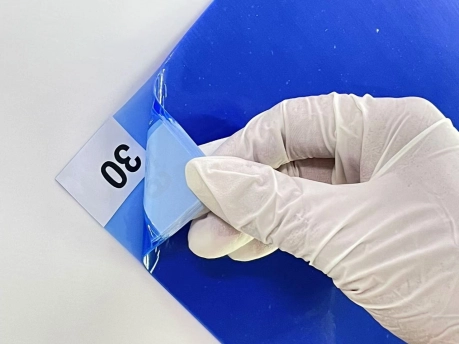
Sticky mats are multi-layered adhesive sheets designed to capture and retain dirt, dust, and other particulate matter from footwear, wheels, and equipment. Typically constructed from durable polyethylene or polypropylene film coated with a pressure-sensitive adhesive, they are placed at entry points of cleanrooms, laboratories, production areas, and other controlled environments.
Available in various sizes and adhesion levels, sticky mats can be customized for specific industrial needs—from general use to ESD-safe versions for electronics manufacturing and chemical-resistant types for pharmaceutical or chemical processing facilities.
How to Use Sticky Mats Correctly?
Proper usage is crucial to maximize the effectiveness of sticky mats:
- Placement: Position the mat securely at the entrance of a clean area, ensuring full coverage of the foot traffic path.
- Preparation: Remove the top protective liner to expose the adhesive surface.
- Stepping Technique: Users should step onto the mat with both feet, applying a slight twisting motion to ensure full contact between footwear and the adhesive surface.
- Replacement: Once the top layer becomes saturated with particles, peel it off to reveal a fresh adhesive layer beneath. Most mats contain 20–30 layers for extended use.
For high-traffic areas, sticky mat stations with multiple mats or larger sizes may be used to enhance contamination control.

The Importance of Sticky Mats
- Contamination Prevention:
- Sticky mats effectively remove up to 95% of particulate matter from footwear and wheels, reducing the risk of introducing pollutants into sensitive environments such as cleanrooms, operating theaters, and food processing areas.
- Cost Efficiency:
- By minimizing contaminants, these mats help prevent product defects, equipment damage, and costly rework. Their multi-layer design also makes them an economical long-term solution.
- Compliance with Standards:
- In regulated industries like pharmaceuticals, biotechnology, and microelectronics, sticky mats help facilities meet stringent cleanliness standards such as ISO 14644 (cleanrooms) and GMP (Good Manufacturing Practice).
- Enhanced Safety:
- In addition to controlling contamination, anti-slip backing on sticky mats reduces slip-and-fall risks, while ESD-safe versions protect static-sensitive components in electronics manufacturing.
Industry Applications
- Electronics & Semiconductors: Prevent dust from damaging circuit boards and microchips.
- Pharmaceuticals & Biotechnology: Maintain sterile conditions in production and research labs.
- Food Processing: Ensure hygiene by reducing pathogens and foreign particles.
- Healthcare: Control infection spread in operating rooms and sterile units.
Sticky mats may appear simple, but their role in safeguarding product integrity, operational efficiency, and regulatory compliance is undeniable. As industries continue to prioritize quality and cleanliness, these unassuming tools will remain a cornerstone of effective contamination control strategies worldwide.

NEWS
GET SERVICE
With quality parts to meet every budget and friendly staff trained to make your visit informative and hassle free.
