

Protective film vs masking film which is better for temporary protection

Protective film vs masking film which is better for temporary protection
Protection of the surface is a critical requirement during construction, renovation, manufacturing, transportation, and maintenance. From floors to glass, metal panels, painted surfaces or anything else, the right protective material can help minimize damage, cleaning expenses and repair costs.
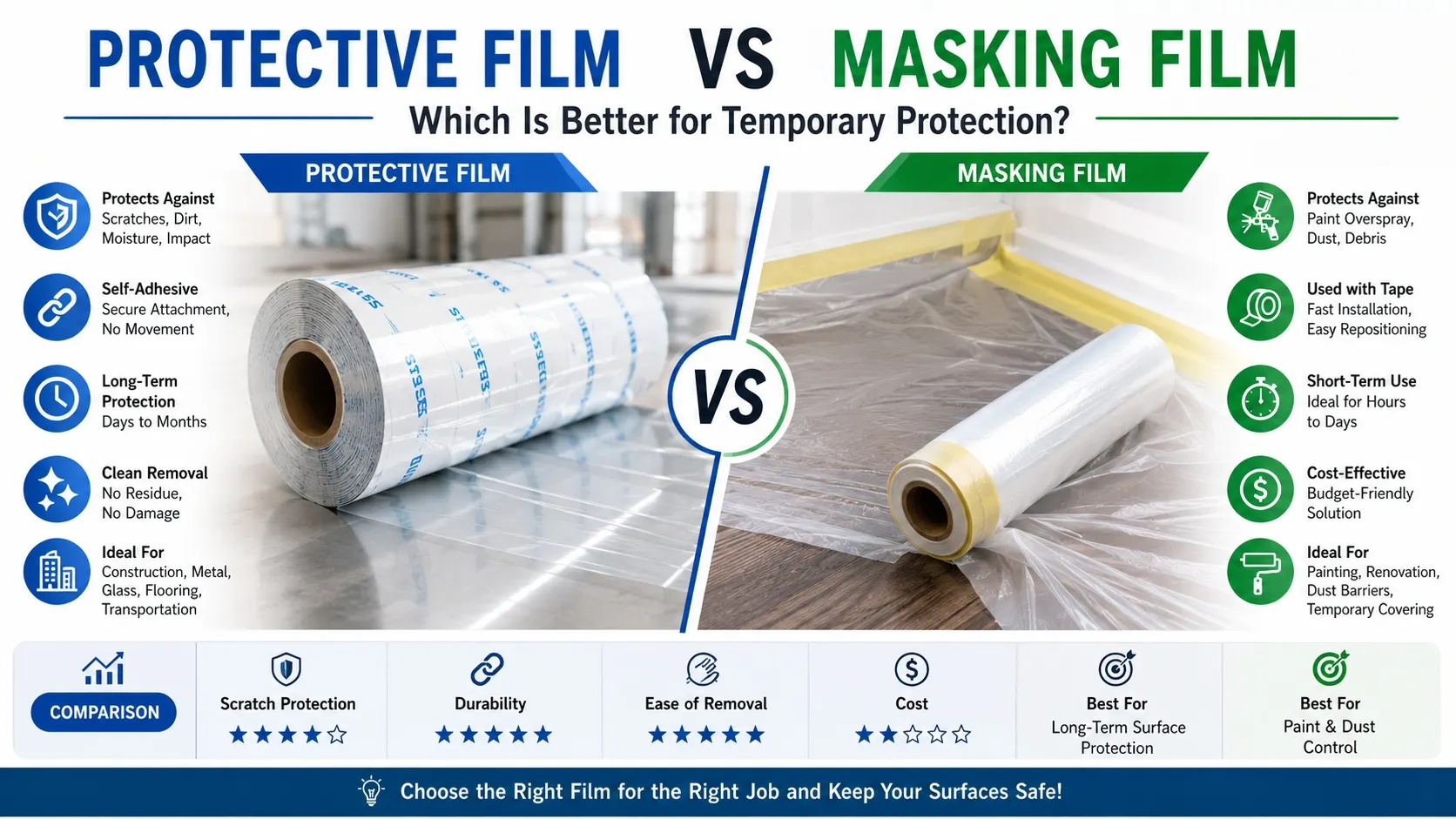
The most widely used solutions are protective film and masking film. Both are intended to protect surfaces from dust, paint, scratches and debris but have different uses and benefits.
In this guide, we will make a detailed comparison between protective film and masking film, and understand which one is better suited for your temporary protection requirements.
What Is Protective Film?
Protective film is a self-adhesive plastic film that protects surfaces from scratches, dirt, moisture, impact or contamination during manufacturing, transportation, installation or construction processes.
The common materials used for making protective films are:
- Polyethylene (PE)
- Polypropylene (PP)
- Polyvinyl Chloride (PVC)
- Specialized multilayer materials
The film is treated with a special adhesive that makes it adhere securely and easily to the film, without leaving residue when removed.
Common applications include:
- Stainless steel protection
- Aluminum panel protection
- Glass protection
- Flooring protection
- Countertop protection
- Electronic component protection
- Automotive surface protection
The protective films can be left on for days, weeks, or even months as needed for the project.
What Is Masking Film?
Masking film is a thin plastic film typically used when painting and renovating. Its purpose is to spray a large surface quickly and avoid the contamination of surrounding surfaces by paint overspray, dust and other debris.
Temporary barriers in the form of masking films are often used with masking tapes.
Common uses include:
- Automotive painting
- Interior house painting
- Furniture covering
- Window masking
- Equipment protection during spraying
- Dust containment during remodeling
The masking film will generally not offer much protection from scratches or impacts, as masking film does not act in a protective manner.
Key Differences Between Protective Film and Masking Film
Understanding the differences between these materials can help you make the right choice.
1. Adhesion Method
Protective Film
Protective film includes a pressure-sensitive adhesive layer that sticks directly to the protected surface.
Benefits include:
- Secure attachment
- Minimal movement
- Better protection during transport
- Reduced risk of contaminants reaching the surface
Masking Film
Masking film generally relies on masking tape or static cling properties.
Benefits include:
- Fast installation
- Easy repositioning
- Suitable for temporary paint projects
Winner: Protective Film
For long-term stability and secure coverage, protective film performs better.
2. Surface Protection Capability
Protective film provides a physical barrier against:
- Scratches
- Abrasion
- Dust
- Dirt
- Moisture
- Light impact damage
Masking film mainly protects against:
- Paint overspray
- Dust
- Debris
It offers little resistance to scratching or abrasion.
Winner: Protective Film
When preventing physical surface damage is the priority, protective film is clearly superior.
3. Application Areas
Protective Film Applications
Protective film is ideal for:
- Construction projects
- Metal fabrication
- Glass manufacturing
- Electronics production
- Transportation protection
- Flooring installation
Masking Film Applications
Masking film is ideal for:
- Painting projects
- Spray coating operations
- Temporary dust barriers
- Renovation masking
Winner: Depends on the Application
If painting is the main task, masking film is often the better choice. For surface preservation, protective film is preferred.
4. Durability
Protective films are engineered to remain functional over extended periods.
Advantages include:
- UV resistance
- Tear resistance
- Moisture resistance
- Long-term adhesion
Masking films are generally intended for short-term use.
They can:
- Tear more easily
- Shift during work
- Lose effectiveness after prolonged exposure
Winner: Protective Film
For projects lasting several weeks or months, protective film provides greater durability.
5. Ease of Removal
Modern protective films are designed for residue-free removal.
High-quality products:
- Peel off cleanly
- Leave no adhesive traces
- Protect surface finishes
Masking films are also easy to remove but often depend on the quality of masking tape used.
Poor-quality tape may leave residue behind.
Winner: Tie
Both products can be removed easily when high-quality materials are used correctly.
6. Cost Considerations
Masking film is usually less expensive than protective film.
This lower cost makes it attractive for:
- Large painting projects
- Short-term protection
- Disposable applications
Protective film has a higher initial cost due to:
- Specialized adhesives
- Stronger materials
- Enhanced protective performance
However, it often reduces repair and cleaning expenses.
Winner: Masking Film for Budget Projects
Winner: Protective Film for Long-Term Value
When Should You Use Protective Film?
Protective film is the best choice when you need:
Surface Damage Prevention
Ideal for:
- Stainless steel sheets
- Aluminum panels
- Glass surfaces
- Flooring
- Stone countertops
Long-Term Protection
Perfect for projects lasting:
- Several weeks
- Several months
- Transportation periods
Professional Construction Work
Contractors frequently use protective film to maintain pristine finishes until project completion.
Manufacturing and Shipping
Protective film safeguards products from factory production through final installation.
When Should You Use Masking Film?
Masking film is most suitable when you need:
Paint Overspray Protection
Painting contractors rely on masking film to protect:
- Windows
- Floors
- Furniture
- Equipment
Quick Temporary Coverage
Masking film can cover large areas rapidly.
Low-Cost Protection
For short-duration projects where physical damage is unlikely, masking film offers an economical solution.
Dust Control During Renovation
Masking film can create temporary barriers to limit dust migration.
Which Industries Prefer Protective Film?
Protective film is widely used in:
- Construction
- Manufacturing
- Automotive production
- Electronics assembly
- Aerospace
- Glass processing
- Metal fabrication
These industries require high-level protection against scratches and contamination.
Which Industries Prefer Masking Film?
Masking film is commonly used in:
- Residential painting
- Commercial painting
- Automotive refinishing
- Renovation services
- Furniture refinishing
These industries focus primarily on paint and dust control.
Environmental Considerations
There are a growing number of manufacturers that have environmentally friendly choices.
Sustainable solutions that can be used include:
- Recyclable PE protective films
- Low-residue adhesives
- Reduced-plastic masking films
- Eco-friendly packaging
For companies aiming to support sustainable practices, it is important to consider recycling programs and material certifications when making their temporary protection product choices.
Final Verdict: Protective Film vs Masking Film
So, which will work better for temporary protection?
This depends on your project's objectives.
Use protective film, if necessary:
- Scratch protection
- Surface preservation
- Long-term coverage
- Transportation protection
- Construction site protection
- Manufacturing protection
Choose masking film if you need:
- Paint overspray control
- Quick surface covering
- Dust containment
- Low-cost short-term protection
Protective film provides better overall protection, durability and value for most applications in construction, manufacturing or surface preservation. Protective film is ideal for painting and renovation projects, but masking film is an excellent solution for protecting valuable surfaces during demanding projects.
NEWS
GET SERVICE
With quality parts to meet every budget and friendly staff trained to make your visit informative and hassle free.
