

Why use protective film during construction and renovation

Why use protective film during construction and renovation
Rebuilding or building new structures can be a costly undertaking, requiring a lot of money, manpower, and time. Finishing is one of the most important steps in any residential, commercial, industrial facility or new building project and should not be forgotten when it comes to protecting finished surfaces. The best way to avoid damage during such projects is to apply a protective film.
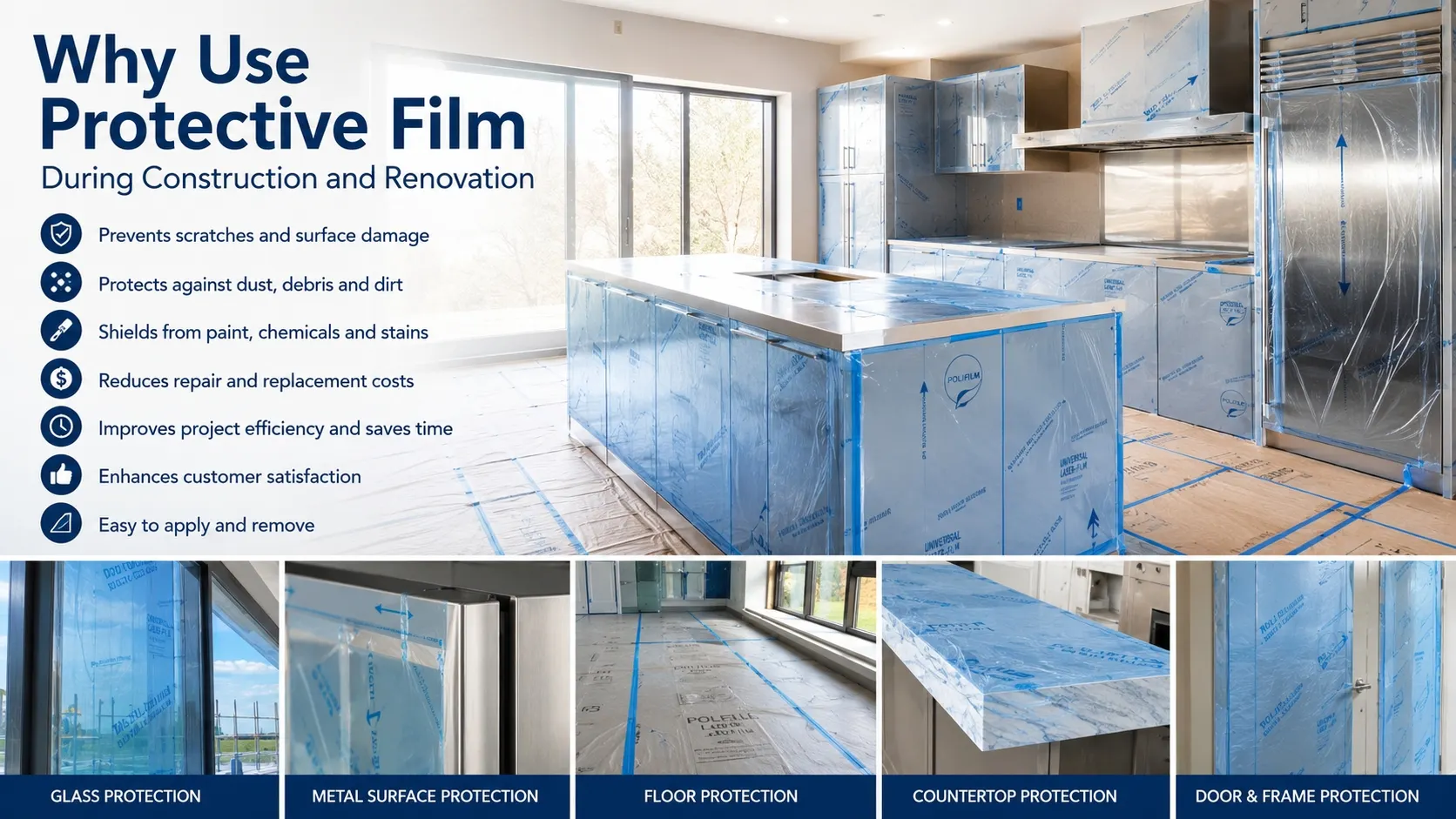
A protective film is a temporary barrier that helps to keep surfaces free from dust, scratches, paint splashes, moisture and construction debris. Protective film during construction and renovation helps contractors, builders and property owners keep finished surfaces looking good and valued, and lessen repair/replacement expenses.
Let's delve into the benefits of protective film during construction and renovation projects and its role in efficiency, cost management, and project quality.Let's discuss the importance of the protective film during a construction project and during renovation, and its efficiency, cost saving and project quality aspects.
What Is Protective Film?
Protective film is a temporary film, temporarily fixed on the surface, which serves to protect the surface during the manufacturing, transportation, installation, construction and renovation process. It is often formed of polyethylene (PE) or other sturdy plastics and can be used on many different surfaces.
There are protective films available for:
- Glass and windows
- Stainless steel
- Aluminum panels
- Painted surfaces
- Flooring materials
- Countertops
- Doors and frames
- Plastic sheets and acrylic panels
- Furniture and fixtures
The film can be easily removed after completing the project without leaving glue on the film.
Prevents Scratches and Surface Damage
The most common motivation for using protective film while building and repairing is to avoid the scratching and physical damage that often occurs.
It is a dynamic construction environment with tools, equipment, ladders and materials moving around continuously at the construction sites. When installing new surfaces, they can be easily getting scratched and dented if are not protected.
Protective film is a long-lasting barrier that takes up small amounts of impact and helps to avoid direct damage to sensitive surfaces. It is particularly important that the following individuals are given the opportunity to take part:
- Glass partitions
- Stainless steel elevators
- Decorative metal panels
- Hardwood flooring
- Kitchen countertops
- Finished cabinetry
Protective film protects the original appearance and quality of installed materials and prevents them from being scratched.
Protects Against Dust and Debris
Dust and debris created during construction and renovations. The use of cutting, sanding, drilling and demolition activities may produce airborne particles that fall onto completed surfaces.
Dust accumulation can:
- Reduce aesthetic appeal
- Cause staining
- Increase cleaning time
- Damage sensitive materials
The surface is covered with a protective film to keep dust from sticking directly to the surface. That way, post construction cleanup is quicker and more efficient and surfaces stay in great shape until the project is over.
Prevents Paint and Chemical Contamination
Renovation is a common occasion for painting, coating and sealing. Paint overspray, paint splashes, adhesives and paint cleaners can inadvertently harm surrounding surfaces.
The protective film will help to shield from:
- Paint overspray
- Silicone sealants
- Construction adhesives
- Solvents
- Cleaning chemicals
- Grout and cement residue
When work is complete, contractors can peel off the protective film, rather than spending time to clean up stains or replacing damaged materials.
Reduces Repair and Replacement Costs
Damage to the surface in the construction process may be costly. Scratches to the glass, flooring or decorative panels can cause extra costs and delays in the project.
A protective film is a simple and economical preventative product that greatly decreases the risk of damage.
Benefits include:
- Fewer warranty claims
- Reduced repair expenses
- Lower material replacement costs
- Improved project profitability
- Reduced labor requirements
The cost of applying protective film is often much less than the costs of repairing any damage that occurs after installation, for contractors and project managers.
Improves Project Efficiency
Time constraints in construction projects may be stringent, and unforeseen repairs can cause delays in the project.
Operational efficiencies are achieved by the use of protective film because it:
- Minimizing damage-related interruptions
- Reducing cleaning requirements
- Preventing rework
- Supporting smoother project handovers
Teams can complete tasks effectively and efficiently without having to deal with damage issues that they could have avoided.
Enhances Customer Satisfaction
Newly built or reconditioned spaces must be completed to perfection for the client. Scratches, stains or faulty finishes will make customers feel that the quality of the vehicle is poor and lower their satisfaction.
Protective film can be used to ensure that:
- Finished surfaces remain pristine
- Installations look professional
- Final inspections proceed smoothly
- Customers receive a high-quality result
A clean, damage-free project will improve reputation and boost repeat business and referrals.
Ideal for Multiple Surface Types
Today's protective films are designed to be compatible with a wide variety of materials, and they can be safely applied onto them.
Common applications include:
Glass Protection
Protective film shields windows, doors, mirrors, and glass partitions from scratches, paint, and dust.
Metal Surface Protection
Stainless steel, aluminum, and decorative metal panels can be protected from fingerprints, abrasions, and construction debris.
Floor Protection
Hardwood, vinyl, laminate, tile, and stone flooring can be safeguarded against foot traffic and equipment movement.
Countertops and Cabinets
Kitchen and bathroom installations remain protected from impacts, stains, and construction materials.
Plastic and Acrylic Panels
Protective film prevents scratching and maintains clarity during installation and handling.
This versatility makes protective film an essential solution for nearly every construction and renovation project.
Supports Sustainable Construction Practices
Sustainability has become a major focus in the construction industry. Preventing material damage contributes directly to waste reduction and resource conservation.
When surfaces are protected:
- Fewer materials need replacement
- Less waste is sent to landfills
- Energy consumption associated with manufacturing replacements is reduced
- Overall project sustainability improves
Many manufacturers now offer environmentally friendly protective films that align with green building initiatives and sustainability goals.
Easy Application and Removal
Another advantage of protective film is its ease of use.
Most construction-grade protective films feature:
- Pressure-sensitive adhesive
- Quick application
- Bubble-free installation
- Strong temporary adhesion
- Clean residue-free removal
The film can remain in place throughout the construction process and be removed only when the project is ready for final presentation.
This convenience makes it an efficient solution for both large commercial projects and smaller residential renovations.
Choosing the Right Protective Film
Selecting the appropriate protective film depends on several factors:
Surface Material
Different surfaces require different adhesive strengths and film formulations.
Project Duration
Long-term projects may require UV-resistant films designed for extended exposure.
Indoor or Outdoor Use
Outdoor applications often need weather-resistant and UV-stable protective films.
Traffic Levels
High-traffic areas may require thicker and more durable films.
Removal Requirements
Select films that will come off without leaving a residue or scratching the surface.
Using a trusted supplier of protective film can help to ensure that it is performing at its best and providing the best protection possible.
Conclusion
Protective film is an important part of construction and renovation work as it protects valuable surfaces from scratches, dust, paints, chemicals and any other type of damage. It can lower repair expenses, increase the effectiveness of the projects, boost client satisfaction, and aid sustainable development in construction.
From glass to metal, floor to countertop, to decorative finishes – protective film is an inexpensive and dependable solution that helps ensure finished surfaces are preserved in quality and appearance during construction.
Using protective film is a good investment for contractors, builders, architects and property owners to ensure that projects are delivered professionally, efficiently and free from unwarranted damage.
NEWS
GET SERVICE
With quality parts to meet every budget and friendly staff trained to make your visit informative and hassle free.
