
How An Adhesive Paper Pad For Cleaning Works: A Practical Guide For Industrial Buyers

How An Adhesive Paper Pad For Cleaning Works: A Practical Guide For Industrial Buyers
In many industries including manufacturing, printing, and electronics, an adhesive paper pad for cleaning is handy. It gathers the thin particles, and lint that accumulate on flat surfaces. Other methods, like sticky rollers and liquid cleaners, can leave a mess. This product offers a sustainable, residue-free solution for cleaning dust and mess.
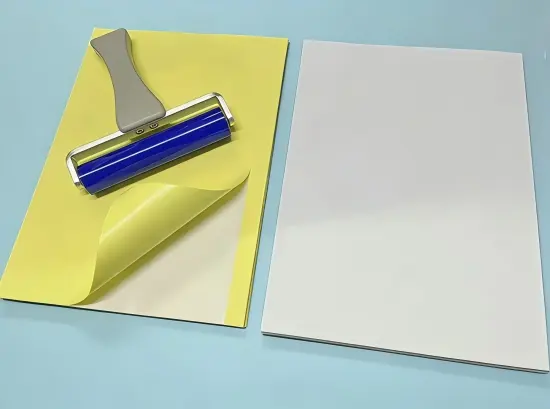
This article will describe the structure of an adhesive paper pad for cleaning, correct usage, and the purchasing options that exist for an adhesive paper pad.
What is an Adhesive Paper Pad for Cleaning?
A cleaning adhesive paper pad is a notepad-like arrangement of pressure-sensitive adhesive sheets with a paper surface, with a backing sticking to one side. When one sheet is pulled away, a new sheet is presented.
A standard adhesive cleaning pad is equipped with:
•A solid cardboard support base.
•About 45-50 adhesive sheets.
•A peel-off edge for easy separation of sheets.
•Yellow layer backing for improved debris visibility (optional).
The design lets users clean several times quickly, without using any other tools.
How Does an Adhesive Paper Pad for Cleaning Work?
The principle is low-tack adhesive. When the adhesive side comes into contact with a surface, the loose particles stick and are picked. The bond is strong enough to capture fine dust but weak enough to leave no residue behind.
Basic steps to use an adhesive paper pad for cleaning:
•Place the pad on a flat work surface with the backing side down
•Peel the top sheet from the bound edge
•Press the exposed adhesive side onto the area to be cleaned
•Lift the sheet – particles transfer from the surface to the pad
•Repeat with fresh sheets as needed
Most industrial users place an adhesive paper pad for cleaning near entry points to clean rooms, beside coating machines, or on workbenches for pre-assembly cleaning.
Key Components of an Adhesive Paper Pad for Cleaning
Understanding the material layers helps buyers compare quality and performance.
- Surface Layer:
•Premium clay-coated paper
•Smooth finish allows for even adhesive distribution
•Keeps adhesive from bleeding through
- Adhesive Layer:
•Acrylic adhesive with balanced tack
•Leaves no residue on the majority of surfaces
•Safe handling of the product within the temperature range of 15°C to 40°C

- Backing Material:
•Coated paper (white or yellow)
•Improves visibility of particles with yellow backing
•Provides support for adhesive layer without tearing
- Binding:
•Glue bound on one edge
•Allows for easy removal of sheets with one hand
•Stops sheets from separating
- Base Board:
•Rigid cardboard or plastic
•Keeps the pad from bending while in use
•Optional non-slip backing for bench mounting
Common Applications in Industry
This cleaning pad is not intended to handle large debris or wet messes. Instead, it excels at removing dry, fine particles from smooth, non-porous surfaces.
- Printing Facilities:
•Cleaning printer beds and guides prior to substrate loading
•Cleaning up the paper dust on cutting tables
- Packaging Lines:
•Cleaning up the sealing surfaces before film is applied
•Cleaning conveyor belts at the filling stations
- Electronics Assembly:
•Cleaning up PCBs prior to soldering
•Cleaning up inspection stations
- General Manufacturing:
•Cleaning up workstations prior to labeling or coating
•Cleaning up workstations prior to quality control
- Workshop Maintenance:
•Cleaning up workbenches in the middle of a project
•Cleaning up sanding dust prior to finishing
Why Yellow Backing Matters in an Adhesive Paper Pad for Cleaning
A few cleaning paper pads have a yellow backing layer, and there is a reason beyond aesthetics. Yellow provides high contrast for most industrial dust, including white, gray, and transparent particles.
Benefits of yellow backing:
•Easier visual inspection of captured debris
•Faster decision on when to replace a sheet
•Reduced risk of recontamination from overused sheets
Quality control operators often prefer an adhesive paper pad for cleaning with yellow backing because they can see immediately whether the cleaning step was effective.
Selecting the Right Adhesive Paper Pad for Cleaning
Not all adhesive paper pad for cleaning products perform the same. CEvaluating these characteristics is important when shopping:
- Pad count:
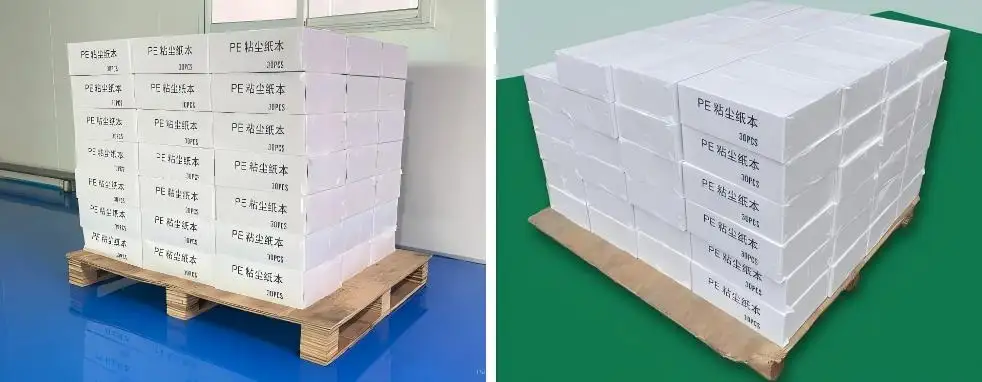
•Most standard pads contain 50 sheets. Pads that need to be changed even less have even bigger pads.
- Level of adhesive tack:
•Low tack provides temporary adhesion to delicate surfaces including films, flexible printed circuits, and optics.
•Medium tack is adequate for the surface prep of metals, glass, and firm plastics for most industry applications.
- Size of sheets:
•Standard size is 240 mm x 330 mm (about 9.5” x 13”).
•Smaller sizes for benchtop use; larger for wide conveyor belts
- Backing color:
•White for general use
•Yellow for quality inspection environments
- Custom printing:
•First sheet can include instruction text or company logo (OEM service)
How to Use an Adhesive Paper Pad for Cleaning Efficiently
Proper technique extends the useful life of each pad and improves cleaning results.
Step-by-step method:
- Position the pad on a stable, dry work surface
- Lift the top sheet from the unbound corner or edge
- Hold the sheet by the unbound edge to avoid touching the adhesive
- Press the adhesive side onto the target area with light pressure
- Lift slowly – do not slide the sheet sideways
- Check the yellow backing (if available) for particle pickup
- Discard the used sheet and repeat with the next clean sheet
When the entire pad is used, remove the cardboard base and dispose of all sheets together or recycle according to local guidelines.
Storage Conditions and Shelf Life
For the best results, the cleaning pad should be stored in its original packaging. Storage requirements include:
•Temperature: 10°C to 30°C
•Humidity: Between 40% and 60% relative humidity
•Should be kept away from direct sunlight and away from heat sources
•Should be kept away from vapor or mist of solvents and oils
If properly stored, the cleaning pad retains its cleaning ability for 12 to 18 months.
Environmental Considerations
Some manufacturers have started to address upcoming 2026 sustainability trends by introducing:
•Recyclable paper backing
•Less adhesive coating
•Paper from verified sources
•Biodegradable release liners (where applicable)
In the current state of technology, adhesive layers cannot be composted, and users should adhere to local waste policies for the disposal of adhesive paper.
Conclusion
The Adhesive Paper Pad for Cleaning offers a practical, waste-free way to remove dry debris from flat surfaces without electricity or cleaning agents. Pads have many considerations: number of sheets, tacks, type of binding, color of backing, etc. and of course, quality. For pads that have a sensitive backing, a yellow backing is used. They can be used and stored efficiently.
When purchasing in 2026, consider which companies have a reliable stable adhesive with a clear data sheet that doesn’t provide unnecessary options.
Common Questions About Adhesive Paper Pad for Cleaning
Q1: Can the adhesive paper be reused?
A: No. Each paper is meant to be used once. Reusing the paper is not efficient for collecting and may leave adhesive on surfaces.
Q2: Does the pad leave adhesive on surfaces?
A: A cleaning pad that is of good quality will leave no residue of adhesive. Always avoid applying excessive pressure, and use a sliding motion.
Q3: Is it useful as a replacement for a sticky roller?
A: The cleaning pad is an acceptable substitute when cleaning flat surfaces and can be used in conjunction with a silicone sticky roller. Stick rollers excel when cleaning curved or vertical surfaces.
Q4: Is it cleanroom safe?
A: It is safe to use, as long as the stick roller is rated for low particle shed. Basic adhesive paper pad for cleaning are intended for general use in industry, while those designed for cleanrooms are specialized and have a low particle construction.
NEWS
GET SERVICE
With quality parts to meet every budget and friendly staff trained to make your visit informative and hassle free.