
anti static Clothing

anti static Clothing
Damage caused by a small electrostatic discharge (ESD) is a major concern in today's technology-rich industries. Ensuring static electricity control is no longer an option in semiconductor manufacturing, electronics assembly, pharmaceutical production, or cleanroom application, it has become a vital component of quality assurance and workplace safety.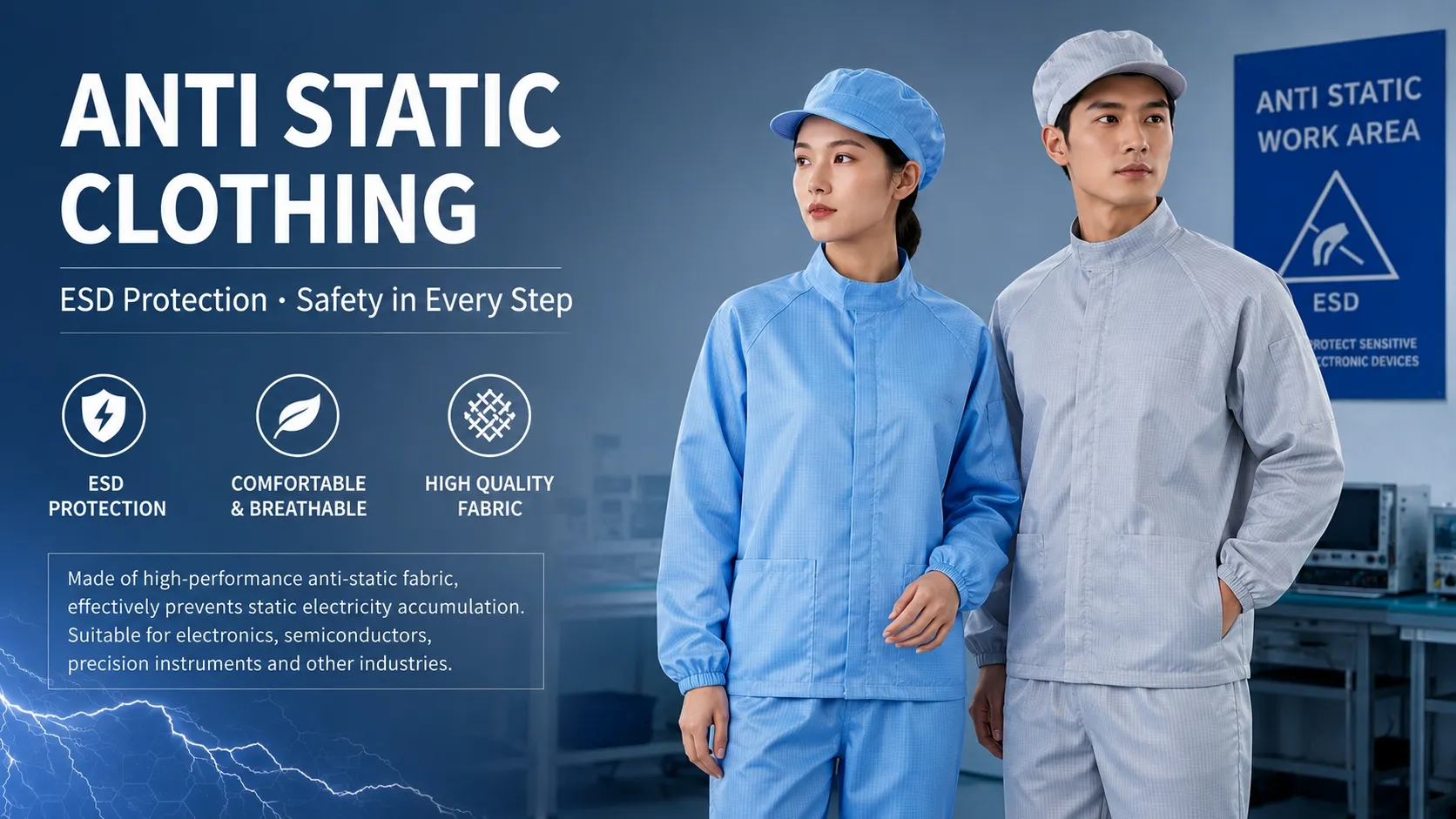
Anti-static clothing comes into play here. Anti-static garments are intended to either drain or dissipate electrostatic charges to reduce or eliminate the potential hazards that static can present to sensitive products, equipment and persons.
Let's look at the types of anti-static clothing, how it works, the major materials used, its applications, benefits, and where to find the right anti-static clothes for your work site.
What Is Anti-Static Clothing?
Anti-static clothing are special clothes designed to reduce or prevent the buildup of static electricity that builds up on the body and clothes. These clothes are made from conductive or static dissipative fibers that enable the release of electrical charges without accumulation and explosive release.
Anti-static clothing provides a controlled path for the movement of static, which may help to prevent electrostatic discharge from damaging sensitive electronic equipment or producing flames in flammable materials, unlike regular workwear.
Typical anti-static clothing includes:
- Anti-static coveralls
- ESD lab coats
- Anti-static jackets
- Cleanroom garments
- ESD polo shirts
- Anti-static trousers
- Gloves and sleeves
- Shoe covers and caps
These garments are widely used in industries where static control is essential.
Why Is Static Electricity a Problem?
Static electricity can be created when two materials touch and then are pulled apart. Thousands of volts of static can be built up during everyday activities like walking, sitting, moving clothes or handling materials.
Although in normal everyday environments static electricity can cause a minor shock, in an industrial environment it can cause serious issues:
Damage to Electronic Components
Today's electronic equipment is very sensitive and has microchips and circuit boards. These components can be permanently damaged by a static discharge of very small magnitude which is invisible to humans.
Product Quality Issues
In electronics manufacturing, static discharge can lead to hidden failures that may not be found when the product is tested but that could cause failures later.
Fire and Explosion Risks
There are other hazards for industries that deal with flammable gases, vapors, powders, or chemicals. Fires or explosions can start from a single electrostatic spark that can ignite combustible materials.
Cleanroom Contamination
Dust and airborne particles are attracted to static charges. This can affect the quality of the products manufactured and can pollute the clean manufacturing environment in cleanrooms.
How Does Anti-Static Clothing Work?
Anti-static clothing uses conductive fibers that have been added to the fabric structure to work. These fibers form a network which helps to distribute and safely dissipate static charges.
Friction is a natural by-product of movement when a worker is moving. The conductive fibers disperse charge over the garment and help it conduct to a grounding system rather than allowing it to build up.
The anti-static fabrics are often patterned, with a grid or stripe pattern made up of carbon or conductive fibres. These conductive pathways help to provide a shield around the wearer and minimize the risk of a sudden discharge.
Anti-static clothing is usually used in combination with:
- ESD footwear
- Grounded flooring
- Wrist straps
- ESD workstations
- Static control mats
An anti-static garment alone cannot provide complete protection without an appropriate grounding system.
Materials Used in Anti-Static Clothing
The performance of anti-static garments largely depends on the materials used.
Polyester with Conductive Fibers
Among the most common types of cloths for anti-static clothing is polyester. To achieve static-dissipative qualities, conductive fibers, like carbon, stainless steel or metal coated yarns, are woven into the fabric.
Benefits include:
- Excellent durability
- Lightweight construction
- Wrinkle resistance
- Long service life
Carbon Fiber Fabrics
Carbon fibers are suited for use in cleanroom and semiconductor applications where static control measures are critical.
Cotton-Polyester Blends
Several industrial clothes are made with polyester and cotton to provide both anti-static and comfort properties.
Advantages include:
- Better breathability
- Improved moisture management
- Enhanced wearer comfort
Conductive Filament Fabrics
These fabrics feature a conductive filament pattern or stripe on the surface of the fabric that is designed to continuously discharge static charges throughout the fabric.
Industries That Require Anti-Static Clothing
Anti-static garments are essential in numerous industries.
Electronics Manufacturing
Electrostatic discharge is a significant problem with printed circuit boards, semiconductors, microprocessors and electronic assemblies.
Workers in these facilities often wear:
- ESD smocks
- Anti-static jackets
- ESD gloves
- Anti-static footwear
Semiconductor Production
The static control requirements of semiconductor fabrication facilities are very demanding. Just a tiny leak can ruin a costly wafer or chip.
Cleanrooms
Both particle control and static control is required in cleanroom environments. Anti-static garments are used for a number of reasons that involve lessening electrostatic risks and preventing contamination.
Pharmaceutical Manufacturing
The static charge has the potential to draw contaminants and disrupt sensitive production processes. Anti static garments aid to maintain cleanliness standards.
Aerospace and Defense
High demands are placed on ESD protection in the manufacture and assembly of electronic systems for use in aircraft and defense equipment.
Chemical and Petrochemical Industries
When working in areas where combustible gases or powders are present, anti-static clothing can help lower the risk of ignition that can be caused by static sparks.
Benefits of Anti-Static Clothing
Protects Sensitive Equipment
Anti-static garments significantly reduce the likelihood of electrostatic discharge damaging electronic components.
Improves Product Quality
By controlling static, manufacturers can reduce defects, improve yields, and enhance product reliability.
Enhances Workplace Safety
Anti-static clothing helps minimize the risk of fires and explosions in hazardous environments.
Supports Regulatory Compliance
Many industries require adherence to ESD control programs and international standards. Proper anti-static clothing helps organizations meet these requirements.
Increases Operational Efficiency
Reducing ESD-related failures lowers downtime, waste, and costly rework.
How to Choose the Right Anti-Static Clothing
When selecting anti-static garments, consider the following factors:
Fabric Performance
Look for fabrics with proven static-dissipative properties and reliable conductivity.
Comfort and Fit
Employees are more likely to wear protective clothing correctly when it is comfortable and breathable.
Durability
Industrial garments should maintain anti-static performance after repeated washing and daily use.
Industry Requirements
Different environments require different protection levels. Electronics assembly may require ESD smocks, while cleanrooms may require full-body coveralls.
Compliance Standards
Choose garments that meet relevant standards such as:
- ANSI/ESD S20.20
- IEC 61340-5-1
- EN 1149
- EN ISO 13688
Maintaining Anti-Static Clothing
Proper maintenance is essential to preserve garment performance.
Best practices include:
- Follow manufacturer washing instructions.
- Avoid bleach and fabric softeners.
- Use mild detergents.
- Inspect garments regularly for damage.
- Replace worn garments when conductivity decreases.
- Store garments in clean, dry conditions.
Regular testing and inspection ensures ongoing compliance with ESD protection.
Conclusion
Anti-static clothing is a very important element of modern static-control programs. These garments help mitigate electrostatic hazards by safely conducting charges away from sensitive electronics, minimize contamination risks, enhance safety in the workplace, and assist in meeting regulatory standards.
In manufacturing industries such as electronics, semiconductor manufacturing, pharmaceuticals, aerospace and cleanroom applications, the quality of products and operations could be enhanced by investing in high quality anti-static clothing.
In today's world, where industries are increasingly looking for greater precision and a higher standard of quality, anti-static garments are still one of the most effective and economical ways of controlling static electricity in the workplace.
NEWS
GET SERVICE
With quality parts to meet every budget and friendly staff trained to make your visit informative and hassle free.