
Anti Static Sticky Mat for Electronics Factory | Guide

Anti Static Sticky Mat for Electronics Factory | Guide
Anti-Static Sticky Mat of Electronics Factory: Guide to ESD Safety
In the electronics manufacturing of today, a small amount of static charge or a dust particle can destroy delicate parts. This is why the anti-static sticky mat for electronic factory has been a silent yet potent savior in production lines.
Since PCB assembly up to semiconductor fabrication, all controlled environments require clean entry points and movement without any static charge. These mats do not merely constitute a mere floor sheet; they form a part of a complete ESD safe working environment and a robust line of defense in electronics manufacturing contamination control.
What is an Anti-Static Sticky Mat in Electronics Factory?
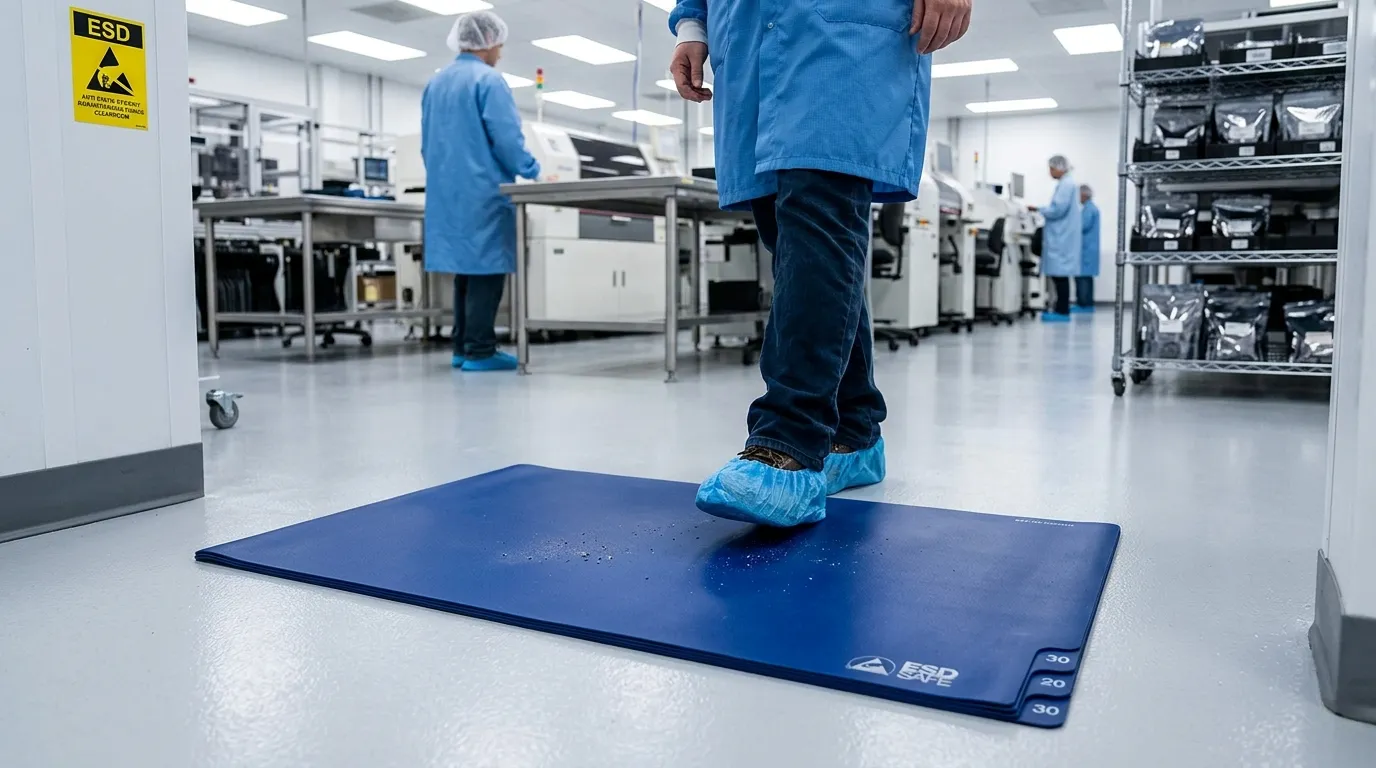
An anti static sticky mat for electronics factory is a multi-layered adhesive floor mat that is used to minimize dust, trap particles, and contain electric charges before the staff can access sensitive production zones.
It is widely used in:
• PCB production sticky mat areas.
• mat entrances of electronics assembly lines.
• cleanroom sticky mat semiconductor entry points.
• sticky mat-controlled rooms of wafer fabrication.
• SMT assembly anti-static mat stations
The mat is made of several peel-off adhesive layers that entrap dirt and minimize the transfer of contamination to clean spaces. This is not just a cleaning accessory. It is a non-portable dissipative sticky flooring that upholds grounded ESD flooring in high-tech settings.
The Reason Why Electronics Factories Should Have Anti-Static Sticky Mats
Electronic factories are concerned with micro-level precision. The product can fail due to the presence of invisible dust or electrostatic discharge. This is the reason why these mats are important:
1. Protection Against Electrostatic Discharge (ESD)
Chips, circuits, and wafers can be destroyed immediately by the use of static electricity. This risk can be reduced with the help of an ESD floor mat in production facilities.
2. Strong Contamination Control
The mats enhance the control of contamination of electronics manufacturing by catching dust on shoes, carts, and wheels.
3. Cleanroom Compliance
They aid in clean manufacturing floor protection under controlled conditions, such as:
• microelectronics production mat zones
• mat entrance of electronics packaging facilities.
• manufacturing cleanroom mats in circuit board manufacturing.
4. Production Yield Improvement
Reduced contamination translates to reduced defects and increased yield of products.
The Anti-Static Sticky Mats Work (Technical Explanation)
The mechanism of action is basic yet very sophisticated.
Multi-Layer Structure
The majority of mats have 30-60 layers that can be peeled off. A controlled adhesive that captures the particles is applied to each layer.
At the time when personnel step on the mat:
• Dust and particles are instantly captured.
• There is a gradual reduction of the static charge.
• There is no entry of contaminants into clean zones.
This forms a powerful electrostatic protection system with a dust control sticky mat in electronics manufacturing functions.
Important Electronics Manufacturing Uses
The electronic anti-static sticky mat is applied in various production phases.
- PCB Manufacturing
Used as a PCB manufacturing contamination control solution to protect circuit boards from dust and static.
- Semiconductor Industry
A semiconductor cleanroom mat will ensure that micro-particles do not harm wafers.
- SMT Assembly Lines
An SMT assembly ESD mat provides the safety of handling micro components.
- Wafer Fabrication Units
A sticky mat made of wafer fabrication minimizes air and floor-borne particles.
Advantages of Contamination Control
A clean factory is not a choice in electronics; it is compulsory. These mats provide:
• Efficiency of cleanroom particle trapping mat.
• Dust removal adhesive mat performance
• Slick mat protection of a controlled environment.
• Dirt capture floor mat feature.
• Anti-static mat compliance in a sterile area.
They significantly reduce:
• airborne dust
• shoe-borne particles
• wheel-borne contamination
• static-induced dust attraction
The result is a consistent quality of production and reduced rejects.
What is the Best Anti-Static Sticky Mat to Select?
The selection of the appropriate mat will depend on your factory setup.
1. Layer Count
- 30 layers: light usage
- 40-60 layers: heavy industry.
2. Adhesive Strength
Select according to pedestrian traffic and machinery movements.
3. Size and Placement
Common placements:
• cleanroom entrance
• SMT production entry
• PCB inspection zones
4. ESD Performance
Make sure it is a genuine ESD-compliant sticky mat with tested resistivity.
5. Durability
In high-traffic areas, use a heavy-duty anti-static sticky mat as a factory entrance.
6. Customization
Many suppliers offer:
• custom size ESD sticky mat.
• anti-static adhesive mats in large quantities.
Wholesale ESD sticky mats.
Installation and Maintenance Guide
Maximum performance is achieved through proper installation.
Installation Steps
• Lay mat on a level, clean surface.
• Ground when necessary.
• Secure edges to prevent movement.
Maintenance Tips
• Wipe off the top when dirty.
• Change regularly in busy areas.
• Wipe the area to ensure maximum adhesion.
This provides long-term performance of the flooring in terms of static control and uniform reduction of contamination.
Electronics Factories Buying Guide
When you intend to purchase anti static sticky mat from an electronics factory, consider:
• Supplier credibility
• Material quality
• Layer durability
• ESD certification
Price vs performance ratio.
A lot of industries have a favorite anti-static sticky mat manufacturer or industrial anti-static floor mat supplier to work with and have long-term supply consistency.
Why Nabai ESD to Anti Static Sticky Mats
Quality and precision are engineered into each layer at Naba ESD.
Their mats are constructed to:
• protecting electronics assembly lines with mats.
• production of microelectronics mats.
• accurate manufacturing of electronics mat standards.
And great attention was paid to:
• floor systems for the control of contamination.
• reliability of the electrostatic discharge protection mat.
• performance of the control of static electricity.
Naba ESD solutions are popular in contemporary industrial cleanrooms and production floors where microscopic contamination is essential.
Conclusion:
An anti static sticky mat for electronics factory is more than a walking space; it is the first defense line of your product quality. The anti-static sticky mat used in an electronics factory has a silent yet effective role in ensuring that sensitive components are not damaged by dust and static damage. It provides stability, safety, and cleanliness throughout PCB lines and semiconductor clean rooms.
This minor upgrade is a big difference in case your objective is increased yield, reduced defects, and enhanced ESD protection. Enhance your production safety by acquiring a high-quality anti-static sticky mat in your electronics factory today. Visit NABAI.
NEWS
GET SERVICE
With quality parts to meet every budget and friendly staff trained to make your visit informative and hassle free.