

best sticky mat for shoe cleaning before entering lab

best sticky mat for shoe cleaning before entering lab
A scientific laboratory needs to be clean and free of contamination, both in terms of safety and accuracy. A sticky mat for shoe cleaning is one of the easiest, yet most effective tools to reach this goal. Sticky mats are frequently used to stop dirt, dust and microorganisms from entering sensitive lab areas, keeping the people and equipment clean. This guide will delve into the best shoe cleaning sticky mats before getting into the lab, the ways in which they work, their advantages, and shoe cleaning tips.
Why Shoe Cleaning Matters in Labs
Laboratories are highly controlled environments. Any contamination can ruin experiments, harm sensitive equipment or be a hazard. Particles are transported in shoes from outside, such as soil, bacteria, chemical residue etc., and can rapidly fall onto lab floors. Sticky mats are used as a first line defense to stop these contaminants from spreading across the facility.
What Is a Sticky Mat?
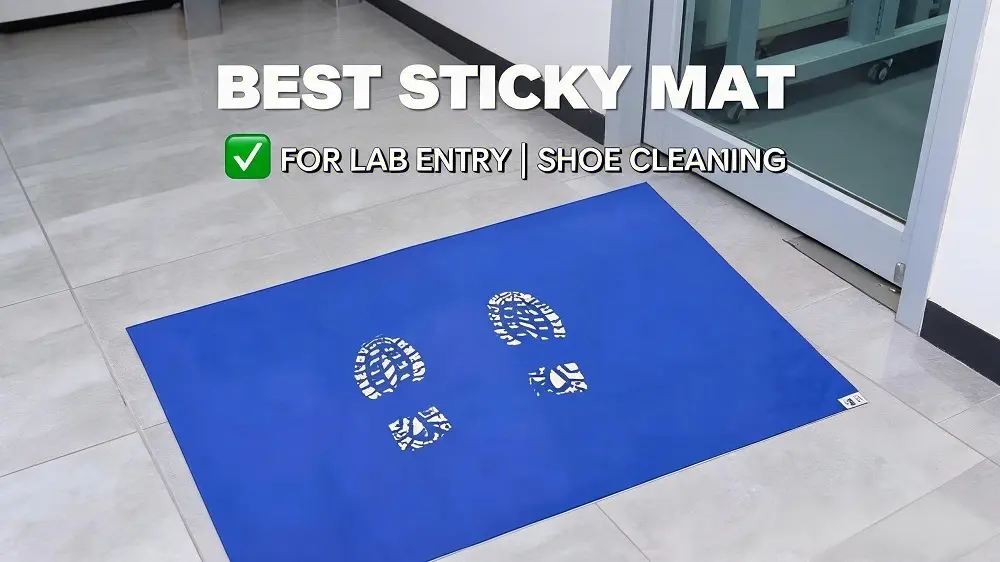
A sticky mat or tacky mat or adhesive mat can be used as a sheet of adhesive layers to trap dirt and particles from shoes or wheels as people enter a controlled area. It is tacky on top, yet safe to walk on, clearing away dirt. The majority of sticky mats have several peel-off layers, which means that you can use the mat over and over again without replacing the entire mat.
A good sticky mat has the following characteristics:
- Strong adhesion to capture dust, dirt, and small particles.
- Multiple layers for extended usability.
- Durable backing to prevent slipping and ensure safety.
- Easy-to-use peel-off design for quick replacement.
- Variety of sizes to fit entrances of different labs.
Benefits of Using Sticky Mats for Lab Entry
- Enhanced Cleanliness: Sticky mats remove contaminants from shoes, reducing particle load inside the lab.
- Safety: Less dirt and debris on floors means lower risk of slips and falls.
- Cost-Effective: Extends the life of lab flooring and reduces cleaning expenses.
- Regulatory Compliance: Helps meet ISO cleanroom standards and other laboratory regulations.
- Convenience: Easy to peel off a layer when it becomes dirty, ensuring continuous cleanliness.
Choosing the Best Sticky Mat for Shoe Cleaning
Selecting the right sticky mat is essential for effective contamination control. Consider the following factors:
- Size: Ensure the mat is large enough to cover the main entryway of the lab. Common sizes include 24×36 inches or 36×60 inches.
- Layer Count: Mats with more layers last longer and require less frequent replacement. Typical mats have 30-60 peel-off layers.
- Adhesive Strength: The adhesive should be strong enough to trap particles but not leave residue on shoes.
- Material Quality: Look for mats made with non-toxic, environmentally friendly adhesives.
- Slip Resistance: A non-slip backing prevents accidents in busy lab entrances.
- Customization: Some labs prefer mats with branding or color-coding to indicate different lab zones.
Top Sticky Mats for Shoe Cleaning Before Entering Lab
While many brands produce sticky mats, some consistently receive high marks from lab managers and quality control professionals:
- TackMat Ultra Clean – Known for strong adhesion and 60 layers, ideal for high-traffic labs.
- CleanStep Peel & Stick Mats – Affordable and effective, with a non-slip backing.
- 3M Safety-Walk Sticky Mats – Reliable and durable, widely used in medical and research facilities.
- XL Lab Mats by AlphaClean – Extra-large mats suitable for labs with multiple entrances.
- EnviroMat Multi-Layer Mats – Eco-friendly adhesive and customizable sizes for specific lab needs.
How to Use Sticky Mats Effectively
To maximize the benefits of sticky mats, follow these best practices:
- Position Strategically: Place mats at all entrances, including secondary access points and areas where lab personnel may bring carts or equipment.
- Peel Layers Regularly: Replace the top adhesive layer as soon as it becomes visibly dirty or after high traffic periods.
- Combine with Other Cleanroom Practices: Sticky mats work best alongside shoe covers, hand hygiene, and gowning protocols.
- Monitor Wear and Tear: Replace mats completely when adhesive performance declines or the backing is damaged.
- Training Staff: Educate lab personnel on the importance of using sticky mats to maintain lab integrity.
Common Misconceptions About Sticky Mats
Some lab managers think that a little sweeping and mopping will do just as well. Sticky mats are essential for helping to prevent contamination in the lab, but even traditional cleaning is significant. Sticky mats aren't limited to the shoe, equipment wheels, carts and trolleys can also benefit from sticky mats.
Cleaning Lab Environments Beyond Sticky Mats
Sticky mats are excellent, but a part of a cleanliness program in the lab. Complementary measures include:
- Air filtration systems to remove airborne particles.
- Controlled gowning areas for lab coats, gloves, and masks.
- Regular surface cleaning with disinfectants suitable for your lab’s environment.
- Strict hygiene protocols for all personnel.
Conclusion
A little investment before entering the lab to clean the shoes with the best shoe sticky mat, a lot of differences. These mats act as a barrier to contamination, both for experiments and personnel. By carefully choosing the right materials, adhering to proper usage guidelines, and implementing a comprehensive lab cleanliness plan, laboratories can keep their work areas clean, safe, and compliant.
Sticky mats are basic and affordable and are a must in contemporary laboratory. If you're a researcher, a pharmaceutical lab, or a cleanroom, cleanliness in every step begins at the door and that means a sticky mat.
NEWS
GET SERVICE
With quality parts to meet every budget and friendly staff trained to make your visit informative and hassle free.
