
Private Label Cleanroom Products: What Nabai's ODM Programme Covers

Private Label Cleanroom Products: What Nabai's ODM Programme Covers
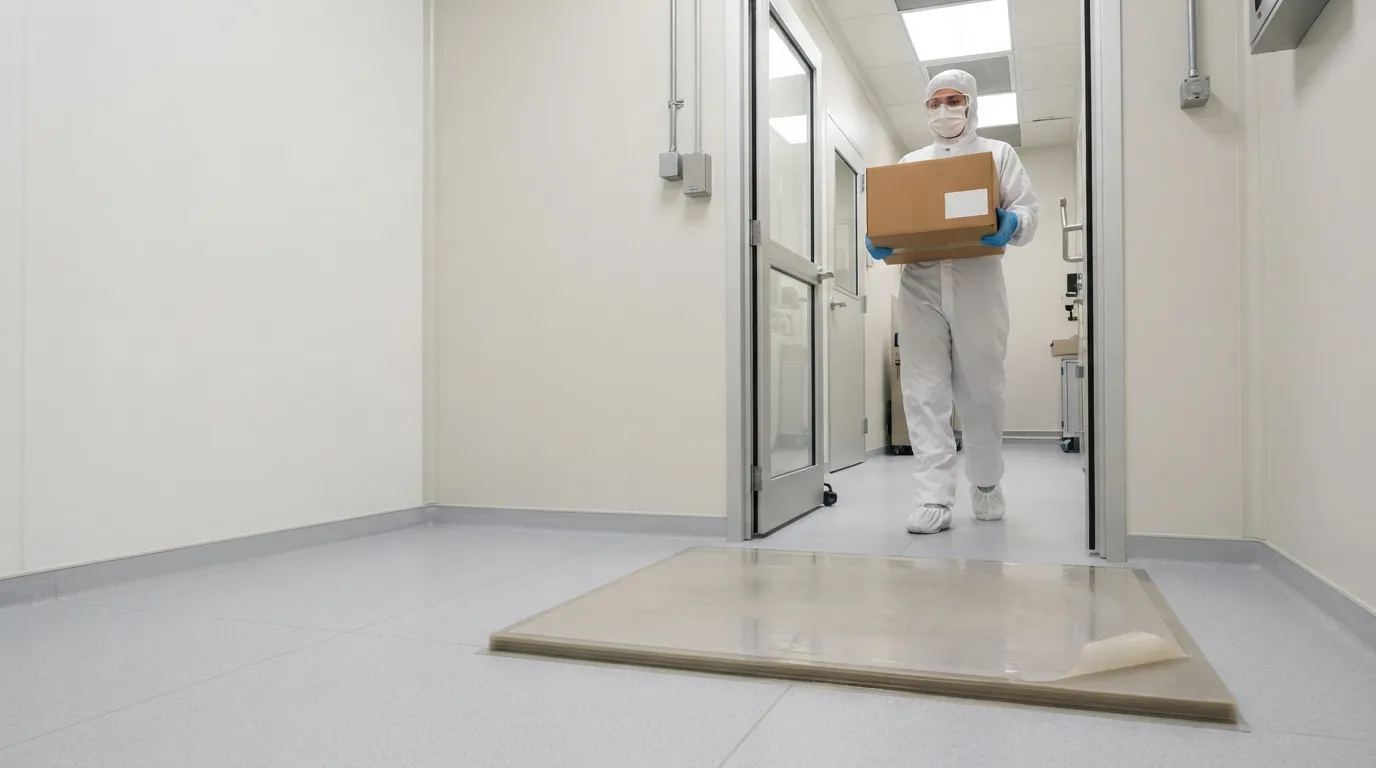
Private-label cleanroom products are contamination-control consumables manufactured by one company and sold under another company's brand. For a distributor, contract manufacturer, or facility operator, the model turns standard cleanroom products into their own product line, with their own labels, packaging, and brand name, while the manufacturer handles specification, production, and quality control.
Nabai's ODM programme covers the product selection, specification, branding, packaging, sampling, and production coordination behind a private-label cleanroom product, subject to commercial confirmation for the specific product family. The programme is relevant to the cleanroom product families Nabai already manufactures and exports, including cleanroom sticky mats, sticky rollers, self-adhesive sticky paper, and protective films.
This page explains what private-label cleanroom manufacturing involves, which Nabai product families are relevant, what to prepare for an ODM enquiry, and which documents prove a product fits its intended cleanroom or ESD application.
What Does "Private Label" Mean for Cleanroom Products?
"Private label" in the cleanroom-supplies industry means that one company produces a contamination-control product and another company sells it under its own brand. The buyer does not develop the product from scratch; they select the product they need, apply their brand, and the manufacturer provides the production and supply chain behind it.
Private label sits alongside two other commercial models that buyers often come across:
- OEM (Original Equipment Manufacturer) — the supplier manufactures a product to the buyer's existing design or specification.
- ODM (Original Design Manufacturer) — the supplier contributes design, configuration, or specification support to the buyer's brief.
- Private label — the buyer selects an existing or lightly configured product from the supplier's range and sells it under their own brand.
The three models overlap in practice. A project may combine a buyer's specification, the supplier's design input, and the buyer's branding. What matters is not the commercial label but who owns the specification, who approves it, and which documents prove the product meets the requirement.
Private Label vs OEM vs ODM
| Model | Who owns the specification | Typical supplier role | Typical buyer role |
|---|---|---|---|
| Private label | Buyer selects from existing or configured products | Supplies, labels, and packages the product under the buyer's brand | Chooses the product, approves artwork, sells it under their own brand |
| OEM | Buyer provides the design or specification | Manufactures to the buyer's defined specification | Provides the specification, approves samples, monitors quality |
| ODM | Supplier contributes design input; buyer approves the final specification | Develops or configures the product to the buyer's brief | Approves the specification and sample, owns the commercial relationship |
Which Cleanroom Products Can Be Private-Labelled?
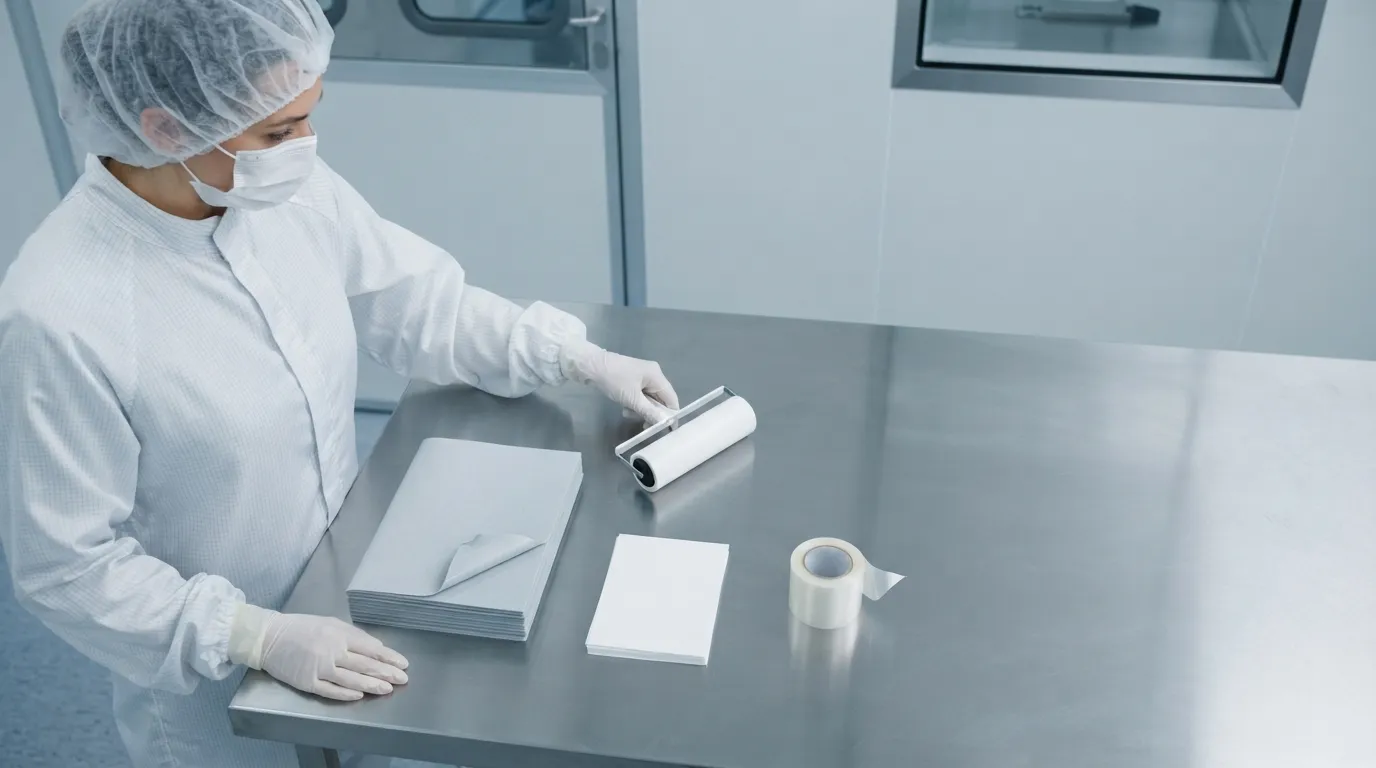
Nabai's product range covers the cleanroom entry-control and contamination-control categories most frequently requested for private labelling. The table below lists the product families a buyer can reference when preparing an ODM brief. Private-label availability should always be confirmed for the specific variant, size, and specification before quotation.
| Product family | Nabai reference | What to include in the ODM brief |
|---|---|---|
| Cleanroom sticky mats | custom sticky mat manufacturer | Mat size, layer count, tack level, ESD requirement, packaging, label artwork |
| Sticky rollers and roller accessories | Listed in Nabai's product catalogue | Roller format, handle type, film width, packaging requirements |
| Self-adhesive sticky paper | printable self adhesive sticky paper | Sheet or roll format, size, perforation, printability, packaging |
| Protective films | PE anti-static protective film | Film type, thickness, width and length, anti-static requirement, packaging |
A cleanroom sticky mat — also called a tacky mat or adhesive mat — is an entry-control product used in controlled environments to capture particles from shoes and wheeled equipment. It is not the same as a consumer adhesive mat used for household cleaning. The specification and documentation expectations are entirely different.
A product family listed on the website does not automatically mean every variant is available for private label. The manufacturer must confirm which sizes, materials, adhesive systems, and ESD grades can be branded and supplied under a private-label programme. That confirmation is part of the ODM enquiry.
What Can Be Customised — and What Must Be Confirmed
Private-label customisation operates at two levels: branding and product construction.
Branding-level customisation covers labels, packaging, cartons, shrink-wrap, and the documents that accompany the product. This is the most common form of private labelling and normally has the shorter lead time.
Product-level customisation changes the product itself — dimensions, layer count, sheet count, material, adhesive tack, ESD properties, colour, or printing. Product-level changes can affect performance and documentation, so they must be approved against a written specification and, where needed, verified by testing.
Before a manufacturer can quote a private-label project, the buyer must confirm:
- The exact product family and variant.
- Whether the customisation is branding-only or product-level.
- Required specifications: size, tack level, resistance value, layer or sheet count.
- The application environment, so cleanroom or ESD requirements can be assessed correctly.
- Required documentation: TDS, batch test report, SDS/MSDS, or other declarations.
- Target quantity and requested timeline.
How Nabai's ODM Process Works
Every private-label cleanroom product project follows a similar sequence. The steps below describe the workflow a buyer should expect when working with a manufacturer like Nabai; the exact process is confirmed with the Nabai sales team during the enquiry.
- Requirement brief. The buyer identifies the product family, application, size, quantity, branding, packaging, and target timeline.
- Feasibility review. The manufacturer checks which product variants can be supplied, which customisations are possible, and which documents can be provided.
- Specification and artwork approval. The buyer approves the product specification, label artwork, and packaging design.
- Sampling. A pre-production sample is produced and evaluated against the approved specification.
- Quotation and commercial confirmation. Price, minimum order quantity, lead time, and terms are confirmed in writing.
- Production and quality control. The batch is produced and checked against the approved sample.
- Repeat order. Future orders reference the approved specification, allowing the buyer to verify batch consistency.
Information to Prepare for Your ODM Enquiry
A complete ODM enquiry saves time and avoids misunderstandings. The buyer should include the following information:
| Information to include | Why it matters |
|---|---|
| Product type and category | Identifies the product family and variant being requested |
| Application environment | Determines whether cleanroom, ESD, or industrial-grade requirements apply |
| Dimensions and tolerances | Sets the physical specification of the product |
| Material preference (if known) | PE, PP, PET, or silicone affect durability, residue behaviour, and reusability |
| Tack or adhesion requirement | Must be stated in the manufacturer's published unit, not as a vague "high tack" label |
| ESD requirement (if applicable) | Surface resistance (ohms) and surface resistivity (ohms/square) are different values; specify which one applies, and state whether the requirement is static-dissipative or conductive |
| Layer count, sheet count, or roll length | These are separate measurements and must not be mixed |
| Packaging and label requirements | Defines branding scope and packaging format |
| Target quantity and timeline | Enables minimum-order and lead-time confirmation |
| Required documentation | TDS, batch test report, SDS/MSDS, or other evidence should be requested in advance |
Technical Documentation and Quality Evidence
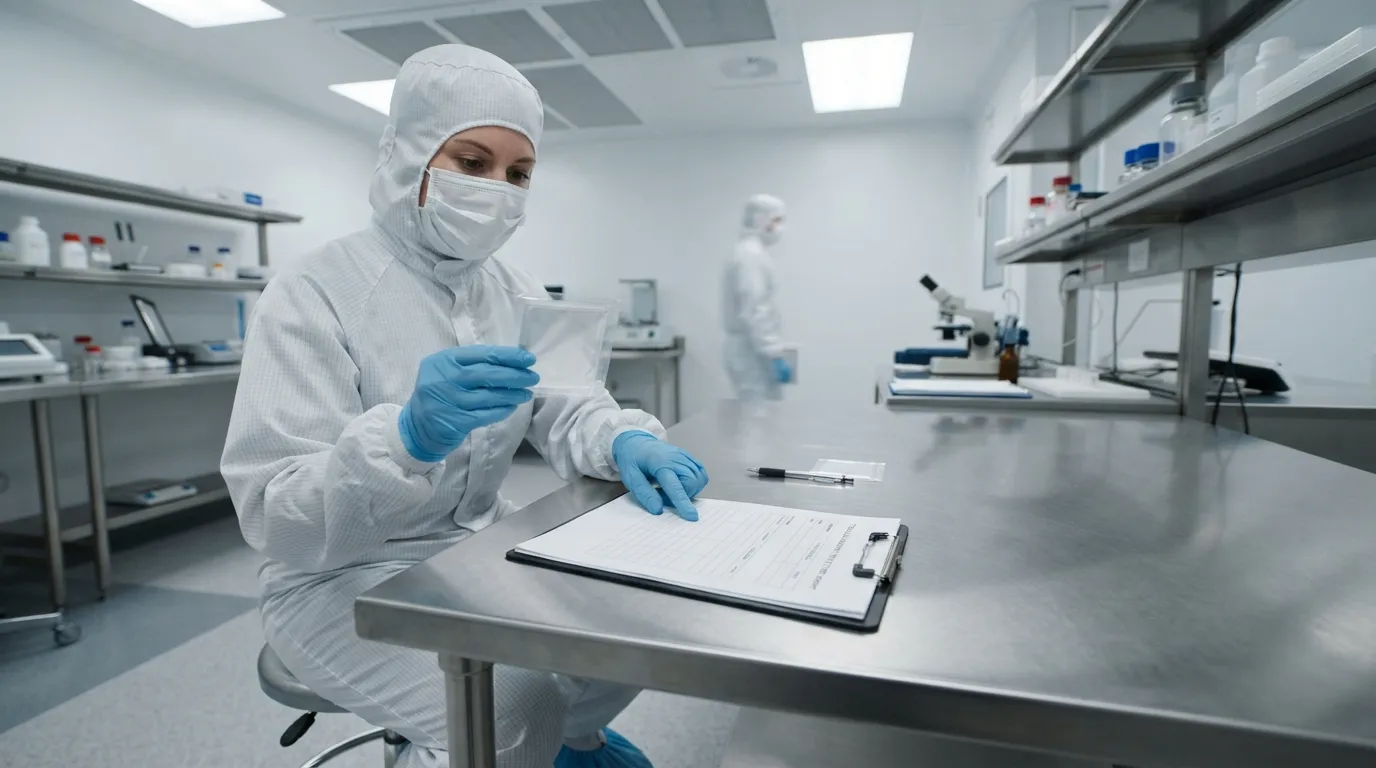
Technical documentation answers different questions, and the buyer should request the right document for the right purpose.
- TDS (Technical Data Sheet). A TDS documents a product's physical and electrical specifications and handling guidance. It describes the general product line rather than a specific production batch.
- Batch test report. A batch test report verifies that a specific batch or sample met defined test values — for example surface resistance, tack, or a flammability rating. The evidence applies to the batch it belongs to, not to every product the manufacturer supplies.
- SDS/MSDS (Safety Data Sheet). An SDS communicates composition, safe handling, storage, and hazard information.
A TDS tells the buyer what the product is designed to be. A batch test report tells the buyer what a specific batch measured. Private-label branding does not itself prove cleanroom, ESD, GMP, or regulatory compliance; the product's evidence must support the claim.
TDS vs Batch Test Report
The distinction between a TDS and a batch test report is one of the most important documentation questions in a private-label enquiry.
- A TDS is a general product specification that applies to the product family in normal production.
- A batch test report is specific to a production batch or sample and records the test method, measured value, and batch or sample identity.
- A TDS alone does not prove that a specific batch met a specification. A batch test report does.
When reviewing either document, check that the units match the requirement — ohms for surface resistance, ohms/square for surface resistivity, and the stated unit for tack or adhesion.
Cleanroom and ESD Standards: What They Do — and Don't — Prove
Cleanroom and ESD standards are frequently cited in marketing language, so precision matters.
ISO 14644-1 classifies air cleanliness by particle concentration; ISO 14644-2 addresses monitoring to provide evidence of cleanroom performance related to air cleanliness, as described in the ISO news release on revised cleanroom standards. These standards define the cleanroom environment, not the certification of a consumable product.
ANSI/ESD S20.20 covers requirements for establishing, implementing, and maintaining an ESD control programme for electronics-related activities. It defines a facility-level programme framework, not an individual product's electrical classification.
A cleanroom can be ISO-classified, and a facility can run an ANSI/ESD S20.20 programme, but neither statement automatically proves that a sticky mat, roller, or protective film is suitable for that environment. Product-level suitability is verified through the product's TDS and any batch test reports.
Questions to Ask Before Choosing a Private-Label Cleanroom Manufacturer
The final supplier evaluation comes down to a short set of questions. A reliable manufacturer should be able to answer all of them in writing.
- MOQ and lead time. Confirm both for the specific product family. Minimum order quantities and lead times can differ between standard and custom products. For sticky mats specifically, see the guide to cleanroom sticky mat moq and lead time.
- Sample policy. Request a pre-production sample before committing to a bulk order.
- Batch consistency. Ask how the manufacturer controls repeat orders against the approved specification.
- Documentation. Confirm which documents are available per product and per batch.
- Specification ownership. Confirm who owns the approved specification and how changes are handled.
- Quality control. Ask what testing and inspection is carried out during production.
- Communication. Confirm the single point of contact for the project.
Request a Sample or Quotation from Nabai
The fastest way to evaluate a private-label cleanroom project is to send a complete brief and request a quotation. Include the product family, application, dimensions, target quantity, branding requirements, and required documentation — the information described in the checklist above. A Nabai sales or ODM representative can then confirm feasibility, lead time, and documentation for the specific product.
NEWS
GET SERVICE
With quality parts to meet every budget and friendly staff trained to make your visit informative and hassle free.