

cleanroom equipment manufacturer

cleanroom equipment manufacturer
In precision, safety and quality oriented industries, it is crucial to maintain controlled environment. Cleanrooms are used in a wide range of applications, including pharmaceutical manufacturing, biotechnology research, semiconductor production, and medical device manufacturing, to help prevent contamination and meet stringent industry requirements.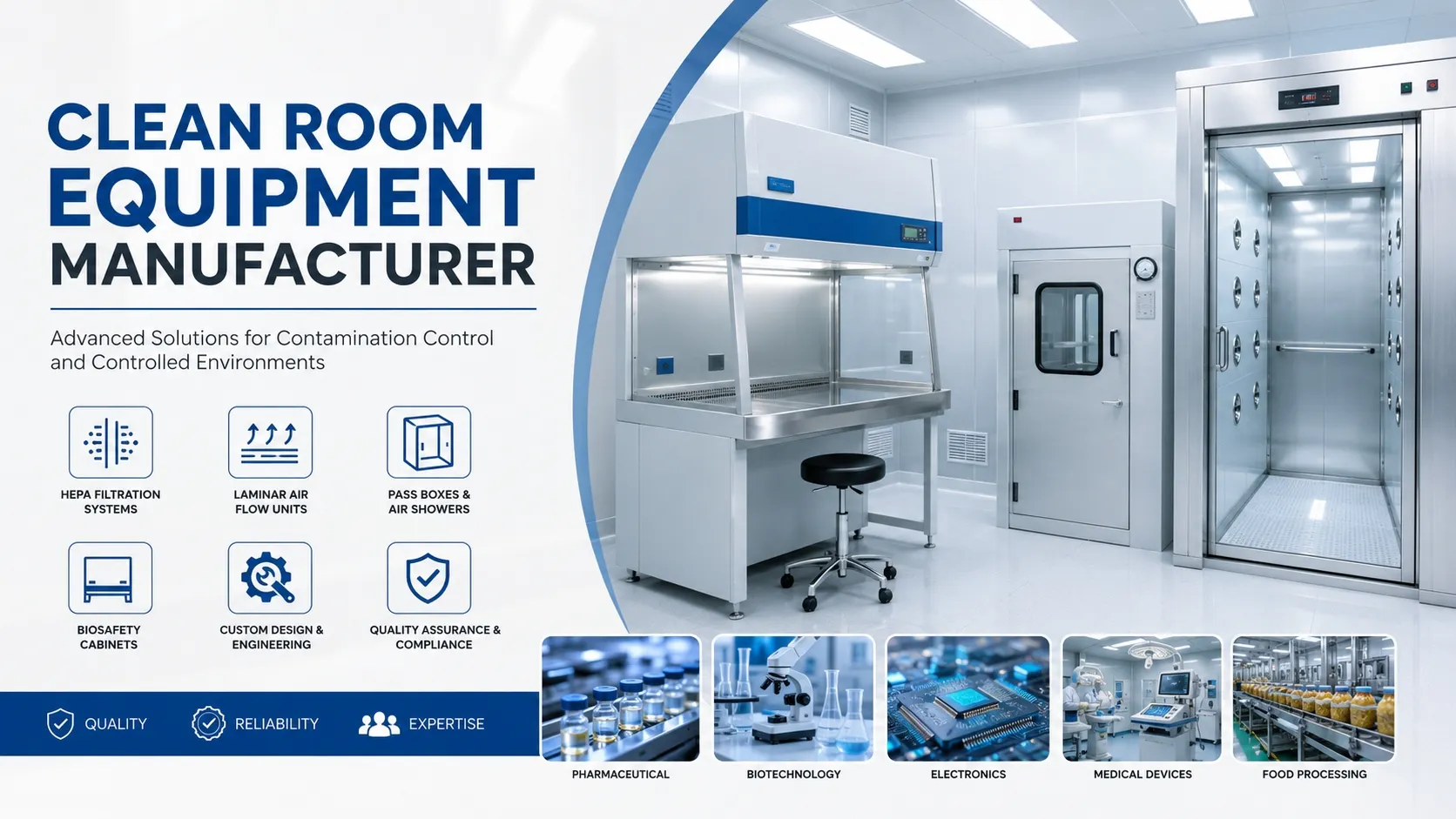
The quality of equipment used in any cleanroom is a large determining factor on the effectiveness of the cleanroom. A dependable clean room equipment manufacturer can play a crucial role in enhancing the functionality, consistency, and adherence to regulations. Modern cleanroom equipment is engineered to inhibit airborne particle contamination, stabilize the environment and facilitate contamination-sensitive processes in various industries. The components of cleanroom systems usually consist of laminar airflow units, pass boxes, biosafety cabinets, HEPA filters, and dedicated accessories that are all designed to provide controlled cleanroom environments.
What Is Clean Room Equipment?
Clean room equipment includes specialized tools and systems used to control the environment in a clean room, which has a low level of airborne particles, microorganisms and contaminants. These systems control the concentration of air particles, humidity, temperature and airflow to maintain the required cleanliness classifications.
Cleanroom equipment is designed to work without producing contaminants as is conventional industrial equipment. The high quality systems are made from smooth and corrosion proof materials which are easy to clean and maintain.
Common equipment used in a cleanroom includes:
- Laminar Air Flow Units
- Pass Boxes
- Air Showers
- Biosafety Cabinets
- HEPA and ULPA Filtration Systems
- Cleanroom Workstations
- Cleanroom Storage Solutions
- Laboratory Furniture
- Fan Filter Units (FFUs)
- Cleanroom Accessories
Each element is specifically designed to help provide a contamination controlled environment, enhance productivity and help protect the safety of the worker.
Why Clean Room Equipment Is Important
The key to contamination control is the cleanroom equipment. If not managed and designed correctly, airborne particles can pose safety hazards, cause damage to sensitive components, and impact products.
Product Quality Protection
Industries like electronics or pharmaceuticals need to be very controlled to produce. The consequences of even those tiny particles can be detrimental to product performance, or costly product recalls.
Advanced cleanroom equipment aids in reduction of contamination sources and gives a stable operating environment in critical manufacturing processes.
Regulatory Compliance
There are many industries that need to adhere to international standards like ISO 14644, GMP guidelines and industry specific regulations. An efficient cleanroom system helps an organization to attain and maintain compliance and makes audits and inspections easier. The number of cleanrooms and suitable equipment for contamination control are usually mentioned in terms of ISO 14644 classifications.
Operational Efficiency
High-quality machinery reduces maintenance needs and downtime. New cleanroom systems are designed for long life to ensure that the system will perform well and keep costs low, while enhancing productivity.
Worker Safety
Biosafety cabinets and laminar airflow systems help keep employees safe from contact with dangerous substances and keep work areas sterile.
Essential Types of Clean Room Equipment
Laminar Air Flow Systems
Laminar airflow units deliver a laminar stream of filtered air over a workspace. These are systems designed to filter out airborne particles in order to provide a clean working environment for sensitive operations. The HEPA-filtered laminar airflow systems are widely used in medical, industrial, and research applications to provide controlled, contamination reducing airflow.
Laminar airflow equipment is generally used in:
- Pharmaceutical laboratories
- Medical research facilities
- Electronics manufacturing
- Quality control laboratories
Pass Boxes
Pass boxes are used to move materials from controlled to uncontrollable areas or vice versa without breaching the cleanliness level.
These units can reduce cross-contamination risks and enhance workflow efficiency. There are two types of pass box, dynamic and static, which are widely adopted in pharmaceutical, health care and manufacturing plants. Pass boxes are an important and common feature in a clean room to transfer materials without incurring risk of contamination.
Biosafety Cabinets
Biosafety cabinets are used to protect the environment, products and personnel when working with biological materials.
They play a key role in:
- Biotechnology laboratories
- Pharmaceutical research
- Medical testing facilities
- Microbiology laboratories
HEPA Filtration Systems
Airborne particles are effectively filtered. These systems are the backbone of most cleanrooms and contribute to the achievement of the necessary cleanliness classifications.
High-quality filtration systems include:
- Particle control
- Air purification
- Contamination prevention
- Regulatory compliance
Air Showers
Air showers cleanse personnel and materials prior to their entry into critical cleanroom areas. The dust and particle removal by high-speed filtered air eliminates the possibility of dust and particles being carried into controlled environments.
Industries That Depend on Clean Room Equipment
Pharmaceutical Manufacturing
In the production of drugs, sterile conditions are necessary to avoid contamination and provide product safety. Cleanroom equipment enables to uphold a high standard of quality during the production processes.
Biotechnology
Contamination-controlled environments are needed in research laboratories for delicate experiments and biological testing procedures.
Electronics and Semiconductor Manufacturing
microscopic particles can cause damage to microchips and electronic components. Cleanroom systems are designed to create clean environments required for precision manufacturing.
Healthcare and Medical Devices
Cleanroom equipment is used in medical device manufacturing, diagnostic laboratories, and hospitals to ensure hygienic environments and patient safety.
Food and Beverage Processing
Controlled environments help food manufacturers to enhance hygiene and minimise contamination risks during food manufacturing.
Key Features of a Reliable Clean Room Equipment Manufacturer
It is extremely important to choose the right manufacturer for long-term performance and compliance. The best equipment manufacturers of clean rooms provide not only products, but full contamination-control solutions as well.
Engineering Expertise
Thanks to their expertise, experienced manufacturers know the specific needs of various industries and are able to suggest solutions that are tailored for specific applications.
Comprehensive Product Portfolio
A trusted supplier would be expected to offer all cleanroom equipment and accessories including airflow systems, filtration systems, laboratory furniture, pass boxes and more.
Compliance with International Standards
Manufacturers should develop and make equipment which complies with ISO, GMP, and other standards.
Customization Capabilities
Each cleanroom project is very special. There are a variety of custom manufacturing options to ensure equipment meets layouts, operational needs and cleanliness classification.
Quality Assurance
Top manufacturers have strict quality control processes in place during design, manufacture and testing. Quality control, validation documentation, testing and compliance are highlighted by manufacturers to help ensure equipment reliability and readiness for regulatory requirements.
Technical Support and Maintenance
Quality after-sales service is beneficial for organizations to ensure the equipment is used for a longer time while ensuring optimal performance.
Emerging Trends in Clean Room Technology
As industries evolve, cleanroom technology continues to advance.
Some emerging trends include:
Smart Monitoring Systems
Digital sensors and monitoring platforms provide real-time data on temperature, humidity, airflow, and particle counts.
Energy-Efficient Equipment
Modern cleanroom systems are designed to reduce energy consumption while maintaining high performance.
Modular Cleanroom Solutions
Modular designs offer flexibility, faster installation, and scalability for growing businesses.
Advanced Filtration Technologies
Next-generation HEPA and ULPA filtration systems deliver enhanced contamination control and improved operational efficiency.
Sustainable Manufacturing Practices
Manufacturers increasingly focus on environmentally responsible production methods and energy-saving cleanroom technologies.
How to Choose the Best Clean Room Equipment Manufacturer
When evaluating potential suppliers, consider the following factors:
- Industry experience
- Product quality certifications
- Customization capabilities
- Compliance expertise
- Technical support services
- Installation assistance
- Maintenance programs
- Customer references
- Manufacturing capacity
- Innovation and technology
A manufacturer with experience in cleanroom design can assist in creating a cleanroom solution that is optimal for both existing and future demands.
Conclusion
Industries that require controlling contamination levels that directly affect product quality, safety, and regulatory compliance require cleanroom environments. The clean room equipment performs well to maintain controlled environments and critical manufacturing and research processes.
Organizations can enhance efficiency, ensure product integrity, and maintain compliance with industry standards by collaborating with an experienced clean room equipment manufacturer. From pharmaceuticals to biotechnology, healthcare to electronics, and food processing, a commitment to dependable cleanroom equipment proves to be a wise investment for long-term value and operational efficiency.
NEWS
GET SERVICE
With quality parts to meet every budget and friendly staff trained to make your visit informative and hassle free.
