
cleanroom sticky rollers

cleanroom sticky rollers
Industries like semiconductor fabrication, pharmaceuticals, biotechnology, aerospace, medical devices and electronics manufacturing have one of the most stringent demands of a contamination-free environment. Microbes can cause poor product quality and yield loss, and lead to expensive compliance problems even if they are only microscopic in size. Therefore, specialty equipment is used in the cleanrooms to clean the work surface to remove particles, without adding to the particles present.
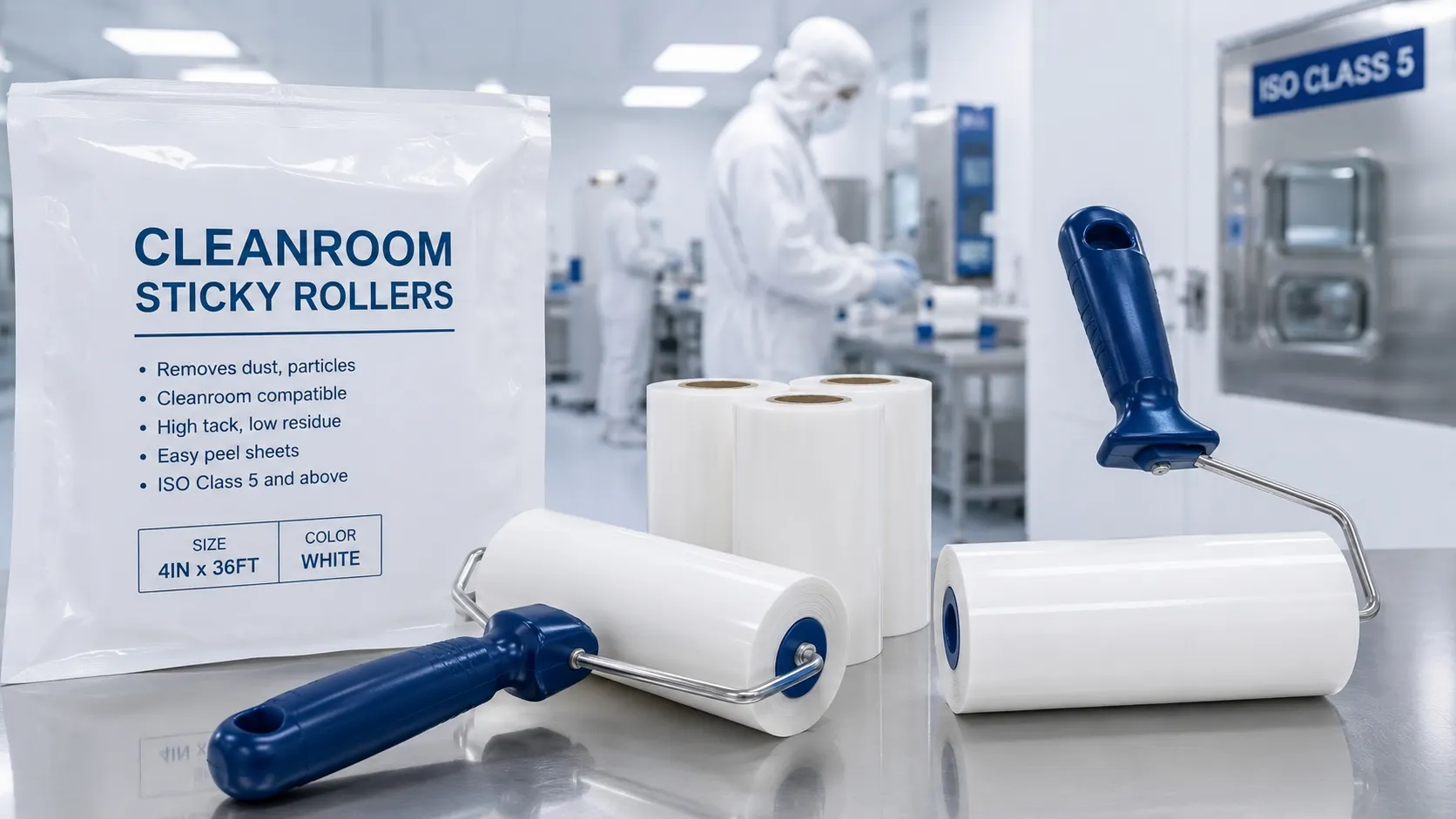
Cleanroom sticky rollers and foam mops are amongst the most effective solutions. These are fast, efficient and residue free cleaning tools to use for walls, ceilings, floors, windows, equipment surfaces and workstations. They can effectively collect dust, fibers and particulate contamination, and are an integral component of today's cleanroom maintenance programs.
What Are Cleanroom Sticky Rollers?
Cleanroom sticky rollers are adhesive cleaning tools that are designed for use in controlled environments, also known as tacky rollers. Sticky rollers are different to traditional cleaning cloths or wet mops that simply use water to dislodge the loose particles.Sticky rollers are unique in that they have a special adhesive surface that collects loose particles.
The roller is rolled over a surface and contaminants stick to the tacky surface. When the particles are absorbed into the outer layer, the used sheet can be removed and replaced with a new adhesive layer. This design provides for uniform cleaning performance and reduces downtime.
Sticky rollers are usually applied to:
- Cleanroom floors
- Walls and partitions
- Ceilings
- Windows and glass panels
- Equipment exteriors
- Conveyor systems
- Worktables and shelving
- Packaging areas
Sticky rollers are simple and effective in the removal of contamination prior to spreading it throughout the facility, as they do not need any cleaning chemicals or liquids.
Why Particle Removal Matters in Cleanrooms
Air filtration systems are important in the control of contamination, but do not remove all particles that fall to surfaces. Over time, dust, fibers, skin flakes, packaging debris, process contaminants and more can collect on floors, walls and equipment.
When these particles re-enter the atmosphere they can interfere with critical manufacturing operations and affect product quality. Thus, regular cleaning of the surface is an important aspect of contamination control measures.
To solve this problem, sticky rollers can be used to remove particles one by one before the contaminations transfer to clean area. This makes them particularly useful in areas of high traffic, gowning areas, production lines and in sensitive manufacturing environments.
Types of Cleanroom Sticky Rollers
Film Sticky Rollers
Manufactured with low density polyethylene (LDPE) adhesive film, film rollers work well with smooth, flat surfaces.
Benefits include:
- High particle pickup efficiency
- Minimal residue generation
- Excellent performance on walls, floors, and windows
- More adhesive sheets per roll
- Consistent cleaning across large areas
For smooth epoxy floors, stainless steel equipment, and glass surfaces, film rollers may be the best option.
Foam Sticky Rollers
Foam sticky rollers are made with soft and conformable foam which can be used for irregular or textured surfaces.
Advantages include:
- Conforms to grooves and indentations
- Suitable for delicate surfaces
- Anti-static properties
- Effective on textured panels and equipment
- Ideal for electronics manufacturing environments
Due to the ability to access areas that film rollers can't, foam rollers are often used to clean machine housings, textured walls and sensitive electronic parts.
Cleaning Walls and Ceilings Efficiently
During regular maintenance, walls and ceiling are ignored. However, over time these surfaces can become highly contaminated with particulates.
Advantages of modern sticky roller systems: Lightweight handles and extension poles enable operators to safely clean elevated surfaces, without using ladders or reaching.
The advantages of sticky rollers on walls and ceilings are:
- Improved contamination control
- Faster cleaning procedures
- Reduced labor requirements
- Consistent cleaning coverage
- Elimination of liquid cleaning residue
Extension poles can easily extend the operator's reach, creating a better opportunity to maintain a clean environment in large production facilities and high-ceiling spaces.
Foam Mops for Hard-to-Clean Areas
Sticky film rollers work best on smooth surfaces, but foam mops have special benefits for irregular surfaces.
Foam rollers can compress slightly to fit the:
- Textured wall surfaces
- Grooved equipment panels
- Machine enclosures
- Manufacturing fixtures
- Uneven flooring
This flexibility enhances the removal of particles where it might have been difficult to get a good grip using conventional adhesive film rollers. Foam rollers are often utilized by electronics manufacturers because the foam is naturally anti-static and safe for sensitive electronics.
Cleaning Cleanroom Floors
One of the greatest sources of contamination in controlled surfaces is the floor surface. Particles are continually being brought in by personnel, carts, packaging materials and manufacturing processes and may settle on the floor.
Sticky rollers are a practical solution used for removing unwanted particles prior to them being released into the air during dry cleaning.
Advantages include:
- Quick particle removal
- Reduced contamination spread
- No liquid chemicals required
- Easy operation
- Suitable for routine maintenance
Many facilities incorporate sticky roller cleaning as part of their everyday cleaning routine as well as sticky mats and scheduled wet cleaning.
Window and Glass Surface Cleaning
Windows and observation panels in cleanrooms need to be kept clean both for visibility and contamination purposes. Streaks or residue can be left on the surface by traditional cleaning methods or fabric fibers.
Sticky rollers offer another way of picking up dust and loose particulate material from glass without contaminating the surface.
Regular cleaning of windows helps:
- Maintain clear visibility
- Improve facility appearance
- Reduce particle accumulation
- Support compliance with cleanliness standards
Film rollers are generally recommended for glass surfaces due to their smooth and uniform contact characteristics.
Choosing the Right Cleanroom Roller
When selecting a cleanroom sticky roller, consider the following factors:
Surface Type
Choose film rollers for smooth surfaces and foam rollers for textured or delicate surfaces.
Cleanroom Classification
Verify that the roller is suitable for your required ISO classification and contamination control standards.
Roller Width
Common widths include 9-inch, 12-inch, and 18-inch models, allowing facilities to optimize cleaning efficiency for different applications.
Extension Compatibility
For walls and ceilings, select systems compatible with extension poles for improved reach and operator safety.
Sheet Count
Higher sheet counts reduce replacement frequency and improve operational efficiency.
Best Practices for Using Sticky Rollers
To maximize performance:
- Clean from the cleanest area toward less clean zones.
- Replace adhesive sheets before they become overloaded.
- Store rollers in clean, protected packaging.
- Use extension poles for elevated surfaces.
- Incorporate sticky roller cleaning into routine contamination-control procedures.
- Train personnel on proper cleaning techniques.
Consistent implementation of these practices can significantly improve cleanroom cleanliness and operational reliability.
Conclusion
A cleanroom sticky roller and foam mop are an indispensable part of keeping a cleanroom environment free from contamination. These special products offer a quick, efficient and residue-free way to remove particles from floors, walls, ceilings, windows, workstations and manufacturing equipment.
Rollers for film work best on smooth surfaces, and foam rollers work well on textured or sensitive surfaces. When used in conjunction with extension handles and appropriate cleaning protocols, they are used to meet the high level of cleanliness needed in today's sophisticated manufacturing and laboratory settings.
Organizations can invest in the proper tools and equipment for cleanroom cleaning and benefit in the following ways: improve contamination control; protect product quality; increase compliance; and decrease operational risk throughout the facility.
NEWS
GET SERVICE
With quality parts to meet every budget and friendly staff trained to make your visit informative and hassle free.