
Cosmetic Lab Sticky Rollers Explained: How Nabai Meets 2026's Design And Performance Needs

Cosmetic Lab Sticky Rollers Explained: How Nabai Meets 2026's Design And Performance Needs
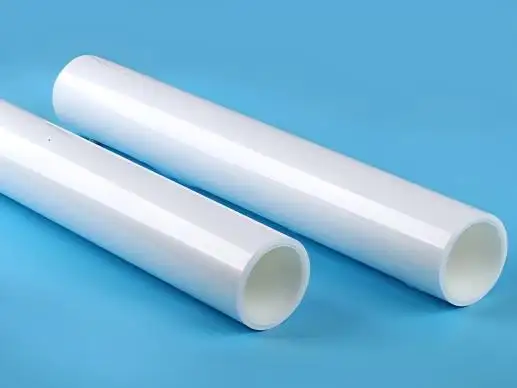
Cosmetic Lab Sticky Rollers are used to quickly and effectively eliminate dust, debris, and small particles in sensitive environments such as packaging areas, research and development laboratories, and assembly lines. The functionality of sticky rollers is relatively simple. However, in 2026, buyers demands have changed, influenced by material science and user expectations. This article will describe Nabai's standard PP sticky roller and the shifts that have influenced these user expectations regarding functional design and performance.
What Are Cosmetic Lab Sticky Rollers Used For?
Cleanliness in a cosmetic lab is a fundamental requirement for ensuring the safety of the product and the accuracy of the tests. Sticky Rollers are used to clean workbenches, the outsides of equipment, cleanroom packaging films, and inspection tools. Sticky rollers use a pressure-sensitive adhesive pull system, as in contrast to traditional brushes or wipes, sticky rollers pull the debris without scattering.
Common applications include:
•Preparing surfaces for microbiological testing: removing background dust reduces false positives.
•Cleaning the lab balance enclosures: powdery debris is captured without distribution.
•Maintaining printing and labeling zones: loose debris is captured as labels or cartons.
Existing Constraints Leading to Change
The previous generation of cosmetic lab sticky rollers had two significant limitations. One was the shedding of fibers from the surface of the roller. The second was a lack of confidence in the consistency of adhesive strength across the entire roll. White flakes could be found left behind after rolling, or the roller would fail to pick up talc-like powders.
By 2026, labs will look for rollers that:
•Never lose material retained in the cleaning process.
•Adhere to both smooth and slightly rough surfaces.
•Exhibit consistent strength of adhesion across the entire roll.
•Nabai's Standard PP Sticky Roller: An Evaluative Study
To manufacture its standard PP sticky roller, Nabai uses high-purity polypropylene film, enabling low particle shedding. The adhesive layer is uniformly coated acrylic pressure-sensitive adhesive, which transfers little if any residue. This design achieves the tradeoff between the particle pickup stability and surface safety.
Key technical features include:
•Low-lint PP surface: polypropylene material reduces fiber residue from the repeated cleaning pass.
•Reliable dust pickup: adhesive captures very fine dust particles (in the order of microns) from tools and flat surfaces.
•Smooth rolling operation: roller structures support even movement across flat lab space without skipping and sticking.
Incorporating these properties into the roller makes Nabai's Standard PP Sticky Roller highly effective and useful for cleanrooms, assembly (including electronics assembly), printing, packaging, and specialized tasks where precision and cleaning are important as they serve to reduce or control contamination.
How Nabai's Design Empowers the 2026 Trends
Procurement managers look for things, beyond the basic function, such as material traceability, dimensional compatibility, and reduction of waste. Nabai combines these elements through documented specifications and flexible options.
Material transparency:
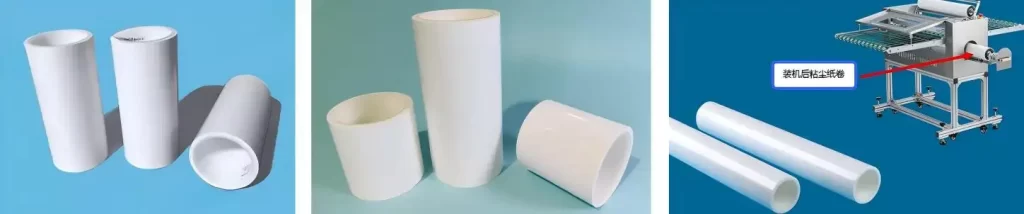
•Each roll specifies base material (PP), type of adhesive (acrylic), and the core (cardboard with 3-inch diameter).
•Available colors: white (high visibility of captured contaminants) and blue (standard industrial choice).
Customizable sizing to reduce waste:
•Widths from 650 mm to 2000 mm in 100 mm increments.
•Lengths: standard 20 m, with custom options.
•Inner core sizes: 38 mm, 51 mm, 76 mm, 40 mm, 25.4 mm to fit different dispenser holders.
Consistent adhesive strength range:
• Adhesion rated from 200 g/25mm to 1500 g/25mm, offering labs the choice of lower tack options for delicate surfaces, or higher tack for coarse clean room flooring.
Application Guidance Without Overpromising
Users can ensure predictably successful outcomes by simply following a series of steps:
1. Maintain the rolls. You need a tape holder to keep your roll of tape secure, neat, and easy to access.
2. Show placement. Mark where the lines should begin and end with tape. Mark section breaks with tape. Cut the tape or use a tape cutter when one is present.
3. Adhere. Continue to adhere the tape to the surface and skyline. Move along the surface, overlapping edges until all the surface adhesive is filled.
4. Dispose excess tape as required. This roller can be used along with a silicone sticky roller to initially remove larger debris.
No special training is necessary, and no special storage conditions apply. However, keeping the rolls away from direct heat and humidity can extend their safe usage period.
Performance Data That Support Daily Decisions
When making purchasing decisions, procurement teams like numbers for easy comparison. Nabai's standard PP sticky roller offers the following:
•Thickness: 80 µm (standard). A balance of durability and conformability.
•Adhesion range: 200D–1500D (values in grams per 25 mm width).
•Inner core compatibility: Fits virtually all industrial-sized mandrels and handheld rollers.
These values are the same all along a roll, which means the first sheet and the last sheet perform the same.
Why will buyers in 2026 use this approach?
Instead of focusing on wild promises like “zero particle” or “infinite tack”, Nabai focuses on behaviors that can actually reproduce results and align lab managers purchasing habits on:
•Achievable and replicable low-lint performance over absolute performance measures and claims.
•Suitability and compatibility in existing systems.
•Seamless implementation within ISO 14644-1 cleanrooms or GMP cosmetic manufacturing spaces.
Takeaway Points for Cosmetic Labs
Prioritize the following logics when optmizing the sticky rollers in your cosmetic lab for 2026:
•Roller material: polypropylene will yield a lower fiber release in comparison to cheaper alternatives.
•Adhesive Type: in many cosmetic industries, natural rubber adhesives will yield a greater residue.
•Width Availability: roller width that is equivalent to your surface of work will minimize sheet waste.
•Core Size: Ensure your current rollers and or dispensers' handles will fit.
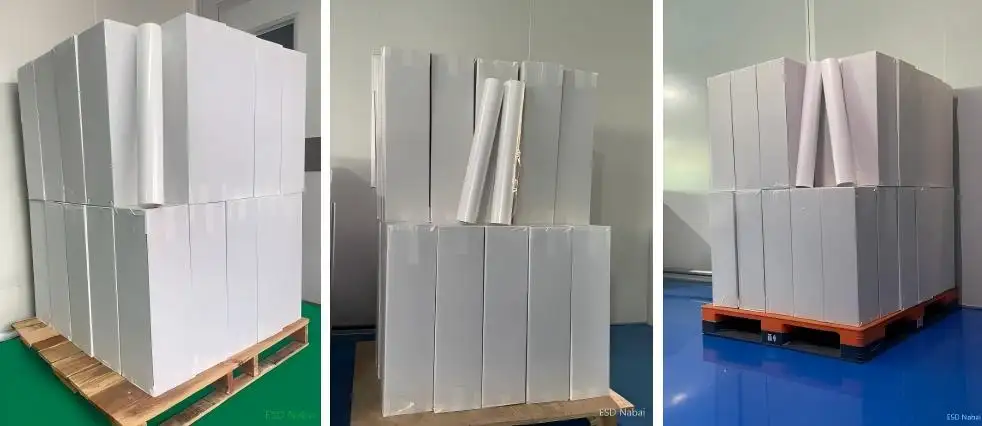
Nabai's standard PP sticky roller comes in various widths, core sizes, and multiple colors. It is manufactured with custom process control and dimensions can be processed for particular lab layouts.
Last Word
Sticky roller design need flexibility and a broad range of materials that lab decontamination protocols demand. As a solution standard Nabai's sticky rollers have lab needs at their core: low and stable adhesive pickup, size, and control. Potential design for cleanrooms.Nabai's approach to 2026 will be contamination control.
Frequently Asked Questions (FAQ)
Q: Can I reuse Cosmetic Lab Sticky Rollers?
A: No, each sheet can only be used once because of cross-contamination. After gathering debris, the sheet can lose adhesive and even redeposit the collected debris.
Q: Can Nabai's PP Sticky Rollers work with silicon rollers?
A: Yes, the PP sticky roller can work both alone and with the silicone rollers. The PP Roller is ideal for smaller particles. Silicone Rollers work better with bigger debris.
Q: How long do these Rollers last?
A: When kept in original product packaging and stored away from heat, moisture, and sunlight, the adhesive can last up to two years.
Q: Do you provide samples before bulk orders are confirmed?
A: Nabai sends out sample rolls for design confirmation and do this free of charge. To order, please email your desired width and core size to the sales team.
Q: Will these rollers work on surfaces that are uneven and/or curved?
A: The rollers work on mostly flat surfaces and can also work on slightly textured surfaces, too. For uneven surfaces that are also curved, try Handheld Sticky Rollers or adhesive wipes for cleaning.
NEWS
GET SERVICE
With quality parts to meet every budget and friendly staff trained to make your visit informative and hassle free.