
Disposable Sticky Mat: Guide, Applications, and How to Choose the Right Contamination Control Solution

Disposable Sticky Mat: Guide, Applications, and How to Choose the Right Contamination Control Solution
Disposable sticky mats are standard equipment for contamination control in cleanrooms, laboratories, electronics manufacturing, healthcare facilities, and construction sites. As regulatory standards tighten, more organizations use them as a frontline defense at entry points.
This guide covers what disposable sticky mats are, how they work, where they're used, current market trends, and how to choose the right product for your needs. It's intended for facility managers, quality managers, EHS professionals, cleanroom operators, and contractors who need practical information rather than marketing claims.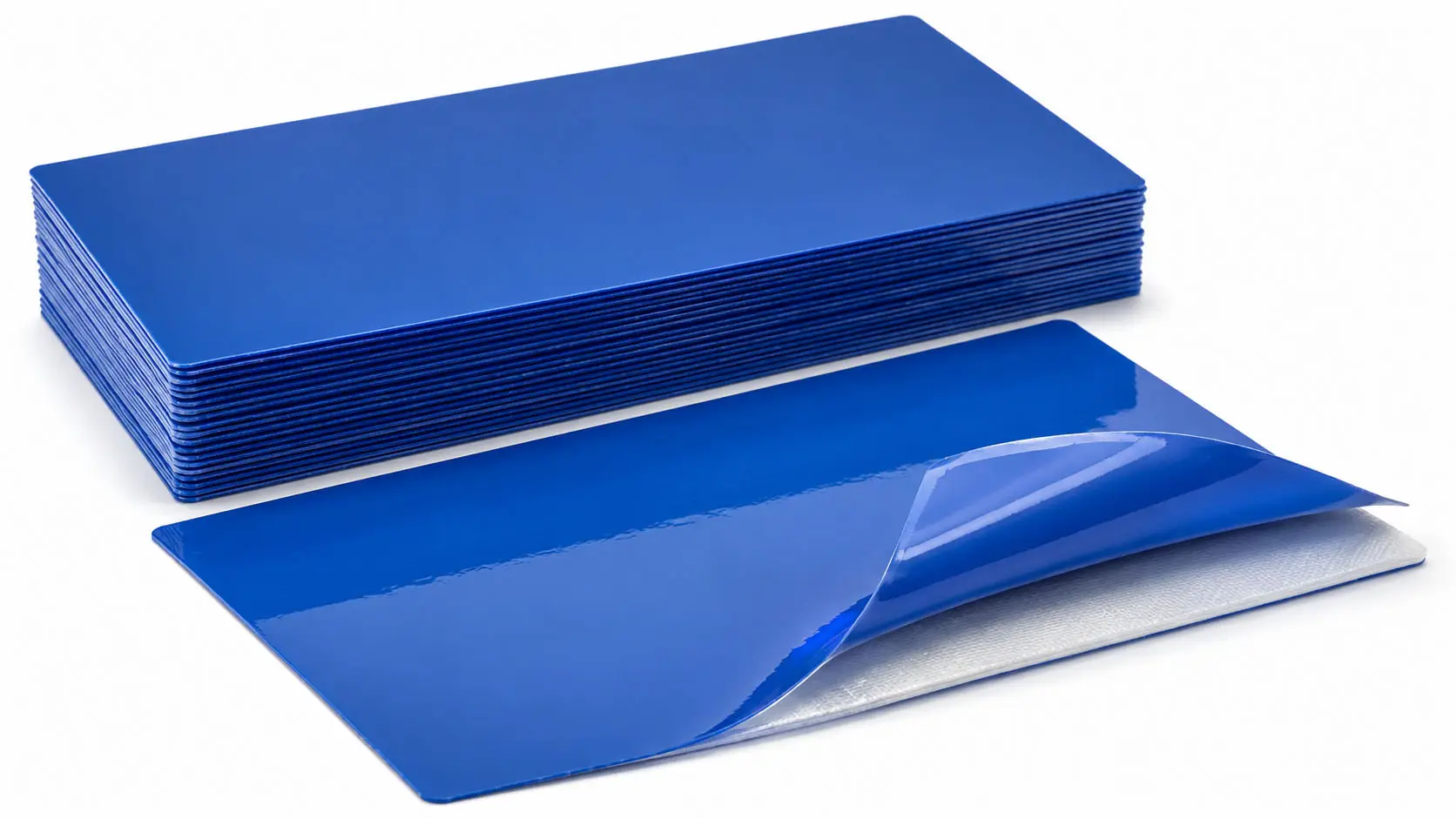
What Is a Disposable Sticky Mat?
A disposable sticky mat (also called a tacky mat, adhesive mat, or contamination control mat) consists of multiple peel-off adhesive film layers stacked on a thin backing. You place it at entrances to controlled environments to remove dirt, dust, and particles from shoe soles, trolley wheels, and equipment wheels.
Each layer has pressure-sensitive adhesive. When the top layer looks soiled, you peel it away to expose a fresh layer underneath. You discard the entire pad once all layers are used.
Key characteristics:
- Multi-layer construction: Most pads have 30–60 layers.
- Pressure-sensitive adhesive: Captures particles without leaving residue on footwear.
- Low profile: Thin enough to avoid trip hazards and work with trolleys.
- Disposable: Replace the entire pad when layers are depleted, ensuring consistent performance.
Why Sticky Mats Matter Now
Tighter Quality and Cleanliness Standards
Industries are raising cleanliness requirements across sectors:
- Semiconductors and electronics: Smaller components are more sensitive to dust and micro-contaminants.
- Pharma and biotech: GMP and cleanroom standards push facilities to improve entry control.
- Healthcare and labs: Infection control and cross-contamination prevention remain priorities.
- Food processing: Foreign body prevention and hygienic design requirements drive adoption.
Sticky mats provide an affordable way to strengthen contamination control at the critical entry point.
Supply Chain and Construction Drivers
Market factors are also fueling growth:
- Facility upgrades and retrofits: Companies use sticky mats to limit dust when modernizing existing spaces.
- Hybrid and mixed-use buildings: Offices with embedded labs or production areas rely on mats at shared corridors and elevators to separate clean zones.
- Micro-dust awareness: Even high-end residential and commercial projects now specify sticky mats to protect finishes and air quality.
How Disposable Sticky Mats Work
Contamination Capture Process
- Surface contact: As people walk or carts roll across the mat, the adhesive surface contacts shoe soles and wheels.
- Adhesive interaction: Pressure-sensitive adhesive captures dust, sand, lint, hair, and small debris.
- Particle retention: Contaminants stay locked on the surface and don't transfer to adjacent areas.
- Layer renewal: Once the top layer is visibly soiled, you peel it away to expose a clean layer and restore effectiveness.
Multi-Layer Advantages
Multi-layer pads outperform single-sheet or permanent adhesive surfaces:
- Consistent performance: Each new layer provides a fresh, full-strength adhesive surface.
- Easy inspection: You can clearly see when the top layer needs changing.
- Minimal downtime: Peeling a layer takes seconds with no tools or chemicals.
- Traceability: Numbered layers let you track usage frequency and optimize change intervals.
Types of Disposable Sticky Mats
By Material and Construction
Polyethylene film mats: The standard type. PE film layers with adhesive coating work in cleanrooms, manufacturing, healthcare, and construction.
Antimicrobial mats: Include antimicrobial agents in the surface or adhesive to inhibit bacterial growth. Common in healthcare and food environments.
ESD-safe or conductive mats: Designed for areas where electrostatic discharge control matters most, like electronics and semiconductor packaging.
By Design and Installation
Direct-adhesive mats: The entire pad sticks directly to the floor with no frame needed.
Mats with reusable frames: A disposable pad sits in a rigid plastic or metal frame that holds it in place and improves aesthetics.
Custom-sized mats: Suppliers can cut mats for oversized doorways, long corridors, or specific equipment paths.
Core Benefits
Improved Contamination Control
Sticky mats significantly reduce particulate entering controlled zones. They limit dust and dirt ingress, reduce cleaning frequency inside cleanrooms, and support compliance with cleanroom classifications and internal standards.
Cost-Effectiveness
Compared to air showers, vestibules, or architectural modifications, sticky mats require minimal upfront investment, can be trialed at multiple locations before committing to bigger solutions, and offer predictable consumable costs based on traffic.
Easy Installation and Operation
No power connection or complex setup required. Mats can be placed quickly at doors, corridors, or temporary partitions. Maintenance is just layer removal and occasional pad replacement.
Flexibility for Temporary Spaces
For projects with temporary clean areas or changing workflows, mats can be repositioned without construction. They're ideal for renovations and seasonal production peaks.
Common Applications
Cleanrooms and Controlled Environments
Sticky mats go at cleanroom entrances, airlocks, gowning rooms, and transitions between cleanliness zones. They're widely used in pharma, medical device manufacturing, microelectronics, and optics.
Laboratories and Healthcare
In labs and hospitals, mats minimize cross-contamination between areas, reduce debris near specimen zones, and support infection prevention. They're placed at lab entrances, isolation units, and sterile processing departments.
Electronics, Optics, and High-Tech Manufacturing
Dust on PCBs, components, or lenses causes failures or defects. Sticky mats at work area entrances, tool storage, and supply rooms reduce particle load. Some facilities combine ESD flooring with ESD-compatible mats.
Food Processing and Packaging
Mats prevent dirt and foreign particles from entering production rooms. They're placed before transitions from non-production corridors to production areas and complement hygiene stations and boot wash systems.
Construction, Renovation, and Fit-Out
Construction is a growing segment. Mats protect finished or nearly finished flooring and surfaces, reduce dust transfer between floors, and satisfy client expectations in high-end projects. Contractors value them for simplicity and impact on punch-list performance.
Choosing the Right Disposable Sticky Mat
Size and Coverage Area
The mat should cover the full doorway width plus extra length so each foot takes several steps on it. Common sizes include 18"×36", 24"×36", and 26"×45", with custom options available. Aim for at least two full steps per foot for optimal contamination removal.
Number of Layers
30-layer mats suit moderate-traffic areas. 60-layer mats work for high-traffic entrances or when you want fewer replacements. Assess your usage: high traffic warrants more layers or more frequent changes; strict hygiene standards may call for fewer layers but changed more often.
Adhesive Strength and Residue
Adhesive strength affects contamination capture and user experience. Too weak means insufficient removal; too strong risks residue on shoes or difficulty moving carts. Look for balanced tack suited to your environment and tested performance that doesn't leave residue.
Surface Color and Visibility
White mats make dust and darker debris highly visible, useful in cleanrooms and labs for easy inspection. Blue mats offer a professional appearance and good contrast in healthcare and electronics. Clear or neutral mats minimize visual impact in spaces where floor markings must show through.
Antimicrobial and ESD Options
Consider antimicrobial mats in healthcare, food, or high-risk lab environments. Choose ESD-safe mats in electronics assembly and semiconductor areas with strict static control requirements.
Compliance and Cleanroom Compatibility
For regulated environments, verify compatibility with your ISO class or internal cleanliness categories. Ask suppliers for documentation on outgassing, particle shedding, and material safety. Ensure disposal aligns with your environmental policies.
Best Practices
Optimal Placement
Install mats at all primary entry points to controlled areas. Consider placing them at intermediate transitions between zones with different cleanliness levels. Ensure the mat sits on a clean, dry, smooth surface for effective adhesion.
Layer Change Frequency
Base initial change frequency on traffic and visual inspection, such as after every shift or when 30–50% of the surface looks soiled. Use numbered layers to track usage and optimize schedules. In high-risk areas, change layers more often.
Training and Signage
Teach staff to walk across the full mat and not step over it. Use simple floor or wall signs to explain the mat's purpose. For trolley and cart traffic, ensure the mat covers the wheel path.
Integration With Other Controls
Sticky mats work best as part of a broader program. Combine them with gowning protocols, shoe covers, and hand hygiene where appropriate. Use them alongside HEPA filtration, air showers, or pressure differentials in high-grade cleanrooms. On construction sites, combine mats with temporary barriers, negative air machines, and regular cleaning.
Market Trends
Growing Demand and Innovation
Recent trends show steady growth driven by pharma and electronics expansion. Construction and facility management adoption is rising, especially during renovations. Products are improving with better adhesive formulations, enhanced antimicrobial properties, and reduced VOCs.
Sustainability Focus
Because mats are consumable, sustainability is increasingly important. Organizations are reviewing usage patterns to avoid waste and optimizing layer change frequency based on measured contamination rather than fixed schedules. Vendors are exploring sustainable substrates and adhesives plus more compact packaging.
The most practical steps today are to use mats where they provide real contamination control, avoid over-deployment, and train staff to maximize each layer's life while maintaining safety.
Selecting a Supplier
Performance and Consistency
Test samples in your facility to confirm adhesion, residue behavior, and durability. Check for consistent quality across batches.
Range of Sizes and Options
Confirm availability of sizes for all entrances. Determine whether you need antimicrobial or ESD-safe options for specific zones.
Support and Documentation
Look for clear usage guidance, technical data sheets, and test reports where available. Ensure materials are compatible with your cleaning and disinfection products.
Total Cost of Ownership
Total cost includes cost per pad, layers per pad, change frequency and labor, and impact on cleaning and contamination incidents. A slightly more expensive mat that captures more contamination or requires fewer changes can reduce overall costs in high-traffic areas.
Who Should Use Disposable Sticky Mats
Sticky mats are valuable for facility and operations managers running cleanrooms or controlled environments, quality and regulatory managers in pharma and medical device production, electronics and optics manufacturers protecting sensitive components, healthcare infection prevention teams, construction contractors working in operational facilities, and property managers concerned with finishes and air quality.
If your operations involve sensitive products, strict cleanliness standards, or clients who demand high environmental quality, disposable sticky mats are likely a cost-effective component of your contamination control strategy.
Implementation Checklist
- Map critical entry points: Identify all doors, corridors, and transitions leading into sensitive zones.
- Define performance requirements: Cleanroom class, regulatory requirements, or internal standards.
- Select mat types and sizes: Choose layer count, adhesive strength, color, and special features.
- Pilot in key locations: Install mats at a limited number of entrances and monitor contamination, feedback, and durability.
- Set change protocols: Define when layers are changed, who is responsible, and how usage is documented.
- Train staff and deploy signage: Ensure staff understand the purpose and correct use of mats.
- Review and optimize: After an initial period, adjust change frequency, sizes, or placement based on real-world data.
Conclusion
Disposable sticky mats are a proven, flexible, and low-cost way to strengthen contamination control at critical thresholds. When properly selected and used, they reduce particulate transfer into clean areas, support regulatory compliance, protect products and finishes, and adapt to both permanent facilities and temporary projects.
To maximize value, treat mats as part of an integrated contamination control system. Choose products that match your traffic, cleanliness requirements, and industry needs, then support them with clear procedures and regular review. If your organization is evaluating contamination control options, using sticky mats at strategic entry points is a practical step that delivers measurable improvements in cleanliness and quality with modest investment.
NEWS
GET SERVICE
With quality parts to meet every budget and friendly staff trained to make your visit informative and hassle free.