
esd materials

esd materials
In today's electronics world, where the systems are increasingly electronics-driven, it is even more critical to protect sensitive components from electrostatic discharge (ESD). ESD materials are essential for preventing costly damage to products that are created by static electricity, from semiconductor manufacturing to medical equipment, automotive electronics to data centers.
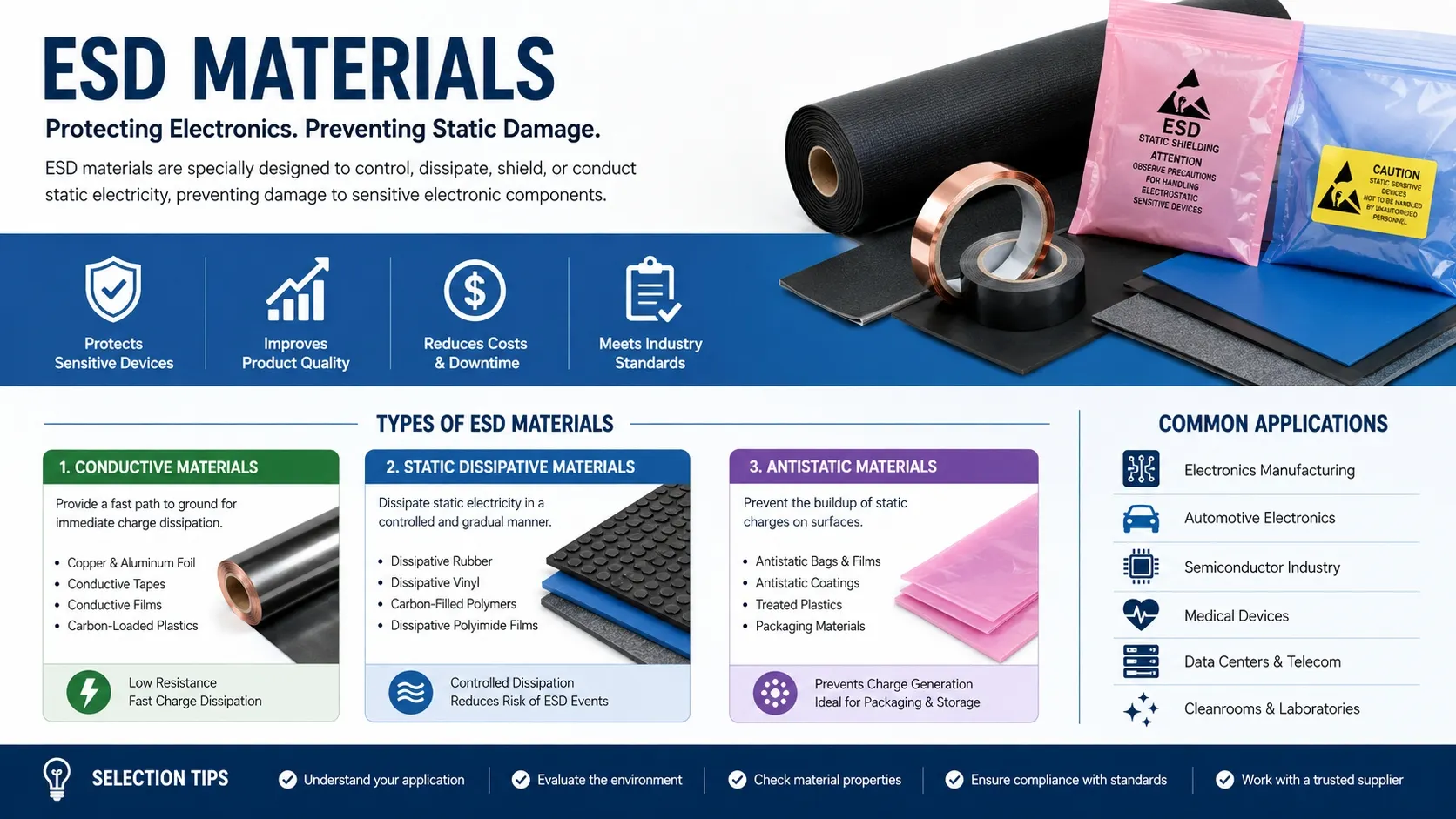
Electronic failures are often not seen as damage can occur without any obvious physical damage to the product, so ESD protection must be taken into account during product design, manufacture, packaging and transport. Knowing the various types of ESD materials can assist engineers, manufacturers and procurement teams in choosing the right material for a specific application.
What Are ESD Materials?
ESD Materials are a class of materials that are specifically designed to control, dissipate, shield or conduct static electricity. They are mainly used as a safeguard against the possible occurrence of sudden electrical discharge that can cause harm to delicate electronic devices and components. In fact, ESD protection is particularly crucial in industries where even the most minor electrical spark may lead to equipment failure or pose safety risks.
Static electricity is always created whenever two materials touch and then they are pulled apart. This stored charge may, then, be released between objects, causing an electrostatic discharge. ESD materials can control this buildup of charge and help prevent damage to electronic systems.
Why ESD Protection Matters
Modern electronic components are going smaller and smaller, as well as getting more sensitive. A leak is too small to cause harm to a human but it can ruin microchips, circuit boards and other electronic assemblies. ESD protection benefits manufacturers by:
- Reduce product failures
- Improve production yields
- Protect sensitive electronic devices
- Enhance workplace safety
- Maintain compliance with industry standards
- Minimize warranty claims and repair costs
Industries that commonly use ESD-safe materials include:
- Electronics manufacturing
- Aerospace
- Automotive
- Telecommunications
- Medical devices
- Semiconductor fabrication
- Cleanroom operations
- Data centers
Main Categories of ESD Materials
ESD materials generally fall into three primary classifications: conductive, dissipative, and antistatic.
1. Conductive ESD Materials
The conductive material is the quickest way to get electrical charges on ground. Their electrical resistance is very low and they are frequently used in grounding. Conductive materials are able to transport electrons over the surface or through the bulk of the material.
Some common conductive ESD materials include:
- Copper foil
- Aluminum foil
- Conductive tapes
- Conductive polyimide films
- Carbon-loaded plastics
- Metalized films
Advantages
- Excellent grounding performance
- Fast charge dissipation
- High conductivity
- Effective EMI shielding
Typical Applications
- Grounding systems
- Shielding enclosures
- Circuit board manufacturing
- Electronic packaging
- Automotive electronics
2. Static Dissipative Materials
Static dissipative materials are the materials that allow controlled discharge of electrical charges. These materials release static energy slowly, instead of all at once, which decreases the likelihood of a sudden discharge event. This controlled behaviour renders dissipative materials to be one of the most commonly used type of ESD protection materials.
Examples include:
- ESD-safe rubber
- Dissipative vinyl
- Carbon-filled polymers
- Dissipative polyimide films
- Specialized engineering plastics
Advantages
- Controlled charge dissipation
- Reduced risk of damaging discharges
- Durable performance
- Suitable for repeated use
Typical Applications
- ESD flooring
- Workstation mats
- Equipment housings
- Storage containers
- Manufacturing fixtures
Dissipative flooring systems and mats are used by many cleanrooms and electronics assembly facilities to safely dissipate static charges away from personnel and sensitive electronics.
3. Antistatic Materials
The antistatic materials are those which are meant to reduce the static charge generation which is not conducted through them. These materials have a high resistance to the build-up of static electricity from rubbing, sliding or touching surfaces.
Antistatic materials that are commonly used are:
- Antistatic polyethylene films
- Antistatic bags
- Antistatic coatings
- Treated plastics
- Packaging materials
Advantages
- Prevent charge buildup
- Lightweight and economical
- Ideal for packaging applications
- Easy integration into manufacturing processes
Typical Applications
- Electronic packaging
- Component shipping
- Protective bags
- Storage containers
- Cleanroom supplies
Common ESD Material Properties
A number of performance attributes should be taken into account when assessing ESD-safe materials.
Surface Resistivity
Surface resistivity is the property of a surface that is determined by its ability to conduct an electric current. It is usually quoted in terms of ohms per square (Ω/sq). The smaller the resistivity, the higher the conductivity.
Charge Decay
The rate that a material clears away an electric charge is called charge decay. Shorter charge decay can help to prevent static buildup.
Shielding Effectiveness
Certain ESD materials offer electro-static shielding to stop exposure to external electrical fields from affecting the sensitive electronics. Materials used for electronic packaging and enclosures are typically shielded materials.
Environmental Stability
ESD performance can be affected by humidity, temperature and contamination. High quality materials have the same electrical characteristics in different environments.
Popular ESD Material Applications
Electronics Manufacturing
ESD mats, grounding systems, tapes and workstation surfaces are used in printed circuit board assembly plants to protect sensitive components on the assembly line.
Medical Equipment
In the medical imaging field, monitoring systems and diagnostic equipment should use materials that are resistant to ESD to guarantee the proper functioning of the device.
Automotive Electronics
Modern cars have dozens of electronic control units (ECUs), sensors, and communication systems which can benefit from ESD protection during manufacture and use.
Semiconductor Production
Extensive ESD control programs are needed in semiconductor fabrication areas, which involve special flooring, garments, packaging, and workstation materials.
Cleanrooms
ESD flooring, sticky mats, dissipative work surfaces and designed garments are examples of contamination and static control measures that are used together in the cleanroom.
How to Choose the Right ESD Material
Selecting the best ESD material depends on several factors:
Understand the Application
Determine whether you need grounding, shielding, dissipation, or charge prevention. Different applications require different ESD performance levels.
Consider Additional Functional Requirements
Many ESD materials serve multiple purposes, such as:
- Thermal management
- Sealing
- Cushioning
- EMI shielding
- Vibration reduction
A material may need to perform several functions simultaneously.
Evaluate Environmental Conditions
Consider exposure to:
- Temperature extremes
- Humidity
- Chemicals
- UV light
- Mechanical stress
Review Industry Standards
Verify compliance with relevant ESD standards and testing requirements for your industry.
Where to Source ESD Materials
ESD materials can be obtained from distributors, manufacturers and material converters. Minor amounts may be obtained from special suppliers or perhaps larger projects may profit from engaging directly with manufacturers or perhaps custom converters. Precision die-cutting, laminating and adhesive integration, as well as application-specific material solutions, can be offered by custom converting services.
Final Thoughts
Despite the ongoing advancement and sensitiveness of electronics products, ESD protection is still a vital component of product reliability and safety. Each of these materials offer benefits to conductive, dissipative and antistatic applications. This information enables businesses to develop and apply effective ESD control measures that minimize failures, ensure product quality and safeguard valuable electronic assets.
From creating medical devices to producing semiconductors, building automotive electronics, to managing a cleanroom facility, the choice of ESD material can impact the performance of the product and its success in the marketplace.
NEWS
GET SERVICE
With quality parts to meet every budget and friendly staff trained to make your visit informative and hassle free.