
How Sticky Paper Pads Remove Dust | Cleanroom Dust Control Guide

How Sticky Paper Pads Remove Dust | Cleanroom Dust Control Guide
What are Sticky Paper Pads and Why are they Important
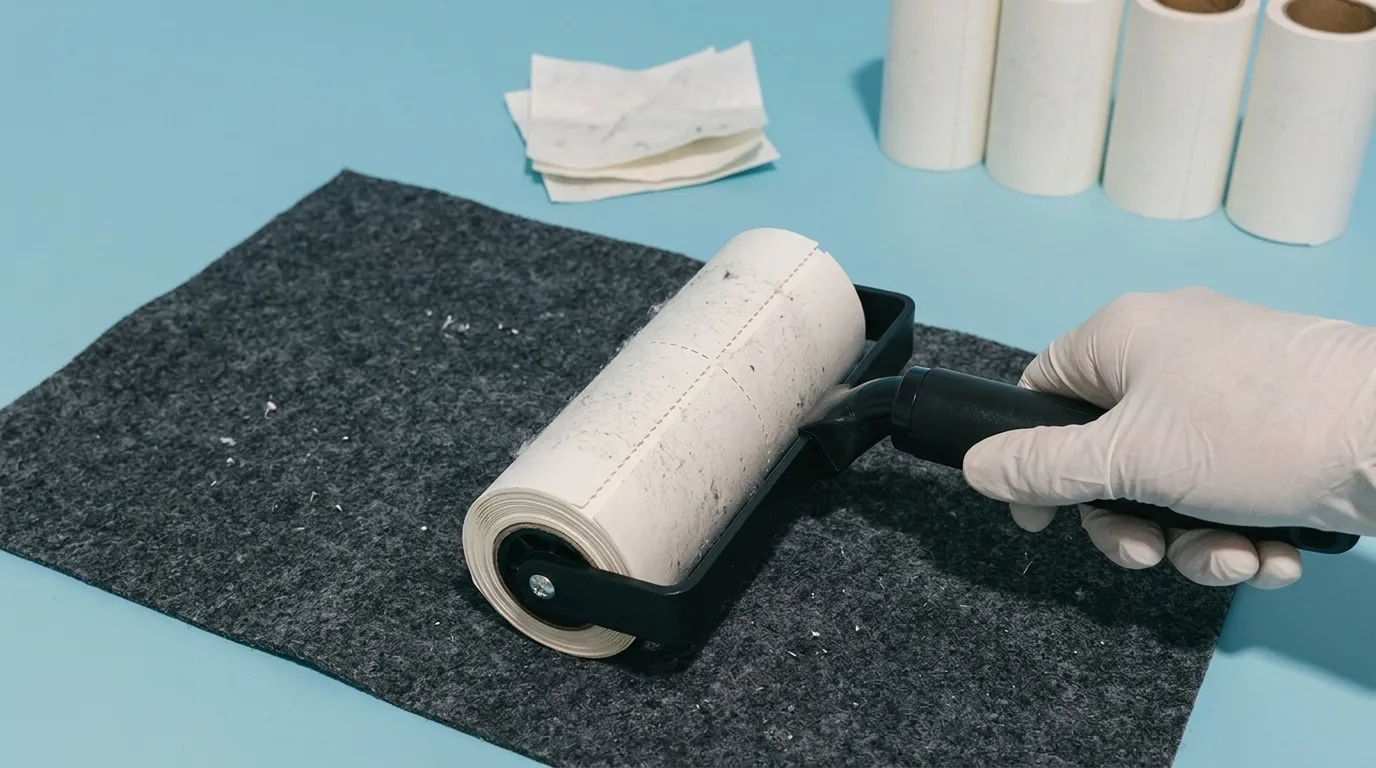
Sticky pads are sticky sheets that are utilized to eliminate dust and particles. They are also known as dust removal pads, adhesive dust pads, and tacky paper pads. The pads are prepared using a pressure-sensitive adhesive layer. This layer captures dust as surfaces come in contact with it. No water, no chemicals, no rough rubbing is necessary.
Their applications are wide in:
- Cleanrooms and labs
- Electronics assembly areas
- Lines of printing and packaging.
- Hospitals and pharmaceutical departments.
Simply put, sticky paper pads are dust magnets on surfaces.
Guide to Cleaning Surfaces: How Sticky Paper Pads Clean Surfaces
At first sight, dust does not seem harmful. But in sanitary places, it brings real troubles. It has the potential to destroy electronics, ruin lab work, and decrease the quality of products. Sticky paper pads come in here. They are easy to use yet very efficient dust removal tools that use adhesive surface control.
This guide explains how sticky paper pads remove dust, and why industries use them to manage contamination. You will also get to know the technical aspect of their dust trapping power.
Mechanism of Removing Dust on Surfaces by Sticky Paper Pads
The science we should study in order to understand how dust is removed by sticky pads of paper is particle adhesion science. The dust is removed through a mixture of adhesive force and physical contact:
1. Particle Contact
Dust particles are in direct contact with the adhesive layer when a surface is in contact with the pad.
2. Adhesion Force Activation
The pad is founded on pressure-sensitive adhesive. This sticky layer forms a feeble bond to particles.
3. Particle Capture
The surface is covered with dust, lint, and micro debris. This is referred to as particle capture or dust trapping technology.
4. Locking Effect
The particles become trapped and are confined in the adhesive layer. They do not go back to the air. This is referred to as the dust adhesion process in the science of industrial cleaning.
Technical Construction in the Back of Dust Removal Pads
High-quality paper pads that are sticky entail quality material engineering. One such example is the PE self-adhesive sticky paper by Nabai. Core construction includes:
- Base material: PE film of high density.
- Adhesive layer: Acrylic pressure-sensitive adhesive.
- Binding edge: Glue binding to peel off sheets.
- Backing layer: Cardboard to hold it in place.
Key technical properties:
- Little shedding of surface particles.
- Non-transfer adhesive layer
- Residue-free cleaning performance
- Constant particle retention system.
This construction enhances the control of contamination of the surface and the dispersion of particles into the air.
Why Sticky Paper Pads are So Effective in Dust Control
In most settings, sticky paper pads are more effective than dry cloth or regular wipes. Here is why:
- Excellent particle adhesion.
- Fine dust is picked up without extra effort on the sticky surface.
- Non-abrasive cleaning
- No scratching on delicate surfaces such as glass or PCB boards.
- Removal of fine dust ability.
- Micro dusts are easily trapped even at the micro level.
- Support for the control of airborne particles.
- They reduce the resettling of dust in the air.
- Static-free dust collection
Anti-static behavior is supported in some pads to minimize the attraction of particles due to the presence of a static charge. These characteristics render them cleanroom dust control and industrial hygiene solutions.
Sticky Dust Removal Pads are Applicable in Industries
In numerous technical settings where hygiene is important, sticky paper pads are employed.
- PCB assembly and electronics.
- Eliminates micro dust boards.
- Removes the possibility of short-circuiting.
- Encourages environmentally friendly cleaning.
- Cleanrooms and labs
- Controls particulate contamination
- Maintains sterility in the workplace.
- Applied to the contamination control pads system.
- Pharmaceutical production
Benefits of Dust Cleaning Using Adhesive Paper Pads
Sticky paper pads have numerous practical benefits:
- Intuitive and user-friendly.
- No cleaning of chemicals needed.
- Classify as sensitive documents.
- Cost-effective dust control solution
- Improves workplace hygiene
- Supports contamination prevention
They are usually cleanroom consumables due to their reliability and convenience.
Nabai PE Self-Sticky Paper: Technical Insight
PE sticky paper by Nabai is used to control dust. Material advantages:
- PE surface low in lintel decreases fiber residue.
- Humid conditions are enabled by moisture resistance.
- Oil resistance enhances the stability of use in industries.
- Sensitive surfaces are covered with a smooth structure.
Adhesive performance:
- Even acrylic pressure-sensitive adhesive.
- Non-transferring and residue-free
- Good particle retention system.
This makes it a good solution for dust trapping sticky paper pads, and contamination control pads.
The Use of Sticky Paper Pad
Sticky pads are easy to use, however, with the proper technique:
- Gently peel off the top sheet.
- Lightly press on the adhesive layer.
- Take away dust particles.
- Repeat with a new sheet as necessary.
Use not excessive force. It is able to lower adhesive life.
Conclusion
How do sticky paper pads remove dust? Sticky paper pads may look rather basic, but they solve a complex problem. They capture fine dust by intelligent adhesive science and controlled particle adhesion. This makes them a dependable cleanroom, electronics, lab, and industrial tool.
PE sticky paper by Nabai has a good performance, low lint, and a residue-free design when you need to keep a stable dust control and clean surface handling.
To be cleaner and have more control over contamination, select reliable solutions at Nabai ESD and maintain your working area dust-free.
NEWS
GET SERVICE
With quality parts to meet every budget and friendly staff trained to make your visit informative and hassle free.