
How to Clean Narrow Gaps in Cleanrooms | Precision Cleaning Guide

How to Clean Narrow Gaps in Cleanrooms | Precision Cleaning Guide
The Importance of Narrow Gap Cleaning in Cleanrooms
Cleanrooms are run under rigid cleaning rules of compliance with ISO-class cleanrooms. Even a small contamination in small spaces can spread due to air movement. Minor cracks are likely to be present:
• Micro-dust particles
• Fiber residues
• Electrostatic debris
• Invisible airborne contamination
These spaces are classified as micro-particle removal in confined spaces and must have high-precision cleanroom maintenance procedures to ensure stability. Industries such as semiconductor manufacturing and drug manufacturing cannot afford a minimal risk of contamination. This is the reason why cleaning procedures of a controlled environment are strictly followed.
Difficulties in Cleaning Small Cleanroom Areas
It is not that easy to clean narrow spaces as it is to wipe a surface. These are inaccessible places and delicate to disturbance. Common challenges include:
• Restricted access to micro gaps and corners
• Electrostatic charge attraction
• Danger of shedding of fibers because of inappropriate tools.
• Lack of visibility in deep crevices.
These problems require tight space cleaning methods in cleanrooms with the combination of ESD-safe cleaning methods and non-shedding tools. Even the speed of movement is important in sophisticated settings since uncontrolled movement may cause the spread of particles in laminar airflow systems.
Cleanroom Science Precision Gap Cleaning
You must know the behavior of contamination in order to learn the cleanroom precision gap cleaning process. Cleanrooms rely on:
• Control of laminar airflow contamination.
• HEPA vacuum cleaners.
• Controlled pressure gradients
• Efficiency of 0.3 microns in particle filtration.
This makes sure that airborne particle reduction methods are effective continuously. When cleaning small crevices, not only is the removal targeted, but also the prevention of re-contamination. It is here that surface decontamination in confined areas is necessary.
ESD control is also crucial. The static charges attract dust in the same way as a magnet, so electrostatic discharge (ESD) safe cleaning equipment in tight spaces is a trend in modern facilities.
Most Effective Cleaning of Narrow Slits in Cleanrooms
How to clean narrow gaps in cleanrooms? The following are effective cleanroom narrow gap cleaning techniques that are applied in industry:
1. Microfiber-Based Precision Wiping
Non-shedding material cleaning processes are done using lint-free microfiber cloths. They do not break up particles but retain them.
2. Vacuum Micro-Nozzle Extraction
Small-gap, special cleanroom vacuum nozzle removes deep-seated particles, controlled suction, and HEPA filtration.
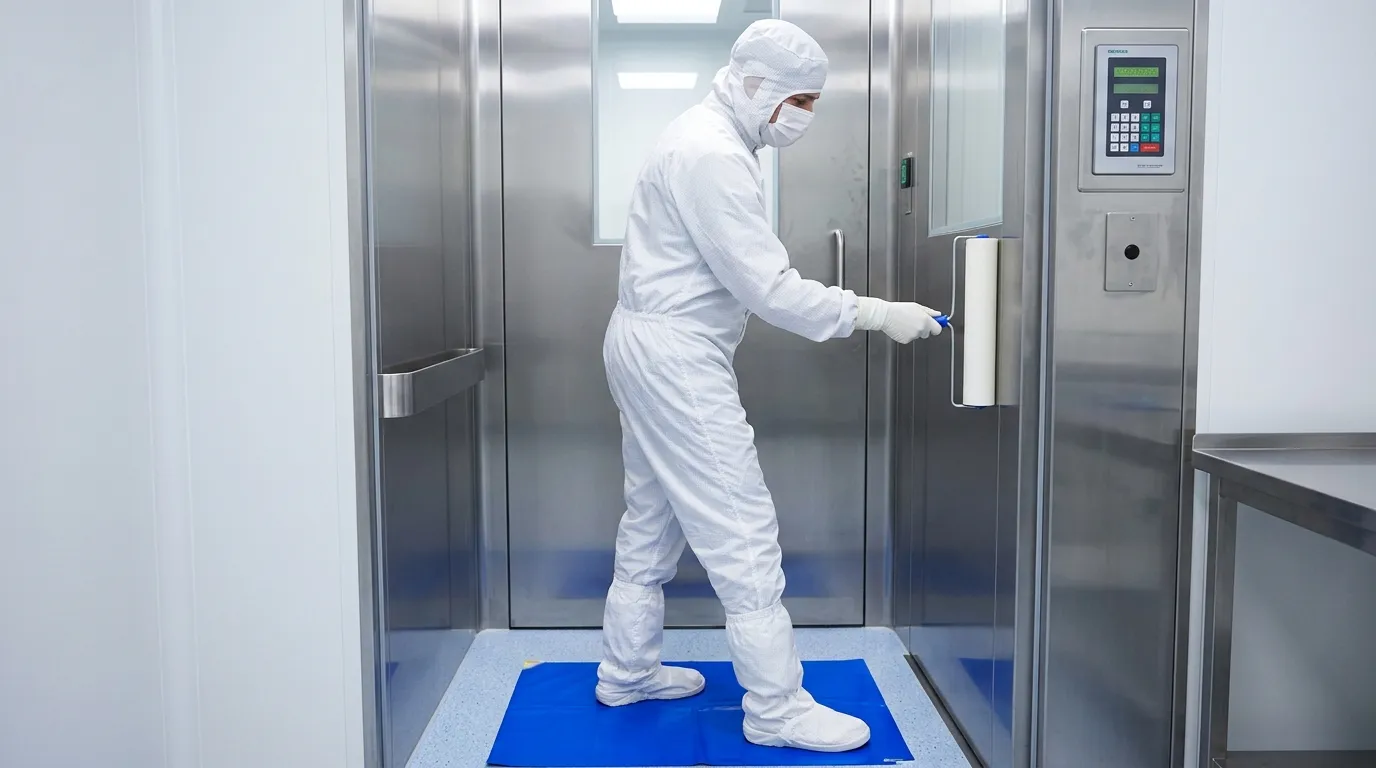
3. Sticky Roller Particle Capture
Fine dust with adhesive surface energy differences is picked up with a high precision sticky roller of cleanroom gaps.
4. Swab-Based Detail Cleaning
Cleaning swabs with narrow gaps are cleanroom swabs that are employed to clean tight corners and slits.
5. Anti-Static Dry Cleaning
Cleans narrow spaces with anti-static cleaning equipment to minimize the attraction of electrostatics and particle accumulation. A combination of these methods constitutes an entire micro-gap particle elimination procedure.
Cleaning Gap Tools Needed in Cleanrooms
The distinction between the success and failure of contamination is the utilization of the correct tools.
Cleanroom-Compatible Tools Include:
• Slim cleaning tools for the cleanroom.
• Cleanroom-compatible microfiber tools
• Cleanroom quality vacuum micro nozzles.
• Particle capture systems: Adhesive rollers.
• Anti-static cleaning machines that are precise.
They aid in precision in edge cleaning operations and offer secure cleaning without damaging delicate surfaces.
Step-by-Step Process: How to Clean Narrow Gaps in Cleanrooms
The systematic approach will ensure consistency and management of contamination.
Step 1: Cleanroom Preparation
Stabilize airflow and put on complete ESD-safe protective equipment. This is biased towards the surface cleaning methods of enclosed areas.
Step 2: Pre-Clean Inspection
Determine the contamination areas by use of visual or particle detectors.
Step 3: Dry Particles Removal
A HEPA vacuum or sticky roller is to be used in initial dust removal.
Step 4: Detailed Gap Cleaning
Use swabs and microfiber in tight crevices, cleaning methods in cleanrooms.
Step 5: Final Decontamination
Cleanse with a sterile, non-shedding substance.
Step 6: Verification
Check compliance with the level of cleanliness with particle counters.
This procedure ensures decontamination of hard-to-reach areas with minimal chances of contamination.
Narrow Gap Cleaning in Industry
The techniques are applied in various industries based on their sensitivity.
- Semiconductor Cleanrooms
Applied in the manufacturing of wafers and chip making. Needs semiconductor fabrication, cleanroom hygiene, and particle control.
- Pharmaceutical Cleanrooms
Provides sterile environments using pharmaceutical sterile environment cleaning procedures.
- Electronics Manufacturing
Expert in dust control systems in electronics assembly to protect micro-components.
- Medical Device Industry
Imposes cleanliness criteria of medical device manufacturing in terms of safety and compliance. All industries rely on the reliability of their products through wafer production contamination control.
Sticky Mats are Used in Cleanroom Contamination Control
One of the least considered but effective tools of contamination control is the cleanroom sticky mat. Sticky mats help in the removal of particles on the footwear and equipment before they are allowed into the controlled areas. This minimizes the contamination load prior to it even reaching small crevices.
Key benefits:
• Picks up dust particles on foot.
• Minimizes foreign contamination.
• Encourages ultra-clean surface hygiene management.
• Improves the control of particles in restricted access zones.
It is a small device that plays a significant role in the removal of contamination of clean rooms in small spaces by controlling dust at the ground level.
Cleanroom Gaps Cleaning: Best Practices
To maintain cleanliness in the long-term, follow the following rules:
• Always work with ESD safe tools.
• Avoid fiber-shedding materials
• Keep the airflow under control when cleaning.
• Follow ISO cleanroom guidelines.
• Wipe downwards, not upwards.
• Replace consumables regularly
The practices help in maintaining a high-tech manufacturing clean environment and reduce the risk of contamination.
Conclusion:
Training on how to clean narrow gaps in cleanrooms is not only focused on removing dust, but also protecting the accuracy, performance, and quality of production. Each micro-gap counts; each cleaning procedure is a part of the total contamination control.
With the help of the right tools and the designed workflow, which is supported by the precision contamination control in cleanrooms, you provide a safer and more reliable manufacturing area. To find high-tech cleanroom solutions, equipment, and contamination control products, visit Nabai ESD Cleanroom Solutions.
NEWS
GET SERVICE
With quality parts to meet every budget and friendly staff trained to make your visit informative and hassle free.