

how to make cricut mat sticky again

how to make cricut mat sticky again
The Cricut cutting machine has revolutionized the crafting world by empowering people to produce quality designs right from their homes. But, one thing that is a universal problem for all Cricut users is when a Cricut mat loses stickiness with time. If your mat is loose on materials, there will be inaccuracies in your cuts, materials will move within it while in use, and your project quality will not be up to standard.
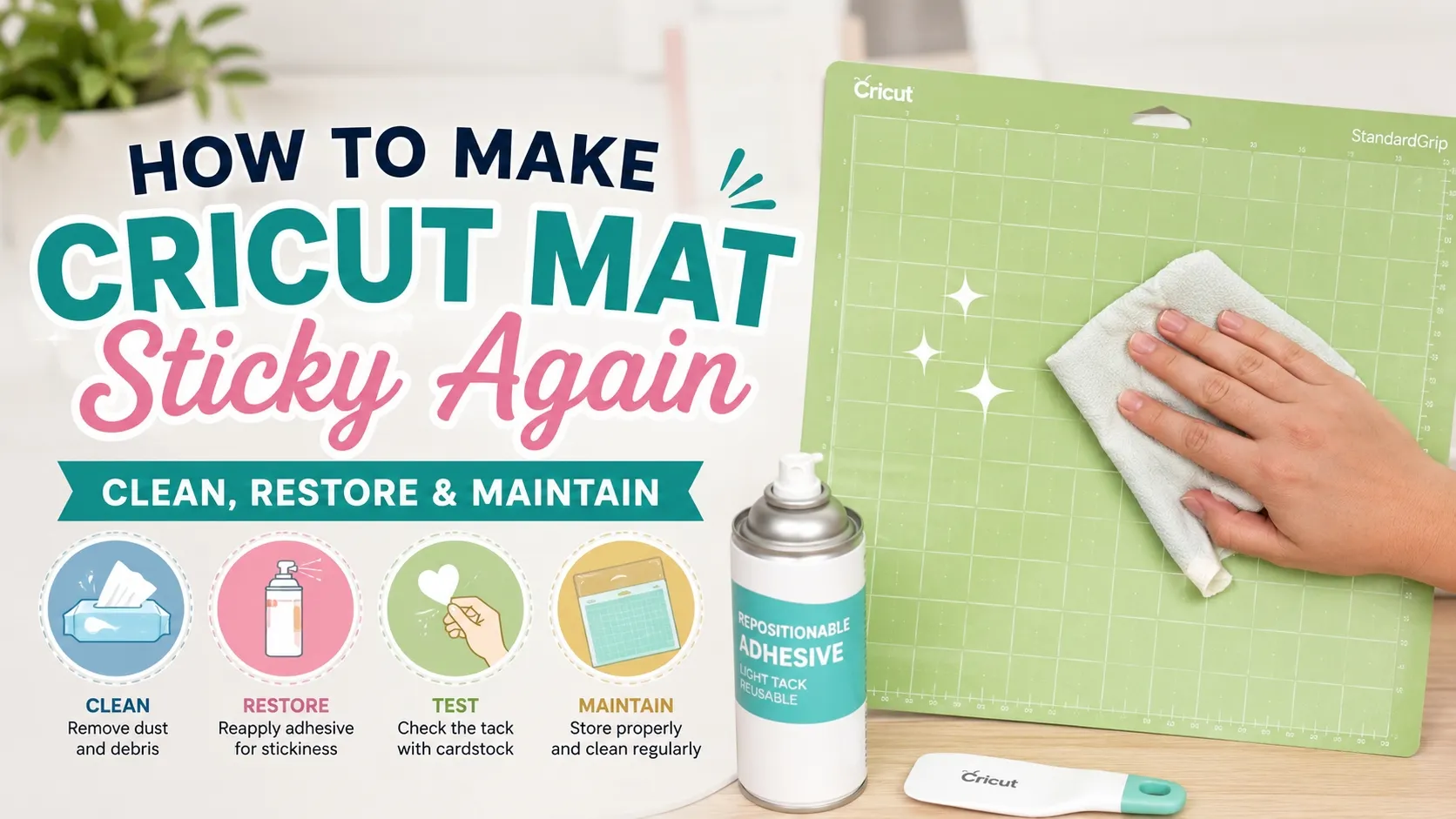
The good news is that it's not always necessary to replace your cricut mat. Becoming knowledgeable about how to stick a Cricut mat can save money, save time, and help with cutting and prolong its life. We're going to discuss why Cricut mats lose their grip, how to clean those mats, and the Cricut mat remedies that really work!
Why Cricut Mats Lose Their Stickiness
A Cricut mat is meant to be used over and over again and gets an adhesive surface that sticks to materials like vinyl, cardstock, paper, fabric, or specialty materials while they're being cut.
As the years go by, there are a number of things that can decrease the grip of the mat:
- Dust accumulation
- Paper fibers and fabric lint
- Finger oils and residue
- Frequent use
- Improper storage
- Exposure to humidity and heat
If you don't take care of your Cricut mat regularly, it can become tacky with time even if you get a high-quality one.
Signs Your Cricut Mat Needs Restoration
You may notice the following symptoms when your mat begins losing its stickiness:
- Materials slide during cutting
- Corners lift while cutting
- Intricate designs fail to cut properly
- Small pieces shift out of position
- Vinyl or cardstock does not stay flat
If these issues occur, cleaning and restoring the mat can often bring it back to usable condition.
Step 1: Clean Your Cricut Mat Thoroughly
If you wish to use another new adhesive, always clean the mat first. Users find that after cleaning they are able to use the product again with an acceptable stickiness.
Method 1: Baby Wipes
Alcohol-free baby wipes are one of the safest cleaning options.
- Lay the mat flat.
- Gently wipe the surface using circular motions.
- Remove lint, dust, and paper fibers.
- Allow the mat to air dry completely.
As moisture evaporates, the original adhesive often becomes tacky again.
Method 2: Dish Soap and Warm Water
For heavily soiled mats:
- Fill a sink with warm water.
- Add a few drops of mild dish soap.
- Use a soft sponge to gently scrub the surface.
- Rinse thoroughly.
- Allow the mat to dry naturally.
Avoid using abrasive brushes that may damage the adhesive layer.
Method 3: Plastic Scraper
A Cricut scraper tool can help remove stubborn debris.
- Hold the scraper at a low angle.
- Gently push lint and residue off the surface.
- Follow with a wet cleaning method.
Regular scraping prevents buildup that reduces stickiness.
Step 2: Test the Mat Before Reapplying Adhesive
Once the mat is dry:
- Place a piece of cardstock on the surface.
- Press lightly.
- Lift one corner.
If the material stays securely attached but can still be removed without tearing, the mat may not need additional adhesive.
Many users are surprised to find that cleaning restores much of the original grip.
Step 3: Reapply Adhesive to Restore Stickiness
If cleaning does not provide sufficient tackiness, you can apply a new adhesive coating.
Using Repositionable Spray Adhesive
Repositionable adhesive sprays are among the most popular solutions.
Popular options include:
- Krylon Easy-Tack Repositionable Adhesive
- Aleene's Tack-It products
- Other removable craft adhesives
How to Apply
- Cover the non-adhesive border with painter's tape.
- Protect surrounding surfaces with newspaper or cardboard.
- Shake the adhesive can thoroughly.
- Apply a light, even coat.
- Allow drying according to manufacturer instructions.
- Remove masking tape.
The mat should regain a reusable sticky surface suitable for most crafting materials.
Using Adhesive Sheets
Some crafters use removable adhesive sheets to refresh cutting mats.
Benefits include:
- Uniform adhesive coverage
- Less overspray
- Cleaner application
However, care must be taken to avoid creating a surface that is too sticky.
Step 4: Avoid Over-Stickiness
A common mistake is applying too much adhesive.
An overly sticky mat can:
- Damage delicate paper
- Leave residue on materials
- Make project removal difficult
- Shorten material usability
If the mat becomes excessively sticky:
- Press a clean cotton cloth against the surface.
- Use a piece of scrap fabric.
- Apply and remove cardstock several times.
This reduces excessive tackiness while maintaining proper grip.
Best Practices for Maintaining Cricut Mat Stickiness
Preventive maintenance significantly extends mat lifespan.
Replace the Protective Cover
Always store the clear plastic cover that comes with your Cricut mat.
The cover helps prevent:
- Dust buildup
- Pet hair accumulation
- Airborne debris
Keeping the mat covered when not in use is one of the easiest ways to preserve adhesive performance.
Store Mats Flat
Store mats:
- Flat
- In a cool, dry location
- Away from direct sunlight
Warping and heat exposure can damage both the adhesive and the mat structure.
Clean Regularly
Don't wait until the mat completely loses stickiness.
Light cleaning after every few projects prevents excessive buildup and keeps performance consistent.
Use the Correct Mat Strength
Cricut offers different grip levels:
LightGrip Mat
Best for:
- Printer paper
- Lightweight cardstock
- Vellum
StandardGrip Mat
Best for:
- Cardstock
- Patterned paper
- Iron-on vinyl
StrongGrip Mat
Best for:
- Thick cardstock
- Chipboard
- Specialty materials
Using the correct mat reduces unnecessary wear and extends adhesive life.
When Should You Replace a Cricut Mat?
While restoration methods work well, every mat eventually reaches the end of its lifespan.
Consider replacement if:
- The adhesive no longer responds to cleaning
- The mat surface becomes damaged
- Deep cuts appear in the plastic
- Warping affects machine feeding
- Multiple adhesive restorations no longer provide adequate grip
For professional crafters and small businesses, replacing worn mats may be more efficient than repeated restoration.
Common Mistakes to Avoid
Using Permanent Adhesives
Permanent glues can damage materials and make the mat unusable.
Always choose removable or repositionable adhesives.
Using Harsh Chemicals
Avoid:
- Acetone
- Strong solvents
- Industrial cleaners
These products may permanently destroy the adhesive layer.
Scrubbing Too Aggressively
Excessive force can remove the original adhesive coating.
Use soft sponges and gentle pressure.
Applying Thick Adhesive Layers
Multiple heavy coats often create uneven surfaces and poor cutting performance.
Thin, even applications work best.
Frequently Asked Questions
How long does a Cricut mat last?
Cricut mats can be used for many months to longer if used often and maintained properly.
Can I use regular spray glue?
No, the regular spray adhesives tend to be permanent and can harm materials. Only repositionable or removable adhesive sprays are to be used.
Does washing a Cricut mat remove the adhesive?
The critical factor is the gentle washing that does not deplete or damage the glue appreciably.
How often should I clean my Cricut mat?
Light users will find that cleaning them after several weeks could help, and heavy-duty users may want to clean them after every couple of projects.
Final Thoughts
The good news is that there's a way to make a Cricut mat sticky again, most of them can be restored through cleaning and maintenance. Lifting the lint and debris can often bring the original adhesive back to life, and if a mat has been used so much it has lost some of its adhesive, repositionable glue sprays can be used on it a second time.
To get the most out of each Cricut mat and make your cuts cleaner and more precise on each project, clean often, store properly, and make sure you use the right size of grip to ensure your blocks position correctly. As long as the Cricut mat can be successfully cleaned and maintained, you shouldn't worry about finite uses—you can keep making a ton of crafts and making countless cuts.
NEWS
GET SERVICE
With quality parts to meet every budget and friendly staff trained to make your visit informative and hassle free.
