
How to Prevent Static Damage During Cleaning | Methods & Guide

How to Prevent Static Damage During Cleaning | Methods & Guide
Preventing Static Damage When Cleaning Cleanrooms | Guide
The static, though small, is very dangerous in electronics work. One leakage can ruin chips, boards, and sensors. That is why it is necessary to know how not to damage the static in the process of cleaning in the contemporary production lines.
- The static damage usually occurs when dust removal causes a charge to be generated on the surfaces. This charge then leaps to sensitive portions. It causes product failure and a high cost of repair. Controlled instruments and safe cleaning procedures are used in cleanrooms to solve this issue.
- All surfaces must be stable and clean in the production of electronics. This is why the use of anti-static cleaning of electronics is applied in a stringent environment. Such techniques minimize the accumulation of charges and safeguard micro components when cleaning.
- Nabai ESD PE Sticky Roller helps in protecting ESD in the cleaning process by eliminating dust without causing friction damage. It has a design that enables it to lift particles safely and maintain the stability of surfaces. This assists factories in keeping cleanroom ESD safety measures and minimizing defects in PCB and semiconductor work.
The Reason Why Static Damage Occurs in the Course of Cleaning
The onset of the process of static damage is when two surfaces move or slide aside. This leads to an imbalance of charges. The charge then jumps to sensitive parts. This is known as the cleaning challenge of electrostatic discharge prevention.
Main causes include:
• Dry air of low humidity.
• Wrong cleaning tools
• Quick rubbing of plastics.
• No grounding when cleaning.
This results in the prevention of damage failure of electrostatic discharge in electronics.
PCB Systems Contain Microchips That are Destroyed by the Slightest Charge
Cleaning is not just about dust removal. It is also charge control. Electronics cleaning should be done after:
• cleaning procedures of the stationary control.
• Procedure for cleaning ESD safe surfaces.
• Contamination-safe cleaning methods
Otherwise, the dust removal could increase instead of reducing the statistical level. This is what makes the ESD protection in the cleaning process an aspect of all production floors.
Cleaning (Core Methods) Prevention of Static Damage
The way to prevent static damage during the cleaning process is determined by the control and tools.
Key methods:
- Clean electronics using anti-static cleaners.
- Always remember to keep grounded when cleaning.
- Use conductive or dissipative tools.
These are helpful in the dissipation of charges in maintenance cleaning and reduce risk. They also find application in boosting low static cleaning processes within industrial systems.
Role of Anti-Static Cleaning Tools
Tools are more important than technique. Modern factories use:
• anti-static surface cleaning machine.
• cleaning machines that are dissipative and are stationary.
• Safe contamination control measures of ESD.
These devices assist in the way of preventing electrostatic discharge when cleaning occurs. They act by decreasing the surface charge and directing it safely away. This is what is known as electrostatic charge management of cleaning.
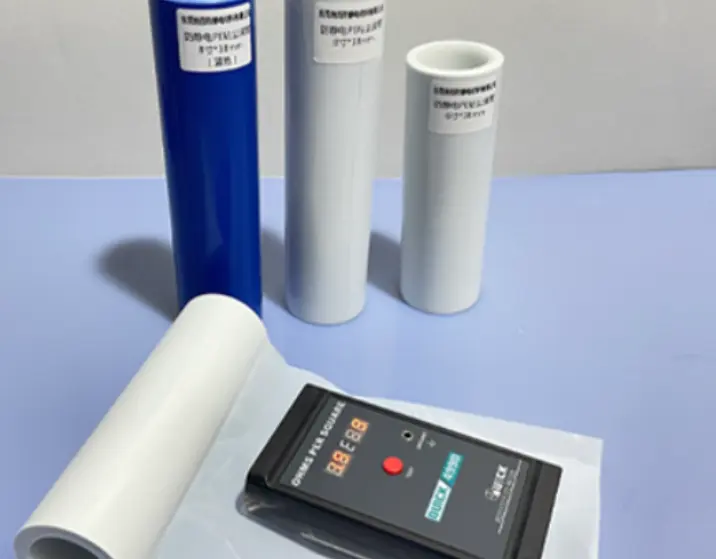
Nabai ESD PE Sticky Roller Technology
Nabai ESD PE Sticky Roller is a cleaner that is safe to use in sensitive areas. Key design features:
• PE roller core, high density.
• Acrylic adhesive layer
• Smooth rolling system ergonomic handle.
• Perforated sheet design to make it convenient.
This is the reason why the technology of a static dissipative roller is used. It is commonly applied in the dust management of electronics assembly and cleanrooms.
PE Sticky Roller and its Application
The roller does more than cleaning. It controls charge.
Working behavior:
• Dust is picked up by the adhesive layer.
• No friction-based build-up of static.
• Regulated pressure decreases charge spikes.
• Surface remains the same after cleaning.
This aids in the principle of dissipation of surface charge in cleaning. It also enhances the maintenance process in production lines without charges.
Applications Step-by-Step in Sensitive Electronics Cleaning
To avoid damage, do as follows:
Cleaning steps:
• Turn off the workstation.
• Apply the PE sticky roller on the surface gradually.
• Roll evenly.
• Adjust the sheet in case of reduced adhesion.
• Roller, store in a clean, dry place.
This is a means of making sure that sensitive electronic parts are handled in a safe manner. It also enhances ESD-safe cleaning methods of cleanroom environments.
Cleanroom Standards and Static Control
PE Sticky Rollers support:
• statistical control systems of cleanrooms.
• Cleanroom ESD compliance tools ISO.
• cleaning control of contamination.
• removal of micro-particles in sensitive areas.
These environments need to be cleaned in a controlled manner to avoid failure. A dust particle as small as that can impact chip performance.
PE Sticky Roller Technical Safety Benefits
The roller is layered with several safety layers:
Key benefits:
• Minimizes micro dust hazard.
• Favors low-humidity static prevention techniques.
• Prevents surface charge build-up
• Improves PCB surface cleaning protection
• Semiconductor cleaning safety practice works.
It is also useful in ESD protection in electronics cleaning at the production level.
How it Enhances ESD Safety in Actual Production
Damage in the form of static damage is common in the last cleaning processes. PE Sticky Roller minimizes:
• Wipe spikes.
• Dust re-attachment
• Fiber contamination
• Surface instability
It promotes low statistical generation of cleaning equipment in everyday activities. This enhances ESD protection of the electronic assembly in the cleaning process.
What is Unique About Nabai ESD Solutions
Nabai ESD deals with industrial cleaning equipment. Our PE Sticky Roller is compatible with:
• Stable dust removal
• Safe surface contact
• Controlled adhesive strength
• Reduced particle release
This renders it a good option for ESD-safe cleaning tools in electronics production.
Conclusion
How to prevent static damage during cleaning? The harm is stagnant and starts with minor losses and ends with colossal losses. Cleaning necessitates complete control of cleanrooms, PCB lines, and semiconductor spaces.
The right equipment, like Nabai ESD PE Sticky Roller, renders surfaces safe, stable, and dust-free. It helps in high ESD protection during cleaning operations as well as minimizing the risk of failure in delicate electronics.
NEWS
GET SERVICE
With quality parts to meet every budget and friendly staff trained to make your visit informative and hassle free.