
How to Reduce Dust Contamination in Cleanrooms | Guide

How to Reduce Dust Contamination in Cleanrooms | Guide
How to Minimize Dust Contamination in Cleanrooms: Guide to Controlled Environments
- Dust control is required in cleanrooms. A particle as small as it is can ruin products or influence research. That is why the issue of how to reduce dust contamination in cleanrooms is one of the trendiest topics in numerous industries today.
- Cleanrooms are operated on controlled airflow, strict cleaning schedules, and particle control devices. Nevertheless, dust gets in via people, air, and the movement of equipment. The methods of cleaning rooms are so strict that they are required.
This guide provides practical techniques, technical systems, and product-based remedies to control cleanroom dust contamination in the practical industrial environment.
The Meaning of Dust Contamination in Cleanrooms
The undesirable dust in the controlled areas is the dust contamination. These particles include:
- Dust from shoes and clothes.
- Machine micro particles.
- Ventilator dust.
- Material debris and lint.
This leads to the pollution of particles in cleanrooms, which affects the quality of products. Cleanrooms are highly regulated, such as ISO cleanroom classification, whereby the amount of particles is closely monitored.
Main Sources of Dust in Cleanroom Environment
Knowledge of sources assists in controlling dust in cleanroom environment systems.
1. Human Movement
Individuals shed skin cells, fibers, and lint.
2. Airflow Systems
Airborne dust control is a problem due to poor filtration.
3. Equipment Operation
Particles are produced by machines.
4. Material Transfer
Contamination is brought about by packaging and tools.
Such industries as electronics and pharma are motivated by these reasons to use cleanroom dust control systems.
Cleanroom Dust Contamination: Cleaning
Various levels of control are employed in industries to attain high levels of contamination prevention in cleanrooms.
1. Air Filtration Systems
- Fine particles are eliminated by HEPA and ULPA filters.
- Encourages air filtering.
- Holds constant airflow patterns.
2. Controlled Airflow Design
- Particle movement is minimized by laminar airflow.
- Eliminates dust in sensitive places.
3. Cleanroom Dress Code
- Whole body suits minimize the release of human particles.
- The contamination is minimized by gloves and masks.
4. Surface Cleaning Systems
- Lint-free wipes
- Dust trapping mats
- Adhesive cleaning tools
These techniques enhance maintenance of cleanliness in the cleanrooms and minimize risk.
Dust Contamination Reduction Sticky Mats
Cleanrooms have sticky mats that are used to control the particles. A good example is the Cleanroom Anti-Bacterial Sticky Mat by Nabai, which is created to control dust and microorganisms. This mat works by capturing the particles of shoes and wheels before they get into the clean places.
Key functions:
- Gathers foot traffic dust.
- Reduces bacteria on portals.
- Enhances control of surface contamination.
- Enhances a clean manufacturing environment.
Technical Breakdown of Cleanroom Anti-Bacterial Sticky Mat
Nabai has a sticky mat that is constructed in a sophisticated layered construction.
- Base Film
- Good quality low-lint PE material.
- Silicone-free and non-transferring
- Picks up dust and debris.
- Antibacterial Technology
- Embedded antimicrobial agent
- Reduces bacterial growth
This building enhances the dust trapping technology and particle capture systems in clean rooms.
The Advantages of Sticky Mats in Dust Contamination
Sticky mats are placed on the entrances. They prevent the spread of dust internally.
Process:
- Shoes step on the mat
- Particles are suspended in an adhesive layer.
- The surface will be left with dust.
- Cleanroom stays protected
This enhances the ability to remove the fine particles and minimizes the need for environmental dust reduction.
Cleanroom Anti-Bacterial Sticky Mat: Benefits
This mat helps in dust and hygiene control.
Dust Control Benefits
- Reduces floor contamination
- Helps in the control of particulates in cleanrooms.
Hygiene Benefits
- Antibacterial surface treatment
- Reduces microbial buildup
- Assists in keeping clean rooms.
Operational Benefits
- Easy sheet replacement
- Low maintenance use
- Constant performance of contamination control.
Cleanroom Industries Applications
Sticky mats are used in highly controlled environments.
1. Semiconductor Industry
- Production of micro dust chips.
- Additional semiconductor clean room standards.
2. Pharmaceutical Industry
- Maintains GMP compliance
- Reduces contamination risk
3. Biotechnology Labs
- Maintains sterile areas.
- Promotes control of biotechnology contamination.
4. Electronics Manufacturing
- Removes dust in PCB assembly lines.
- Improves product yield
5. Medical Device Production
- Gives clean environment of production.
- Reduces particulate defects
Methods of Minimizing Airborne Dust in Cleanrooms
The industries combine diverse systems to enclose the means of reducing airborne particles in clean rooms.
- HEPA filtration systems
- Controlled pressure zones
- Regular cleaning schedules
- Sticky mat entry control.
- ESD-safe cleaning tools
These minimize the problem of managing the particulate matter within the whole facility.
Surface Cleaning and Maintenance Methods
Surfaces are hygienic and reduce the chances of contamination. Best methods include:
- Residue-free wipes
- Dust removal pads
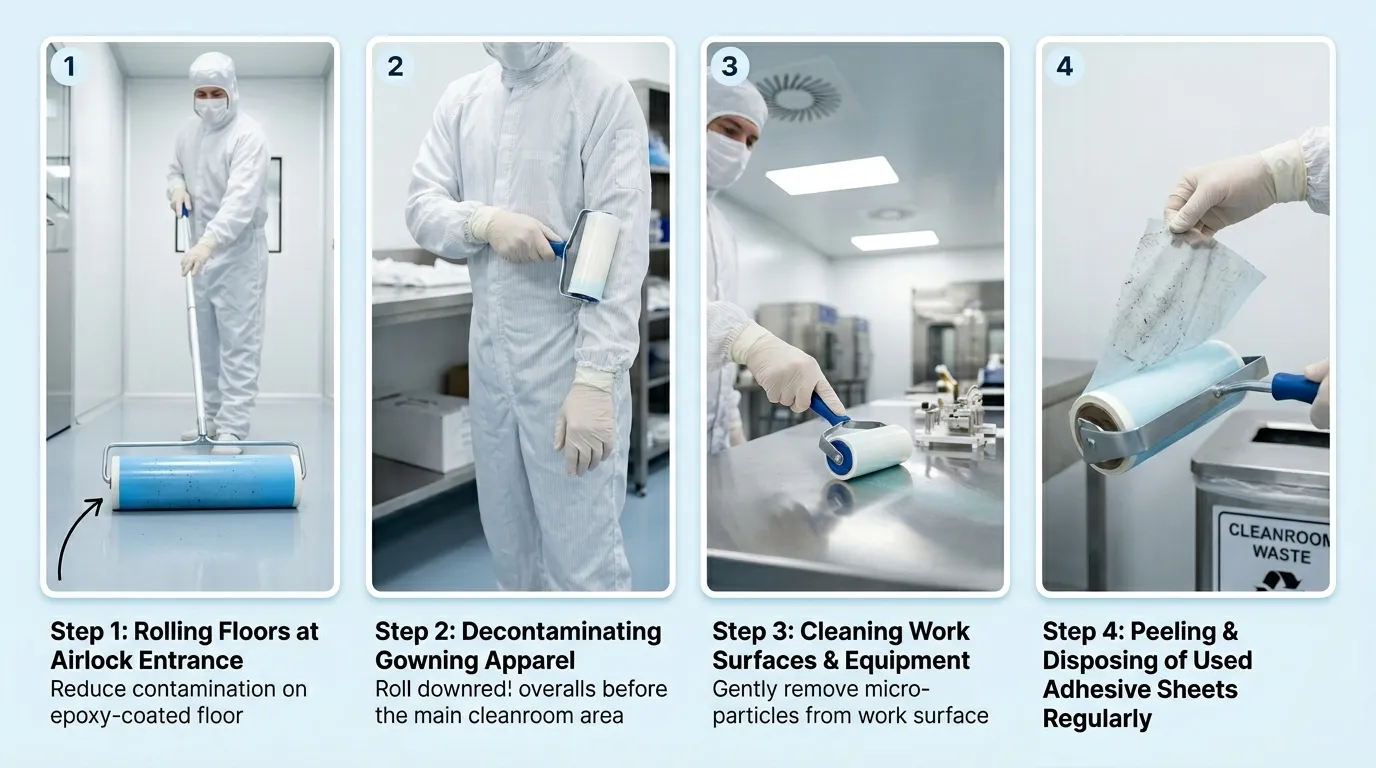
- Sticky rollers
- Lint-free cleaning tools
Such equipment assists in controlling the pollution of surfaces and enhances the stability of cleanliness.
The Reason Cleanroom Dust Control Systems are Important
In the absence of appropriate systems, contamination rapidly spreads. Good cleanroom dust control systems aid:
- Maintain ISO standards
- Improve production quality
- Reduce product defects
- Support sterile environments
This gives a consistent, clean manufacturing environment.
Cleanroom Consumables Role in Dust Control
Consumables are vital items in everyday activities. They include:
- Sticky mats
- Cleaning wipes
- Adhesive pads
Anti-static rollers
The products are useful in the maintenance of the cleanliness of the cleanroom and in reducing the chances of contamination.
Conclusion
Dust control is not a one-step process. It is a cleaning and surface protection system, an airflow. How to reduce dust contamination in cleanrooms is based on discipline and the right tools in daily life.
The Cleanroom Anti-Bacterial Sticky Mat by Nabai has a low level of protection. It captures dust, excludes microbes, and allows the cleanroom to perform consistently without complication. Cleanroom control is not an intuitive process. Select Nabai solutions to safeguard day-to-day and cleaner operations.
NEWS
GET SERVICE
With quality parts to meet every budget and friendly staff trained to make your visit informative and hassle free.