

How to Reduce Dust in Cleanroom Environments | Complete Guide

How to Reduce Dust in Cleanroom Environments | Complete Guide
How to Reduce Dust in Cleanroom Environments
- Dust management in cleanroom environments is crucial for industries reliant on cleanliness and accuracy. A small dust particle can cause damage to the product, slow down production, or ruin test results.
- A good cleanroom dust control method is in place throughout. It begins at entry points and extends on the premises. All this cleanliness is a part.
- The goal is simple: reduce contamination in a cleanroom to a minimum before it grows. Smart systems and tools come in very handy here.
Basic Techniques Used to Minimize Dust in a Clean Room:
In a robust cleanroom contamination control system, several layers of protection are required. Main dust control methods are discussed.
- Use of HEPA air filters for clean air
- Utilization of HEPA air filters for clean air.
- Entry control using sticky mats.
- Controlled gowning procedures
- Surface cleaning schedules
- Pressure-controlled airflow systems
These practices are compatible and complement each other to reduce the amount of dust entering and spreading. This is a complete cleanroom cleanliness improvement method strategy.
Importance of Entry Systems in the Prevention of Dust
The majority of dust comes in the door. Which makes entry systems the most important. Dust will not be allowed to enter by using a clean entry contamination control method. Key Entry Control Tools are:
• Adhesive floor mats
• Gowning area barriers
• Shoe cleaning systems
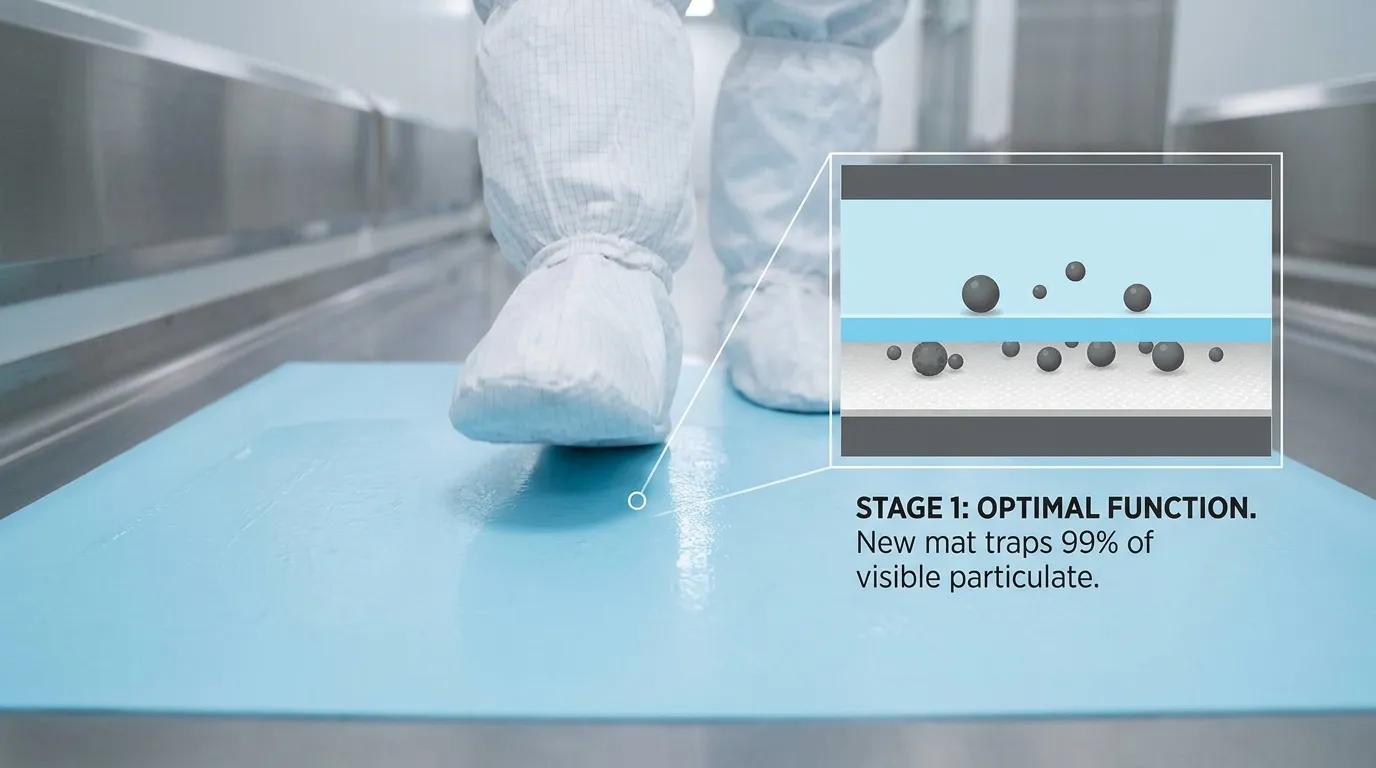
These tools are used to create a cleanroom entry dust reduction system. An adhesive mat contamination control system is one of the significant aspects of contamination control. Sticky mats are used at entrance points for capturing dust using Nabai.
Standard Cleanroom Sticky Mat Features
- Material with long life and anti-releasing silicone surface.
- Stabilization of particles collected from shoes and carts.
- Low residue to provide a clean operation.
- Layered contamination control measures
These mats are used in conjunction with particle traps for clean areas and instantly clean up the dust load.
Nabai Cleanroom Mats: Technical Structure
Nabai sticky mats have built-in features for controlled environments and high precision demands.
Material & Construction
Surface Material: Medical silicone, which has a tacky surface.
- The base structure is made of a fiberglass-reinforced composite layer.
- Filling in with a cotton padding layer
- There is a choice of aluminum and frame-free frame setup options.
The features provide support for the ISO cleanroom cleanliness standard.
Performance Benefits
- Adhesion of molecules that remain stable in dust.
- Little residue remains in the wake of repeated cleaning of the carcass.
- Low maintenance requirements
This will allow the footwear and wheels to be firmly held. This helps to further reduce the particles in cleanroom environments.
Air Filtration and Particle Control
Air systems are significant in controlling dust. To keep the dust particles in the air out of the cleanroom, a cleanroom air particle filtration system is employed.
Filtration Methods
- HEPA filtration systems
- A ULPA filter is installed in the high-grade area.
- Design that enables positive airflow to air.
- Controlled ventilation systems
These are the systems that are employed to have high efficiency of airborne particle control in cleanrooms.
Gowning Area Human Factor Control
Dust is a wonderful product of mankind. Gowning is necessary for this reason. A cleanroom gowning area contamination control system reduces the release of fiber.
Key Gowning Steps
- When entering the clean room, wear clean suits and gloves.
- Controlled dressing zones
- Appropriately handling materials.
This minimizes the introduction of contaminants into the cleanroom due to the actions of people.
Key Industry Uses
This includes dust collection solutions for semiconductor cleanrooms.
- Pharmaceutical Cleanrooms and Cleaning Methods.
- The hospital is a dust-controlled area.
- Lab clean room particle control techniques:
Controlled environment contamination prevention systems are imperative to each industry. The surface dust removal and maintenance methods are used. Methods used are surface dust removal and maintenance methods.
- Surface Control Techniques
- Daily cleaning schedules
- Anti-static wiping tools
- Dust-free cloth systems
- Wet cleaning techniques, which are controlled
These are dust removal techniques for use in clean areas that are used to support the surface. The attention will be drawn to footwear and entry particle control. Unless you are a vacuum fanatic, most of the dust will enter your home in your shoes!
Cleanroom Footwear Particle Removal Process is a Must-Have
- All entry points have sticky mats.
- Shoe cleaning stations
- Multi-layer peel mat systems
- Controlled walking paths
This reduces the amount of dust that enters sensitive areas.
Modern Cleanrooms—Layered Protection
At each point of the process, there are a number of methods of controlling contamination.
Key Benefits
• Using dust removal equipment at dust collection points all the time
• Easy layer replacement
• Lower contamination risk
• Stable hygiene levels
This will improve the cleanroom hygiene equipment.
Nabai Sticky Mats for Cleanroom Protection
The design of the Nabai mats is for the actual industrial environment.
Key Features
• Effective dust trapping system
• Reusable silicone technology
• Low residue performance
• Long-term durability
Dust Control Importance in a Cleanroom
Cleanliness is not the only reason for dust control. It has an impact on safety and product quality. Where no systems exist, contamination can be quickly spread. An effective cleanroom contamination prevention system safeguards the quality of products made during the manufacturing process.
• Lab test accuracy
• Pharmaceutical safety standards
• Semiconductor yield rates
This is why industries take comprehensive measures to reduce dust in cleanroom environments.
Conclusion:
Knowing how to reduce dust in cleanroom environments helps to safeguard all the processes. Dust control is not a single step. It's a full intake-to-intake air flow system. These all work in conjunction: sticky mats, air filtration, gowning control, and surface cleaning. Nabai clean room mats offer a very high level of entry protection and consistent performance. However, if no dust gets in, neither will get out! All controlled spaces are aimed at achieving this.
NEWS
GET SERVICE
With quality parts to meet every budget and friendly staff trained to make your visit informative and hassle free.
