
how to remove dust particles from air

how to remove dust particles from air
Dust is a very common IAQ issue in the home, office, and industrial buildings. It consists of microscopic contaminants like pollen, pet dander, fibres from bedding and fabric, soil, and other tiny particles constantly floating around inside and eventually landing on surfaces.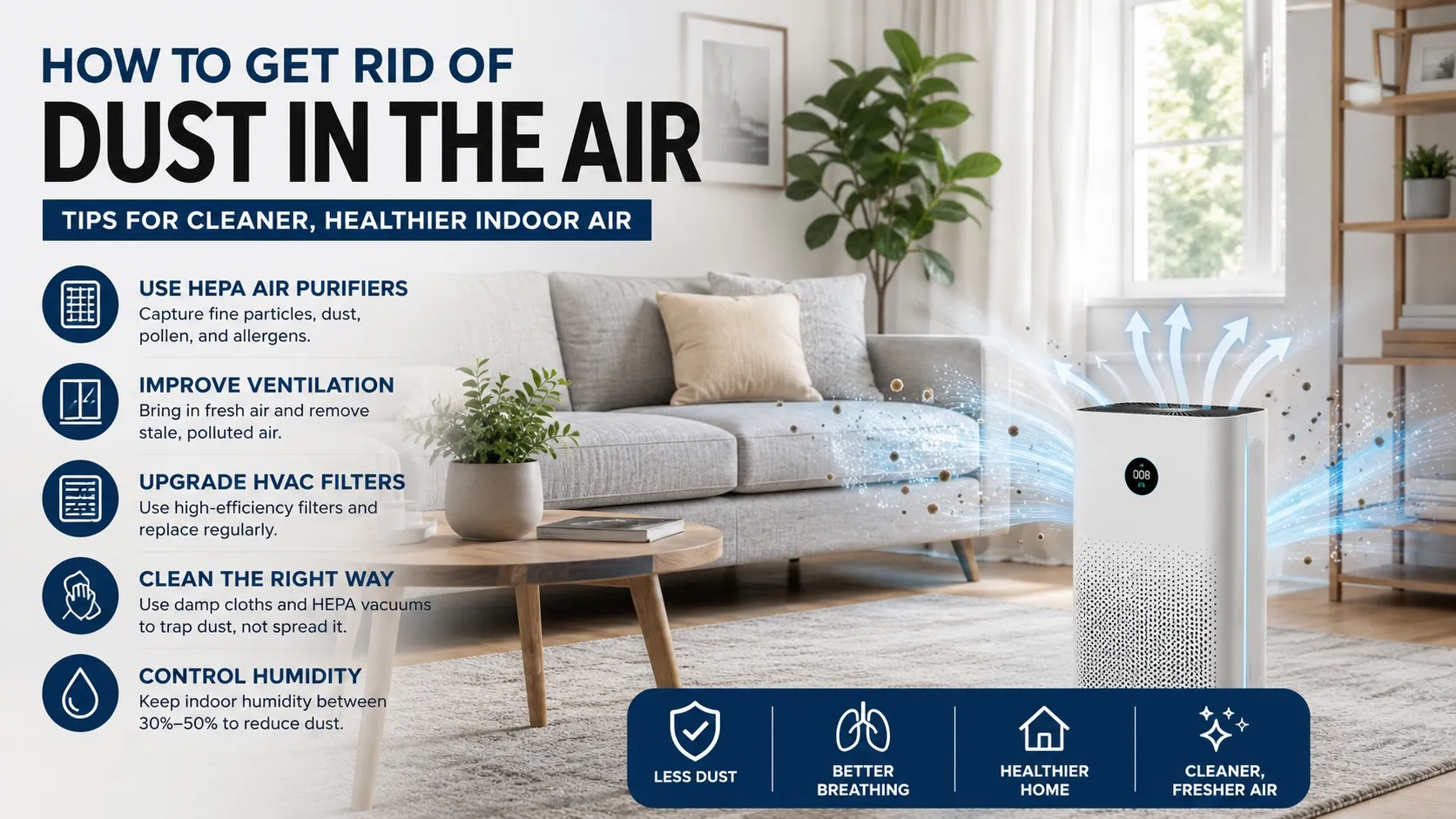
It is not possible to remove all dust from the air, but a multitude of dust removal measures can be taken to minimize airborne dust. This guide describes the best and science-based dust dusting/removal techniques for indoor air and overall air quality improvement.
Understanding Where Airborne Dust Comes From
To solve the problem, you need to consider the sources of dust:
The indoor dust is a combination of numerous types of dust, such as:
- Outdoor soil and pollution entering through doors/windows
- Human skin flakes and hair
- Pet dander
- Fabric fibers from clothing and furniture
- Cooking smoke and combustion particles
- Mold spores and pollen
- Chemicals and microplastics
These particles are continually raised into the air through walking, cleaning, and opening of doors and are therefore not a single event, but a recurring one.
Why Dust Stays in the Air So Easily
Dust particles are very light and remain suspended for extended periods of time. These particles continually circulate in poorly ventilated and low-efficiency-filtering houses.
Some of the main sources of dust in indoor air:
- Poor ventilation
- Low-quality HVAC filters
- High indoor activity (walking, cleaning, pets)
- Carpets and soft furniture trapping dust
- Dry air conditions that keep particles airborne
This is why effective dust control requires a multi-layer strategy, not just one solution.
1. Improve Ventilation to Flush Out Dust
One of the simplest ways to reduce airborne dust is increasing fresh air exchange.
Best practices:
- Open windows when outdoor air quality is good
- Use exhaust fans in kitchens and bathrooms
- Cross-ventilate rooms to push stale air out
- Avoid stagnant air zones in closed rooms
Bringing in clean outdoor air helps dilute indoor particle concentration and reduces long-term buildup.
2. Use HEPA Air Purifiers for Continuous Dust Removal
1, high-efficiency air purification is one of the most effective ways of controlling airborne dusts in modern times.
The HEPA (High Efficiency Particulate Air) filters are very efficient at removing extremely small particles such as dust, pollen and pet dander.
Why HEPA filters work well:
- Capture particles as small as 0.3 microns
- Continuously clean indoor air
- Reduce airborne allergens
- Improve air quality in sealed rooms
Best usage tips:
- Run purifier 24/7 in high-dust areas
- Place near dust sources (pets, entryways)
- Keep doors closed for maximum efficiency
- Replace filters regularly
Air purifiers do not remove settled dust, but they significantly reduce the amount floating in the air.
3. Upgrade Your HVAC Filtration System
Your HVAC system plays a major role in circulating indoor air. If the filter is weak, dust will continuously recirculate.
Recommended improvements:
- Use higher-efficiency filters (MERV 11–13 or HEPA-compatible systems)
- Replace filters every 1–3 months
- Ensure proper airflow to avoid system strain
- Seal duct leaks to prevent external dust entry
Proper HVAC filtration can dramatically reduce whole-house dust levels by cleaning air continuously during heating and cooling cycles.
4. Clean the Right Way (Not Just More Often)
Cleaning is essential—but technique matters more than frequency.
Best dust-reduction cleaning methods:
- Use damp microfiber cloths instead of dry dusters
- Vacuum with HEPA-filter vacuums
- Clean from top to bottom (shelves → floors)
- Wash bedding weekly in hot water
- Remove clutter that traps dust
Avoid dry sweeping, which pushes dust back into the air instead of removing it.
5. Control Humidity Levels
Air that is too dry allows dust to stay airborne longer. Slight humidity control helps particles settle more quickly.
Ideal indoor humidity:
- 30%–50%
Benefits of proper humidity:
- Reduces airborne dust suspension
- Controls dust mites and mold growth
- Improves overall comfort
Use humidifiers or dehumidifiers depending on your climate.
6. Reduce Dust Sources Inside the Home
Long-term dust control depends on reducing where dust comes from.
Effective prevention strategies:
- Remove shoes at the entrance
- Use washable rugs instead of heavy carpets
- Keep pets clean and brushed
- Wash curtains and fabrics regularly
- Minimize unnecessary fabric clutter
Each reduction in dust source leads to lower airborne particle levels over time.
7. Improve Airflow Design in the Home
Stagnant air increases dust buildup.
Optimization tips:
- Use ceiling fans to keep air moving
- Avoid blocking air vents
- Arrange furniture to allow airflow circulation
- Keep HVAC vents clean and unobstructed
Good airflow ensures dust gets captured by filters instead of settling.
8. Avoid Common Mistakes That Make Dust Worse
Many people unknowingly increase dust levels through daily habits.
Common mistakes:
- Dry dusting instead of damp cleaning
- Using low-quality air filters
- Ignoring HVAC maintenance
- Not cleaning air purifier filters
- Sweeping floors instead of vacuuming
Correcting these habits alone can significantly improve air quality.
Can You Completely Eliminate Dust from the Air?
No indoor environment can ever be 100% dust-free. Particles are even present in controlled environments, such as laboratories.
With the combination of, however:
- HEPA filtration
- Proper ventilation
- Smart cleaning methods
- HVAC maintenance
You can reduce airborne dust to very low, healthy levels.
Final Thoughts
When it comes to eliminating dust in the air, it's as much about a system as it is about a solution. The most effective method is to use a combination of filtration, airflow and source control.
When you follow these techniques regularly, you'll see:
- Less visible dust on furniture
- Cleaner breathing air
- Fewer allergy symptoms
- Lower cleaning frequency needed
Cleaner air is not something that can be created instantly, but can be reached with proper long term practices and equipment.
NEWS
GET SERVICE
With quality parts to meet every budget and friendly staff trained to make your visit informative and hassle free.