
How to Use Cleanroom Sticky Mats | Step-by-Step Cleanroom Guide

How to Use Cleanroom Sticky Mats | Step-by-Step Cleanroom Guide
How to Use Cleanroom Sticky Mats in Controlled Areas
The ability to utilize cleanroom sticky mats is important to clean environments. These mats shield clean areas against dust and particles. They are used as a system of particle control floor mat application at entry points.
- An effective cleanroom sticky mat usage procedure minimizes the risk of contamination. It prevents the entry of dirt on shoes, carts, and wheels. This aids in a safe, clean zone entry protection system.
- These mats are common in factories, hospitals, and labs. They create a robust contamination barrier construction system for sensitive locations.
How to Use Cleanroom Sticky Mats
How to use cleanroom sticky mats? Cleanroom sticky mats are easy contamination control measures that are employed at entry points. They assist in the elimination of dust and particles prior to the entry of people or carts into clean places. Proper utilization facilitates cleanliness, safety, and consistent cleanroom environments.
Cleanroom Sticky Mat Step-by-Step Instructions
• Put the sticky mat at the entrance or airlock area of the cleanroom.
• Make sure that the floor is clean, dry, and completely flat.
• Peel off the top protective film layer before use.
• Activate the pressure-sensitive adhesive surface properly
• Enter the mat with clean shoes or restrained movement of the wheels.
• Use normal pressure to apply the floor mat effectively to control particles.
• Do not drag feet to ensure adhesive strength.
• Let the mat capture dust using the adhesive surface contamination control method
• Take off the top layer that has been used when it is completely covered.
• Change layers every time in case of strong cleanroom entry contamination procedure.
Applications of Cleanroom Sticky Mats
• Cleanroom entry doors ISO.
• Pharmaceutical production areas
• Semiconductor manufacturing zones
• Contamination control areas in laboratories.
• Hospital sterile entry rooms.
• Biotech-controlled environments
The main advantages of the appropriate use
• Minimizes dust and entry of particles.
• Promotes cleanroom hygiene.
• Enhances the effectiveness of contamination control.
• Protects sensitive equipment and surfaces
• Maintains stable, clean zone conditions
Cleanroom Mat Application Method in a Nutshell
The method of applying cleanroom sticky mats is simple yet organized. It concentrates on adhesion and dust control on the surface. It uses a pressure-sensitive adhesive surface to trap particles. Every step assists in keeping the entry path clean.
Core functions:
• Use of a foot traffic dust control mat.
• Control method of adhesive surface contamination.
• Use of surface particle removal mat.
• Flooring application Dust control.
This technique belongs to a controlled entry cleaning procedure employed in clean rooms.
The Use of Multi-layer Peel-Off Mat in Cleanrooms
The system of using the multi-layer peel-off mat is easy to clean. Dust is trapped in each layer, which can be removed at full capacity.
This is in favor of a layered sheet replacement system.
Technical structure:
- Top layer: Dust capture surface
- Middle layers: Adhesive particle trapping layers.
- Base grip: Stable bottom layer.
This forms a dust-trapping mat that is effective in the long run. It also enhances the adhesion surface of particles in high-traffic areas.
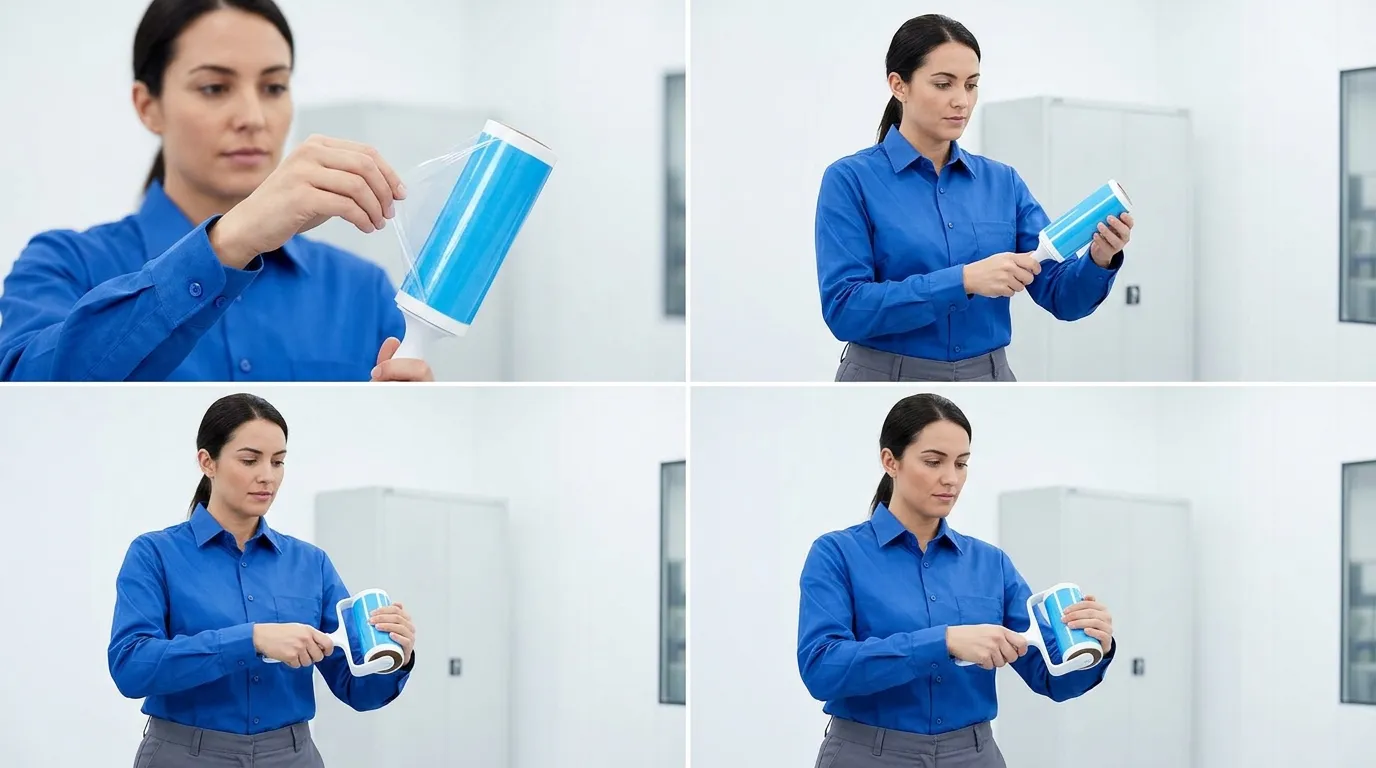
Cleanroom Entry Barrier Mat Set-Up and Placement Regulations
A proper cleanroom entrance barrier mat system enhances the control of contamination.
Placement guidelines:
• Install before the airlock or entry door.
• Lay flat on a smooth surface.
• No edge gaps.
Technical Working Principle of Sticky Mats
The system of work is straightforward yet effective. It employs pressure control and adhesion.
- Use of a static dust capture mechanism.
- Micro-particle trapping efficiency process.
- Particle adhesion surface function.
- Controlled adhesion surface handling
When pressure is applied, dust sticks to the surface layer. This enhances the clean zone workflow in the particulate matter capture.
Cleanroom and Industrial Uses
In most industries where cleanliness is important, sticky mats are employed.
Common environments:
• Semiconductor cleanroom sticky mats areas.
• Workflow rooms in laboratories.
• Areas of the biotech clean zone entry process.
• Cleanroom compliance procedure locations manufacture.
• Hospital clean zone entry system areas.
They endorse the use of ESD safe cleanroom flooring in sensitive areas.
Biomedical and Healthcare Usage Benefits
Cleanliness is paramount in the field of healthcare. Sticky mats can be used to minimize the risk of infection.
They are used as:
- Infection control mats of hospital grade.
- Reduction tools of laboratory contamination.
- Medical cleanroom dust barrier systems.
- Surgical area contamination control mats.
- Dust reduction mats at entry points of healthcare.
This endorses the use of hospital clean zone sticky mats in sterile zones.
Cleanroom Sticky Mats Technical Characteristics
Contemporary mats are constructed using sophisticated layers of materials.
Key technical features:
- Multi-layer peel-off mat operation.
- Polymer layers of low-tack adhesive.
- Non-slip flooring adhesive.
- Use of a static dust capture mechanism.
- Sanitation method of a controlled environment.
These characteristics enhance the performance of micro-particle adhesion technology.
Standard Cleanroom Sticky Mat From Nabai
The standard cleanroom sticky mat of Nabai is a durable and clean sticky mat.
Product structure:
• Surface: Tacky layer of silicone medical grade.
• Base: Fiberglass reinforced composite
• Support: Anti-slip rubber.
• Frame: Support frame, optional aluminum.
This promotes the use of the controlled environment mat installation guide in the industrial areas.
Key benefits:
• Silicone surface cleaning that can be reused.
• Stable particle capture system
• Low residue surface performance
• Long cycle usability
It is compatible with pharmaceutical cleanroom cleaning procedures and stringent conditions.
Cleanroom Sticky Mats: Where to Use
Safety and performance are enhanced through proper usage.
Ideal locations:
• Cleanroom entrances
• Airlock transition zones
• Semiconductor production areas
• Pharmaceutical labs
• Electronics assembly floors
• Hospital sterile points of entry.
These are places that need cleanroom hygiene floor protection systems.
Conclusion
Small steps done right are what make clean spaces. Knowledge on how to use cleanroom sticky mats enhances the safety of the laboratory, hospitals, and factories. These mats create a robust shield against dust and particles at all points of entry.
Take control of clean entry zones with Nabai solutions. Enhance your contamination control system today from Nabai with trustworthy cleanroom sticky mats designed to fit precision industries.
NEWS
GET SERVICE
With quality parts to meet every budget and friendly staff trained to make your visit informative and hassle free.