

Cleanliness Under Control: The Lint-Free Roller For Optical Surfaces

Cleanliness Under Control: The Lint-Free Roller For Optical Surfaces
Modern optics are ubiquitous; from the lenses in your camera to every screen you own, telescopes, and solar panels. Even the smallest loose particle on a surface can cause image aberrations, scattering of light, and coating failure. The lint-free roller for optical surfaces resolves this issue and has become a staple for clean rooms and production lines.
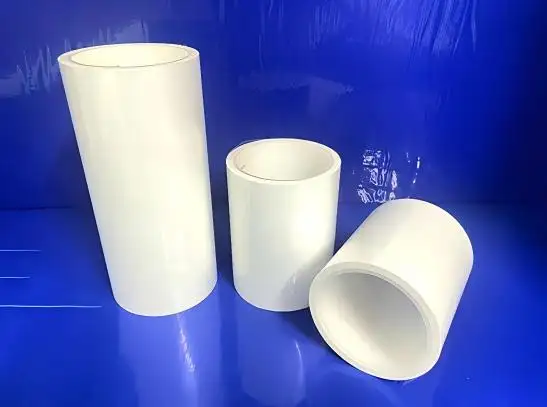
What is a Lint-Free Roller for Optical Surfaces?
Lint-free rollers for optical surfaces are the ideal solution to clean optical elements with a risk of shedding material. These rollers are first of their kind and offer many benefits compared to regular adhesive or household lint rollers. These benefits are as follows:
•No fiber shedding, as the roller will not release lint or particles.
•Controlled tackiness means sufficient adhesion to collect contamination without harming optical coating.
•No chemical migration, meaning the surface will not be contacted by silicone oil, plasticizers, or low-molecular-weight residues.
•Antistatic option means some versions reduce static charge which attracts particulate.
Why Standard Tacky Rollers Fail on Optical Surfaces?
Standard tacky rollers are typically composed of a nonwoven fabric bonded by a hot, rubber-based, or acrylic adhesive. These all can pose serious issues.
•Silicone-based adhesives release siloxanes which will fog up lenses or interfere with coating adhesion.
•Nonwoven backings will shed and become a source for contamination.
•An excessive amount of tack will leave adhesive strings or cause an electrostatic charge and break the surface.
This is why a true Lint-Free Roller For Optical Surfaces needs to be designed strategically with certain materials and methods. One example of this is the Silicone-Free PP Sticky Roller.
An In-Depth Look: The Silicone-Free PP Sticky Roller
Every Sticky Roller offers a substrate made of polypropylene (PP) film and pressure-sensitive adhesive (PSA) without silicone. Here’s a brief outline of the design, construction, and operation along with its advantages.
1. Material Selection
1) Polypropylene (PP) substrate
PP is a high-crystallinity thermoplastic known for a smooth surface, low particle generation, and good chemical resistance. As a film, it releases virtually no lint or dust, fulfilling the “lint-free” promise. PP is also rigid enough to roll evenly without scratching optical surfaces.
- Silicone-free adhesive
Silicone-based PSAs are common in general-purpose tapes, but they pose a serious risk for optics: silicone molecules can migrate or outgas onto the surface. Once present, even trace silicone ruins subsequent coating, bonding, or painting processes (known as “silicone contamination”).
The Silicone-Free PP Sticky Roller uses a silicone-free acrylic or polyurethane PSA. This ensures:
•No volatile or migrating silicone species
•Extremely low residue (detectable only by FTIR or mass spectrometry, if at all)
•Safe compatibility with glass, anti-reflective coatings, metalized films, and polymer optics
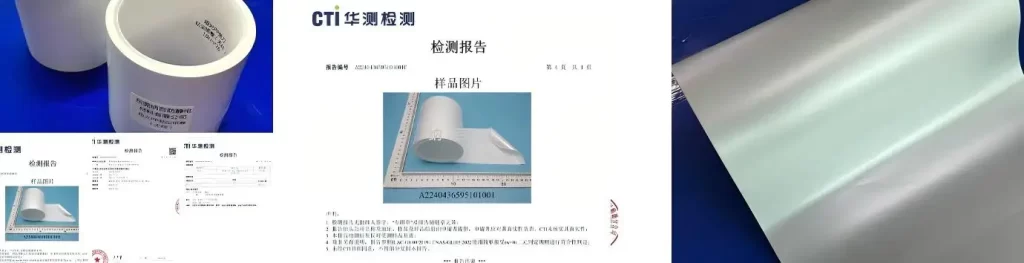
2. Key Features & Advantages
When you use a Silicone-Free PP Sticky Roller on optical surfaces, the technical benefits include:
•High particle capture efficiency – Removes contaminants sized from 1 µm to over 100 µm, including dust, lint, metal fines, and skin flakes.
•Three adjustable tack levels – Self-adhesive rollers come in three grades of tack - low, medium, and high. Low tack rollers are perfect for fragile AR coatings. For tougher surfaces like cover glass, higher tack rollers should be used.
•Clean peeling– The adhesive releases from the optical surface, leaving none of the usual residue, haze, or stringy bits.
•Low outgassing – Suitable for harnessing the low outgassing in a cleanroom Class 5 – 8 (Class 100 – 100,000), these optical components are also ideal for sealed assemblies.
•Film options – The transparent rolls allow the operator to see the particles captured, thereby assessing the efficiency of the cleaning process.
3. How to Use a Silicone-Free PP Sticky Roller Correctly
To get the best results from a Lint-Free Roller For Optical Surfaces, especially the silicone-free PP type, follow these steps:
•Choose the right tack – For soft coatings (e.g., MgF₂, SiO₂ anti-reflection layers), always select low-tack grade. For uncoated glass or sapphire, medium or high tack is acceptable.
•Use a compatible handle – Most rollers fit standard lightweight handles to avoid applying uneven pressure.
•Roll in one direction – Start from the cleanest area and roll toward the edge, applying light, even pressure. Do not rock or reverse direction mid-stroke.
•Replace the roller layer – A single layer of the PP adhesive film can be used multiple times until its surface is saturated with particles. Many product designs offer refill rolls (e.g., 10 – 20 layers per core), allowing you to peel off the contaminated layer and expose a fresh one.
•Store in original packaging – Keep unopened rollers in sealed bags to prevent airborne contamination and preserve tackiness.
4. Comparison: Silicone-Free PP vs. Silicone-Based Rollers
| Feature | Silicone-Free PP Sticky Roller | Silicone-Based Sticky Roller |
| Lint-free | Yes (PP film) | Often nonwoven fabric – may shed fibers |
| Silicone residue | None | Present – migrates to optical surfaces |
| Safe for optics | ✅ Yes – for all optical coatings | ❌ No – silicone contamination risk |
| Outgassing in vacuum | Very low | Moderate to high |
| Typical use | High-end lenses, display panels, wafer handling | General dust control (non-optical) |
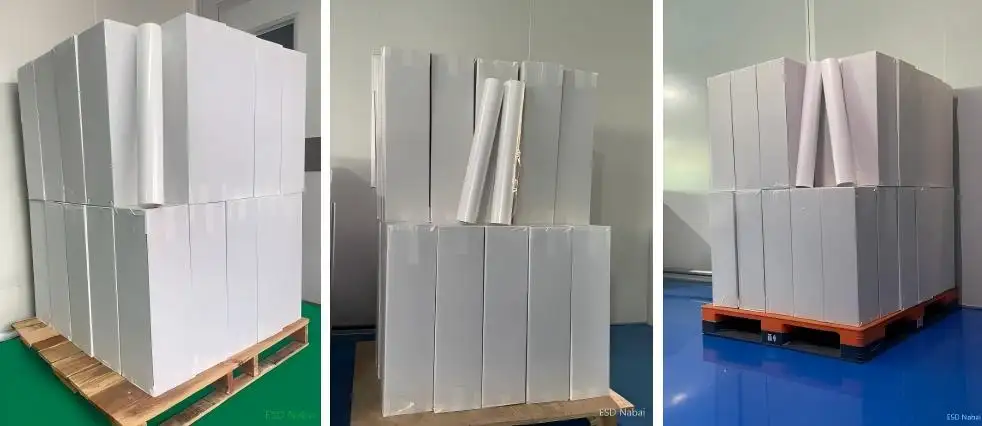
5. Real-World Applications
The Silicone-Free PP Sticky Roller is widely adopted in:
•Camera lens assembly – Cleaning barrel interiors and lens elements before cementing or mounting.
•Flat panel display (LCD/OLED) manufacturing – Removing particles from polarizer films and cover glass before lamination.
•Precision optics – Cleaning beam expanders, mirrors, and windows for lasers or metrology systems.
•Production of solar cells - Final clean before encasculating.
•Medical Optical devices - Endoscopes, surgical microscopy, and diagnostic lenses.
6. Limitations to Keep in Mind (No Exaggeration)
While the Lint-Free Roller For Optical Surfaces is highly effective, it is not a universal solution:
•It cannot remove sub-micron organic films (e.g., oil smudges) – use a solvent wipe first.
•It does not replace ultrasonic cleaning for deeply embedded contamination.
•Extremely rough or porous surfaces require other methods (blow-off or vacuum).
Summary
For optical manufacturers, choosing the right Lint-Free Roller For Optical Surfaces directly impacts yield and reliability. The Silicone-Free PP Sticky Roller stands out because:
✅PP substrate means absolutely lint-free.
✅Silicone-free adhesive eliminates the risk of optical surface contamination.
✅Controlled tack and clean release protect delicate coatings.
✅Available in multiple grades for different cleanroom classes and sensitivities.
When you need to clean a high-value optical surface, remember: no silicone, no lint, no compromise — choose a silicone-free PP sticky roller.
FAQ – Frequently Asked Questions
Q1: Is it okay to use the common house lint roller to clean camera lenses?
Definitely not. Lint rollers bought in shops might use silicone or shed fibers. These may ruin the camera lens optical coatings. Always choose lint-free rollers for optical surfaces. The best roll is a silicone-free PP type.
Q2: How many layers of sticky sheets can be used before being thrown away?
This largely comes down to the degree of contamination on the sticky sheet. The PP adhesive sheet loses its effectiveness when it is maxed out on total particle load. Normally it can be used on optics sheets 3 to 10 times. If the sheet is loaded with particles and the sticky sheet loses tackiness then the used layer of the sheet must be taken off to reveal a new layer.
Q3: Does the silicone-free PP sticky roller work for cleaning anti-reflective coatings?
Yes. Especially the low-tack grades. These coatings are silicone-free and are residue-free as well. Always test on a non-sensitive area first, as fragile coatings may differ.
Q4: Does it remove oily finger prints from the lens?
No. The adhesive sheets remove dry particles such as dust, lint and fibers, but they don’t remove oil. The residue is better cleaned through the use of an appropriate solvent such as isopropyl alcohol along with a lint-free wipe before rolling.
Q5: Toward what cleanroom classes can these sticky rollers be used within?
The silicone-free PP sticky rollers are able to function in the cleanroom classes of ISO Class 5 and 8 (Class 100-100,000). The higher-grade options with low outgassing can even be used in a cleanroom of ISO Class 4.
NEWS
GET SERVICE
With quality parts to meet every budget and friendly staff trained to make your visit informative and hassle free.
