
No Residue Sticky Roller vs. Low-Silicone vs. Standard Silicone: A Clear Comparison & Selection Guide

No Residue Sticky Roller vs. Low-Silicone vs. Standard Silicone: A Clear Comparison & Selection Guide
In cleanroom-dependent industries such as LED manufacturing, optical lens production, PCB assembly, and medical device fabrication, even trace silicone contamination can lead to catastrophic failures — from poor wetting in soldering to delamination in coatings. Choosing the right roller is not trivial. This guide explains the core differences between No Residue Sticky Roller (silicone-free), low-silicone rollers, and conventional silicone adhesive rollers. You will also learn how a well-engineered Silicone-Free PP Sticky Roller delivers reliable, contamination-free cleaning.
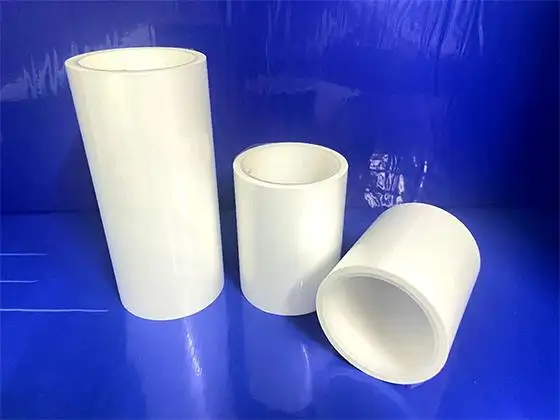
Why Roller Chemistry Matters More Than You Think
Most standard sticky rollers use silicone-based adhesives because they offer excellent tack and reusability. Despite the lack of direct contact, silicones and volatile siloxanes may still migrate to delicate surfaces from the roller. The invisible residue results in:
• Poor adhesion of conformal coatings or encapsulation materials.
• Optical defects seen as haze, wetting defects, and pinholes in optical elements.
• Electrical defects due to multi-contact failure from insulating silicone.
Concern is removed as a No Residue Sticky Roller employs a special design silicone-free acrylic adhesive. But low silicone is not always good silicone. So, we examine the three categories.
Examine the Three Categories
1. Typical Silicone Sticky Roller
• Structure: Standard Silicone used in Pressure Sensitive Adhesive (PSA).
• Residue risk: High. Permits some migration through contact, out gassing, and mechanical shear.
• Most Appropriate for: Non-critical uses (i.e., cleaning industrial floors, cleaning packing areas, and surfaces being painted where silicone presence is not a problem).
2. Low-Silicone Sticky Roller
• Structure: Advertised lower silicone content (so usually ≤ 100 ppm residual siloxanes).
• Residue risk: Moderate. Some migration may still be observed.
• Most Appropriate for: Non-critical (i.e., less sensitive) applications and their associated processes. Not recommended for optical or electronic cleanrooms.
3. No Residue Sticky Roller (Silicone-Free)
• Composition: 100% silicone-free acrylic adhesive on a high-purity polypropylene core.
• Residue risk: None — passes strict surface analysis tests (e.g., no silicone peaks).
• Best for: Silicone-sensitive environments including LED chip bonding, lens coating, PCB flux-free assembly, and implantable medical devices.
At-a-Glance Comparison Table
| Feature | Standard Silicone | Low-Silicone | No Residue Sticky Roller |
| Adhesive type | Silicone PSA | Reduced-silicone PSA | Silicone-free acrylic |
| Surface residue after use | Visible & invisible transfer | Trace (<100ppm possible) | None (undetectable) |
| Suitability for cleanroom ISO 5+ | Not recommended | Limited | Excellent |
| Compatibility with plasma/UV cleaning | Poor (residue reflows) | Moderate | Fully compatible |
| Static dissipation | Usually non-ESD safe | Varies | Permanent static-dissipative PP core |
| Typical applications | General dusting | Non-critical electronic assembly | LED, optics, PCB, medical |
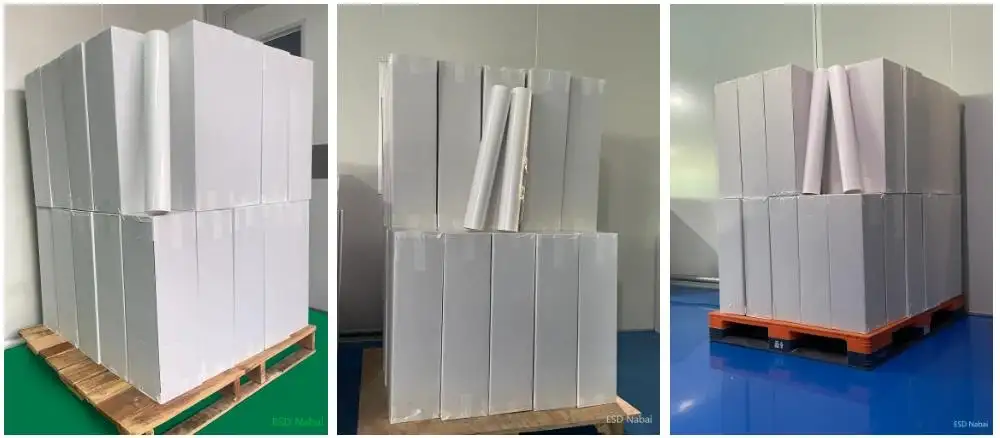
Key Performance Differences — Why a True No Residue Sticky Roller Outperforms
1. Contamination Control
• Standard silicone roller: Leaves a monomolecular layer of siloxane, detectable by contact angle changes.
• Low-silicone roller: May pass basic visual inspection but fails high-sensitivity ion chromatography.
• No Residue Sticky Rollers: No Residue Sticky Roller's adhesive layers utilize an innovative technology that captures unwanted particles while eliminating the release of silicone-based oligomers. Verification was done using FTIR and GC-MS.
2. Adhesive Strength Range (g/25mm)
• No Residue products feature adhesive strengths that range from 200D to 1500D, so end users may select the appropriate strength for the surface sensitivity. Adhesive strength for silicone rollers, however, is poorly controlled and drifts over time.
• No Residue products are available in various widths from 650mm to 2000mm and allow for consistent cleaning across large surfaces and PCBs.
3. Material & Construction Integrity
Premium No Residue Sticky Rollers use high-purity, permanent, and static-dissipative polypropylene (PP) cores, which prevent static damage to electronic components. Many silicone Rollers lose structural integrity with repeated use and fail to maintain consistent contact. Rollers with a PP core do not suffer this problem.
How to Select the Right Roller for Your Process
Step 1: Assess the Level of Contamination You Are Sensitive To
• Low (packaging, woodworking): Standard silicone is appropriate.
• Medium (general assembly, powder coating): Consider low-silicone, but confirm with tests.
• High (optics, semiconductors, medical): No Residue Sticky Roller is mandatory.
Step 2: Verify "Silicone-Free" Claims
• Seek COA with silicone at impurity trace. Watch for "silicone-free acrylic adhesive" or "permanent molded-in IML label" for traceability.
Step 3: Match Adhesive Strength to Surface Topography
• 200D–400D: Glass wafers, polished metal, and ultra-smooth surfaces.
• 500D–800D: PCBs, plastic housings, touch panels.
• 1000D–1500D: Injection-molded parts, carbon fibers, rough surfaces.
Design and Technical Advantages of a Modern No Residue Sticky Roller (e.g. Nabai)
The following example of a sticky roller product shows the advantages of buying a good quality cleaning product.
• Apart from the straight forward ergonomic advantages, this cleaning roller is good design in a number of ways.
• IML (In-Mold Labeling) Surface: Permanently molded labels/logos and lot codes which do not peel off or fade. Supports full traceability.
• Ergonomic PP Handle: Rolling this cleaning roller is quick, easy, and low effort (good design). This cleaning roller is perfect for cleaning in a more controlled and/or sterile environment.
• Customizable Core Colors: blue, white, or other defined colors.
• Wide Size Range: Variety of inner diameters (e.g. 25.4mm, 38mm, 76mm) and widths of 2000mm (e.g. fits within most automatic roller holders).
• Thickness and Length: 80µm with 20m of adhesive (custom possible lengths) ensuring consistent and reliable tack for hundreds of cleaning strokes.
The No Residue Sticky Roller is a process-enabling tool.
Correct Usage Best Practices
Standard Operating Procedure for the most effective use of Sticky Roller:
• IML Label Inspection: Check product specification and lot code daily for each shift.
• Grounded Connections: Used in EPA (ESD Protected Area) if it applies.
• Gentle Rolling : Used uni-directionally.
• Layer Peel: Contaminated upper layer needs to be peeled to refresh adhesive.
• Repeat: The same rolling motion needs to be used to ensure the surface is thoroughly clean.
• Dispose properly: Discard used sheets in appropriate ESD-safe containers.
Common Misconceptions Addressed
• "Low-silicone is good enough for Class 100 cleanrooms."
False — many low-silicone products still outgas cyclic siloxanes (D4, D5) that ruin optical coatings.
• "A No Residue Sticky Roller has weaker adhesion."
Not true — silicone-free acrylic adhesives achieve 200D–1500D grip, matching or exceeding silicone rollers.
• "All PP rollers are silicone-free."
Incorrect — the core material is PP, but the adhesive may still contain silicone. Always check the specification.
Conclusion: Invest in True Silicone-Free Cleaning
For any process where surface chemistry is critical — from LED wire bonding to medical device sealing — a No Residue Sticky Roller is the only safe choice. Standard silicone rollers introduce hidden contamination, while low-silicone options offer false confidence. If you choose a Silicone-Free PP Sticky Roller designed with permanent IML traceability and a wide range of adhesion with ESD-safe PP construction, you address a significant cause of yield loss.
The best option is to always allow a material declaration and test report. Remember, no residue means no silicone and no risk.
Frequently Asked Questions
Q1: What does "low-silicone" actually mean?
For the most part, this is used if silicone is below 100 ppm. However, low-silicone products can still have silicone residue that can be problematic for more sensitive applications.
Q2: How does a no residue Sticky Roller compare in stickiness to a silicone roller?
It is the same, if not more sticky. The silicone-free acrylic adhesive has a peel strength of 200D to 1500D which can be compared to silicone Sticky Rollers and is even greater.
Q3: How can I be certain that a roller is silicone-free?
The best option is to get a certificate of analysis (COA) that has either FTIR or GC-MS testing with no detectable silicone.
Q4: What are the benefits of a PP core in comparison to cores of other materials?
High purity polypropylene enables permanent static-dissipative properties and remains dimensionally stable without any chemical leachables.
Q5: What does an IML label mean on a sticky roller?
In-Mold Labeling embeds lot codes and specifications and logos directly into the roller, and is fully traceable, without any peeling or damage from solvents.
NEWS
GET SERVICE
With quality parts to meet every budget and friendly staff trained to make your visit informative and hassle free.