
Common Contaminants on PCB Surfaces and How Silicone-Free Sticky Rollers Remove Them

Common Contaminants on PCB Surfaces and How Silicone-Free Sticky Rollers Remove Them
Clean surfaces are important for the reliability of printed circuit boards (PCBs). Residues or foreign materials, perhaps even microscopic, can be very problematic, causing poor solder and adhesion failures, as well as electrical failures. Among various cleaning tools, PCB sticky rollers are widely used for dry surface cleaning. However, not all sticky rollers are equal. Traditional silicone-based rollers can leave invisible but harmful residues. This article explains typical PCB contaminants and how silicone-free PCB sticky rollers – specifically the Nabai Silicone-Free PP Sticky Roller – provide a safe, effective removal method for sensitive electronics manufacturing.
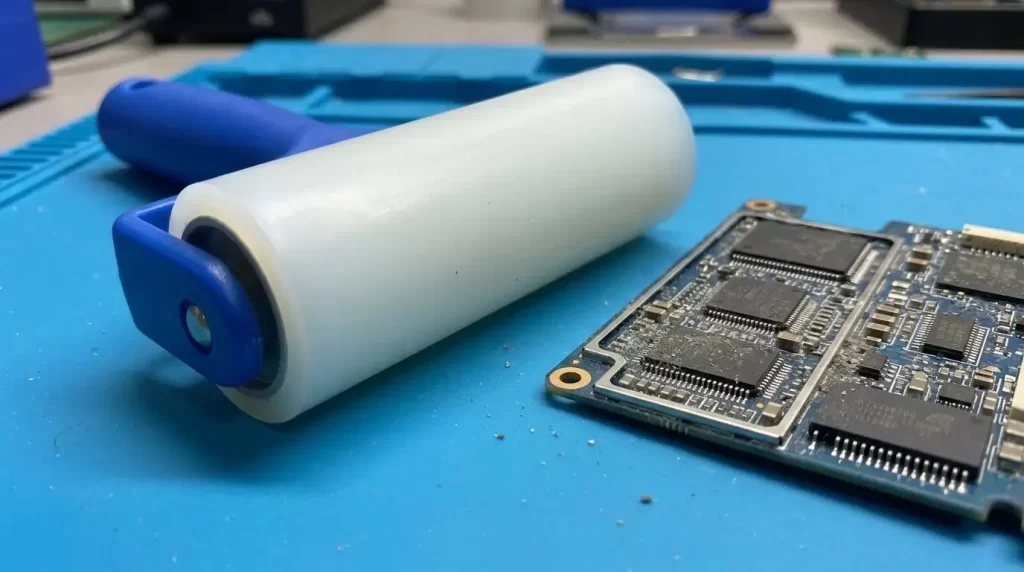
Common Types of Contaminants on PCB Surfaces
PCB surfaces encounter multiple contamination sources during fabrication, storage, and assembly. Understanding these contaminants helps choose the right cleaning strategy.
•Airborne Dust and Fibers: Lint, paper dust, mineral fines, and dust picked up from workshop ventilation and clothing or caused by cardboard boxes pack and settle onto board surfaces.
•Solder Flux Residues: Dust from workshop ventilation and cardboard boxes is picked and settles on board surfaces. Most of the flux is removed in a chemical cleaning process after soldering, but a small amount of rosin or water-based flux may remain. Dust may settle onto the board and may cause problems while coating.
•Handling and fingerprint oils: Skin contact transfers sodium chloride, fatty acids, and urea; these ionic residues can cause corrosion under bias or poor solder wetting.
•Glass fiber particles: During PCB depaneling or drilling, glass fibers from the substrate break off; they are sharp, static-prone, and difficult to dislodge.
•Metal fines: From routing, drilling, or plating processes – copper, tin, or nickel particles may short adjacent traces if not removed before electrical test.
•Silicone contamination (cross-transfer): Often overlooked, silicone can come from release agents, lubricants, or previously used silicone sticky rollers; even a few parts per billion can cause cratering in conformal coatings or dewetting in soldering.
Why Surface Contamination Demands Special Attention in PCB Assembly
Contaminants are not just an aesthetic issue. They directly affect product yield and reliability in the long term.
•Loss of adhesion to the solder mask: Particles which get stuck under the solder mask fail to cure properly and will lead to separation due to peeling during the thermal cycles.
•Solder balling and poor wetting: Dust or silicone on the copper pads increases the contact angle and causes solder to ball up, creating an inadequate solder joint.
•Risk of electrical leakage: Residual ionic contaminants soaking up moisture and creating a conductive pathway between close set pad pitches.
•Conformal coating defect: Silicone contamination will lead to "fish eyes" or cratering in the coatings of an exposed PCB to humidity and corrosion.
•Optical inspection errors: Large particles can be mistaken for foreign material (FM) by AOI systems, triggering false rejects.
Limitations of Traditional Cleaning Methods for PCBs
Standard cleaning approaches – such as brush wiping, tacky wipes, or air blowing – have clear drawbacks. Even silicone-based PCB sticky rollers introduce new problems.
•Brushes and wipes: They often redistribute particles instead of capturing them; fibers from the wipe itself become secondary contaminants.
•Air blow guns: High-velocity air drives particles under components or into vias; it does not remove static-attached fines.
•Silicone sticky rollers: While effective for dust pickup, they leave microscopic silicone residue on the board after each roll. This residue is virtually invisible but can destroy downstream processes like coating or wire bonding.
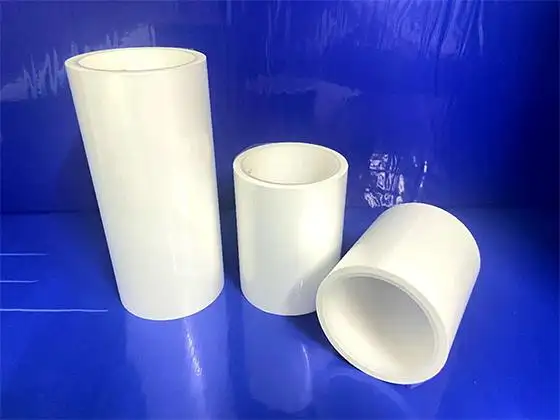
How Silicone-Free PCB Sticky Rollers Work
Nabai's Silicone-Free PP Sticky Roller is engineered specifically for silicone-sensitive environments such as PCB assembly, LED packaging, and medical device manufacturing. Its working principle relies on three key elements.
•Silicone-free acrylic adhesive layer: Does not contain silicone compounds and uses physical tack to bond with and capture dust, fibers and metal fines. Because there are no silicone compounds, there is no residue left on the PCB.
•High-purity polypropylene (PP) core: The roller body is made of static-dissipative PP and does not create a triboelectric charge while rolling. Because of that, it does not attract particles before contact.
•Consistent adhesive strength (200D–1500D): Different tack levels are available; lower tack (200D) for delicate solder mask or gold fingers, higher tack (1500D) for heavy dust or glass fiber removal.
Why Nabai's Silicone-Free PP Sticky Roller Outperforms Conventional Rollers
Nabai has incorporated several design and technical advantages that make its PCB sticky rollers a superior choice for critical cleaning tasks.
•Permanent IML labeling: The in-mold label (IML) is fused into the PP core – no peeling, no adhesive bleed, and no label residue to contaminate the cleanroom environment.
•Full silicone-free construction: Not only the adhesive but also the core and handle are processed without silicone-based mold release agents; verified by FTIR testing.
•Multiple width and core size options: From 650mm to 2000mm widths, and inner diameters of 38/76/51/25.4mm – compatible with most handheld or automated roller handles.
•Static-dissipative property: The PP material is permanently anti-static (not just surface-treated), essential for use in an EPA (ESD Protected Area) without grounding concerns.
•Traceability ready: IML can include QR codes, lot numbers, and adhesive strength grades – helping PCB manufacturers meet IATF 16949 or medical device traceability requirements.
Step-by-Step: Effective Usage of Nabai Silicone-Free PCB Sticky Rollers
The right technique helps you avoid damage to the mainboard while maximizing the removal of micro-debris.
- IML label validation: Verify that both the lot code and the adhesive strength (for example, 800D) meet your process specifications.
- User and roller handle must be grounded: In an EPA, make sure your wrist strap is connected, and that the roller handle is grounded.
- Apply roller in only one direction: Apply uniform pressure gently. Never scrub in both directions, this can scratch the solder mask and press micro-particles into the adhesive.
- Peel the contaminated layer after each pass: Once the outer film is visibly loaded with particles, lift the edge and remove the entire layer to expose fresh adhesive.
- Dispose properly: Discard used sheets into a sealed anti-static waste container to prevent re-contamination of the workspace.
- Combine with silicone roller only when necessary: The Nabai roller can be used alone; if a silicone roller is also used for other areas, always finish with the silicone-free roller to remove any silicone transfer.
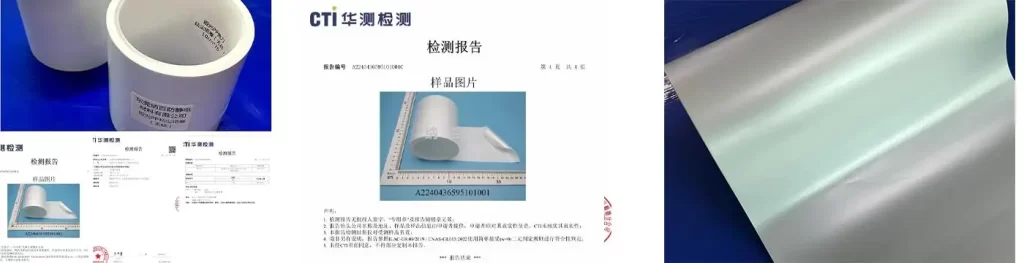
Technical Data That Matters for PCB Engineers
Nabai's product specifications support consistent performance in production environments.
•Adhesive thickness: 80µm – provides enough tack without oozing.
•Standard length: 20 meters (custom lengths available) – reduces changeover frequency.
•Operating temperature range: 15–35°C– adhesive will not soften with shop floor ambient conditions.
•Surface finish options: Matte or glossy IML – matte finish minimizes reflections creating more readable results in the cleanroom.
Conclusion: A Cleaner PCB Starts with the Right Roller
Removing common contaminants – dust, fibers, metal fines, and especially silicone residues – requires a dedicated tool. Traditional PCB sticky rollers made with silicone adhesives create hidden risks. Nabai's Silicone-Free PP Sticky Roller offers a proven alternative: it captures particles effectively, leaves no trace contamination, and supports ESD safety. For PCB assembly lines handling sensitive coatings, optical lenses, or medical electronics, switching to silicone-free cleaning is a low-cost, high-impact step toward higher yields.
Need a sample? Contact Nabai to request a test roll in your preferred width and adhesive strength. Evaluate the difference on your own production line.
FAQs
Q1: How do I know which adhesive strength (200D–1500D) to use?
A: Lower tack (200D–400D) would be used for solder mask or gold fingers. Higher tack (800D–1500D) would be used for dust or glass fiber.
Q2: Is the Nabai sticky roller ESD-safe?
A: Yes, with proper grounding in an EPA, of course. The PP core has permanent static-dissipative properties.
Q3: Can I use the same roller on both PCB and stencil?
A: Yes, but to avoid contaminating the PCB with silicone picked up from elsewhere, always finish with a silicone-free roller.
Q4: Does the IML label ever fall off or leave a residue?
A: No. IML (in-mold labeling) is permanently fused into the PP core and never peels. It will never leave a residue or cleanroom contamination.
Q5: What are the available widths for the Nabai PCB sticky rollers?
A: Standard widths are from 650mm to 2000mm. Other custom widths are available.
NEWS
GET SERVICE
With quality parts to meet every budget and friendly staff trained to make your visit informative and hassle free.