
PE/PP Sticky Roller Selection Guide for PCB, Solar Panel, and Printing Industries

PE/PP Sticky Roller Selection Guide for PCB, Solar Panel, and Printing Industries
PE/PP Sticky Rollers are important for mid-stick control in precision manufacturing. Choosing the right sticky roller for your manufacturing process will greatly influence your product's yield, cleanliness, and process consistency. For companies that manufacture PCBs, solar panels, and printed products, we hope the following guide will help you in choosing the best PE and PP Sticky Rollers for your industry and describe the engineering driven solutions of Dongguan Nabai Anti-Static Materials Co., Ltd.
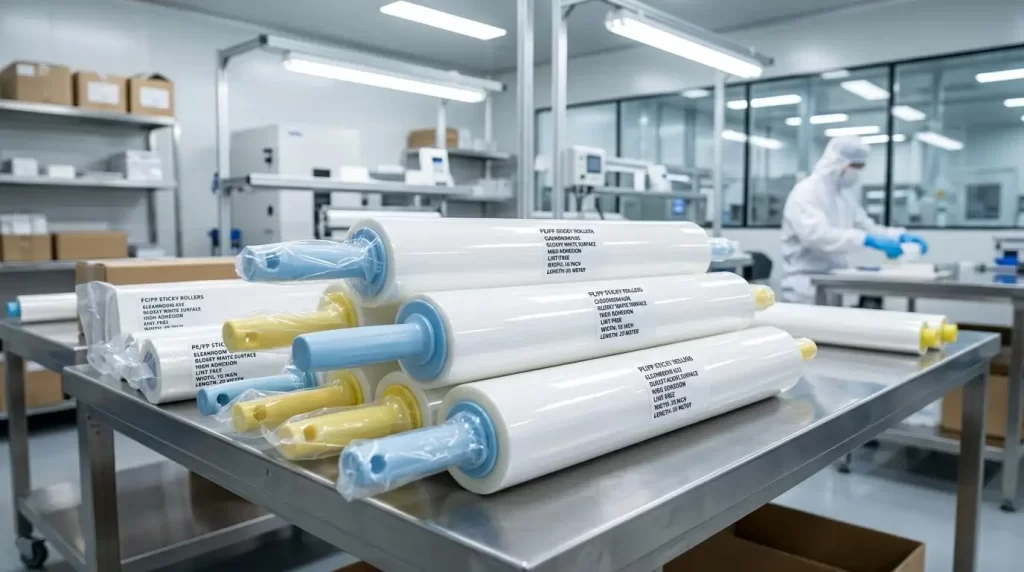
Why the Material is Important for Sticky Rollers
Before tackling the needs of specific industries, we must understand the difference between PE (Polyethylene) and PP (Polypropylene) sticky rollers. PE and PP sticky rollers both are sticky film based cleaning devices, however, they do behave differently:
•PE Sticky Rollers: Softer and more conformable with an increased initial stick. Best used on rough/uneven surfaces where deeper penetration of particles is required.
•PP Sticky Rollers: Firmer with more resistance to edge curling and a lower tendency for adhesive residue. Best used with smooth sensitive substrates like films or coated panels.
Using the wrong type of roller will cause residue transfer, poor pickup of particles, or damage to surfaces.
Selection Guide for PCB Manufacturing
The production of a PCB entails many different processes. These processes cause the generation of many types of particles including dust, fibers, and metal particles. Sticky Rollers are used to clean surfaces prior to lamination and/or soldermask coating.
Some of the critical considerations for PCB Sticky Rollers are:
•Low ionic contamination: Ionic residue can lead to electrochemical migration and short circuits.
•Anti-static: ESD can lead to damage of fine traces and components.
•Migration of Silicon or Amides: Causing solderability problems will adversely affect the adhesion of the conformal coating.
Recommended Roller Types for PCB:
•Anti-static PP rollers featuring surface resistances of 10⁶ to 10⁹ Ω.
•Low to medium tack to avoid the transfer of adhesive to the copper foil.
What Nabai offers to the PCB market:
•ISO-certified: Guarantees low ionic and low volatile residues.
•Tailored tack levels: tack levels from low (50g/25mm) to high (300g/25mm) are available.
•Complete traceability: Each lot of PE/PP Sticky Rollers can be traced back to the raw polymer which is important for defect investigations.
Selection Criteria for Solar Panel Production
Cleaning of the Glass, EVA and Back sheet prior to laminating is very important. Dust trapped within the module can cause micro-shading and inefficiencies, while also creating hotspot failures.
Key features needed in Solar Rollers:
•High dust pickup: Silica and polymer dust build up when cutting glass in the line.
•No oily residue: Transfer of plasticizers and oils will cause EVA to not bond and lead to delamination.
•Temperature Stability: Elevated temperatures (30–40°C) in a factory could soften conventional sticky rollers.
Recommended Solar Roller Type:
•High tack (200-300g), heat resistant PE sticky rollers.
•Kinestically better with wider roller widths (200–400mm) to cover large glass panels.
•Non-woven or adhesive film surface that traps dust with no smearing.
Nabai's design and technical advantage:
•PE with Heat stability: Maintains shape and tack up to 45°C.
•Large custom diameter rollers: Nabai makes PE/PP Sticky Rollers up to 500mm wide with built-in handles to aid panel cleaning.
•Zero-silicone certification: No lamination failures tested by external labs, confirmed no silicone present.
Selection Guide for the Printing and Converting Industries
Rollers are used to remove dust, ink, and fibers in the web or sheet for many printing applications including label printing, flexible packaging printing, and specialty printing for coatings. Contamination can cause hickies, voids, and poor ink transfer.
Essentials:
•High repeat tack: Rollers may be used hundreds of times per shift in cleaning stations.
•Low transfer / no linting: Residue on printing plates or anilox rolls degrades print quality.
•Solvent compatibility: Rollers should not be damaged by cleaning with alcohol or detergent.
Recommended roller type for printing:
•PP sticky rollers with medium tack (100–150g) and a durable release liner.
•Replaceable adhesive film construction (also called “pet roller” design) for economical reuse.
•Conductive or non-conductive depending on press environment; static can cause paper jams.
Nabai's contribution to printing applications:
•Double-layer composite structure: Prevents edge lifting and allows clean peeling even after hundreds of cleaning cycles.
•Customizable hardness (shore A 30–80): Softer rollers for delicate paper, firmer for plastic films.
•Fast OEM/ODM Service: Nabai offers PE/PP Sticky Rollers equipped with custom shapes for handles and cores for application in cleaning stations in printing presses.
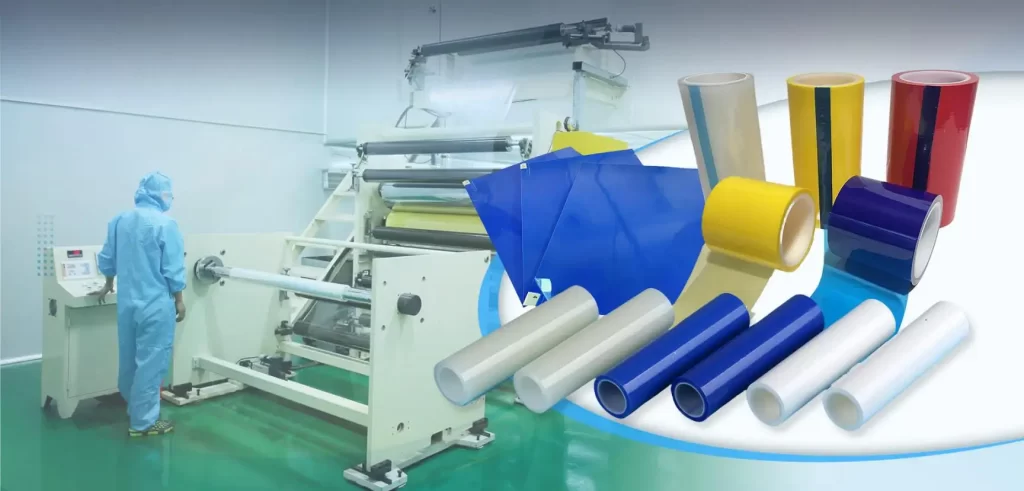
Key Selection Parameters Across Industries
These five elements should shape your decision when purchasing PE/PP Sticky Rollers.
•Tack level (g/25mm): For sensitive coatings, a roll with low tack (50-100) is preferred, while a medium (100-200) level is for dust, and a high level (200-350) is for rough surfaces and debris.
•Surface resistivity: for anti-static rollers the acceptable resistivity range is in the range of 10^6 to 10^9 Ω, while for standard rollers it is above 10^12 Ω. This can be measured using an ohmmeter.
•Adhesive residue test: A quality PP roller does not leave any marks after rolling over a clean glass surface.
•Temp & humidity tolerance: PE rollers begin to soften before reaching the rated norm of >40°C, while PP rollers can tolerate higher levels of this norm.
•Size & core design: An ordinary core design can fall between 30-100mm in diameter and 10-500mm in length. Handles can be designed for handheld use, be threaded to fit poles, or be designed to fit on machines.
Why Choose Nabai for Sticky Rollers?
Nabai has been a reliable and innovative supplier of ESD protection materials for cleanrooms and high performance contamination control materials for precision manufacturing for over 17 years.
Nabai's Dongguan, China production facility is ISO-certified and equipped with in-house R&D, providing an advantage with total quality control and flexible OEM/ODM services. The facility is combined with Nabai's advanced production line and experienced engineering team.
Thanks to their innovative and quality products, customer service, and flexible solutions, Nabai developed successful partnerships with a variety of high-tech global companies. Their services help support their customers' critical business processes and maximize their productivity and yield.
Nabai's Engineering Excellence in PE/PP Sticky Rollers
•Assembled team of engineers, chemists, and quality assurance specialists who design customized sticky formulas and test them for several different applications.
•Each PE/PP Sticky Roller undergoes thorough quality control-testing for tack and cleanliness of the polymer and undergoes testing at each and every step from component selection to the end product.
•Nabai has the capabilities of designing and creating new prototypes quickly due to their advanced production lines and R&D, such as ultraclean peelable film rollers with layers that are ESD safe.
Within the PCB and solar industries, and among printing customers, the rollers have been able to yield significant productivity improvements (PCB fabs > 3-5%, large format solar printers >40% reduced lamination defects, and printers reduce hickies and downtime).
Conclusion: Select Nabai with Confidence
When selecting PE/PP Sticky Rollers for PCB or printing applications, the right choice must consider tack level, material (PE vs. PP), anti-static behavior, and the environment of application. The wrong choice can result in residue, poor performance, and increased rejects. Each application has unique requirements, and when combined with an experienced manufacturer such as Dongguan Nabai Anti-Static Material Co., Ltd., allows the design and implementation of solutions that improve yield and safeguard processes.
There are many custom applications from anti-static PP rollers for fragile PCBs to PE rollers that are heat resistant for solar glass lines. For custom applications, Nabai is ready to provide samples and support throughout the process. Reach out to Nabai to improve your contamination control process.
FAQs
Q1: How do I know if my sticky roller is anti-static?
Check the surface resistivity data sheet; anti-static rollers measure 10⁶–10⁹ Ω, while standard ones are >10¹² Ω.
Q2: What causes adhesive residue on my product?
Usually using a roller with too high tack, incorrect material (PE on smooth surfaces), or an aged/overused roller.
Q3: Are all PP sticky rollers anti-static?
No – only those specially formulated with conductive carbon or coatings. Always request a resistivity certificate.
Q4: Can I clean a sticky roller with alcohol or water?
Alcohol may degrade certain adhesives; water washing works only for specially modified PP rollers. Best practice: use a sticky cleaning pad.
Q5: Do I need silicone-free rollers for printing applications?
Yes – silicone contamination causes fisheyes and poor ink adhesion; always specify zero-silicone certification.
NEWS
GET SERVICE
With quality parts to meet every budget and friendly staff trained to make your visit informative and hassle free.