
Sticky Mat for Dust and Particle Control | Cleanroom Contamination Solution

Sticky Mat for Dust and Particle Control | Cleanroom Contamination Solution
Sticky Mat Dust and Particle Control: Premium Clean Environment Contamination Control
Cleanliness is no longer a choice in the contemporary industrial setting. It is a condition. It could be a semiconductor plant, a pharmaceutical lab, an electronics assembly line, or even a controlled cleanroom entry, but even a small dust particle can do great harm.
It is at this point that the dust and particle control sticky mat proves to be a very potent and easy-to-use solution. It operates silently when it is at the entry points and eliminates contaminants before they get to critical areas.
What is a Sticky Mat for Dust and Particle Control?
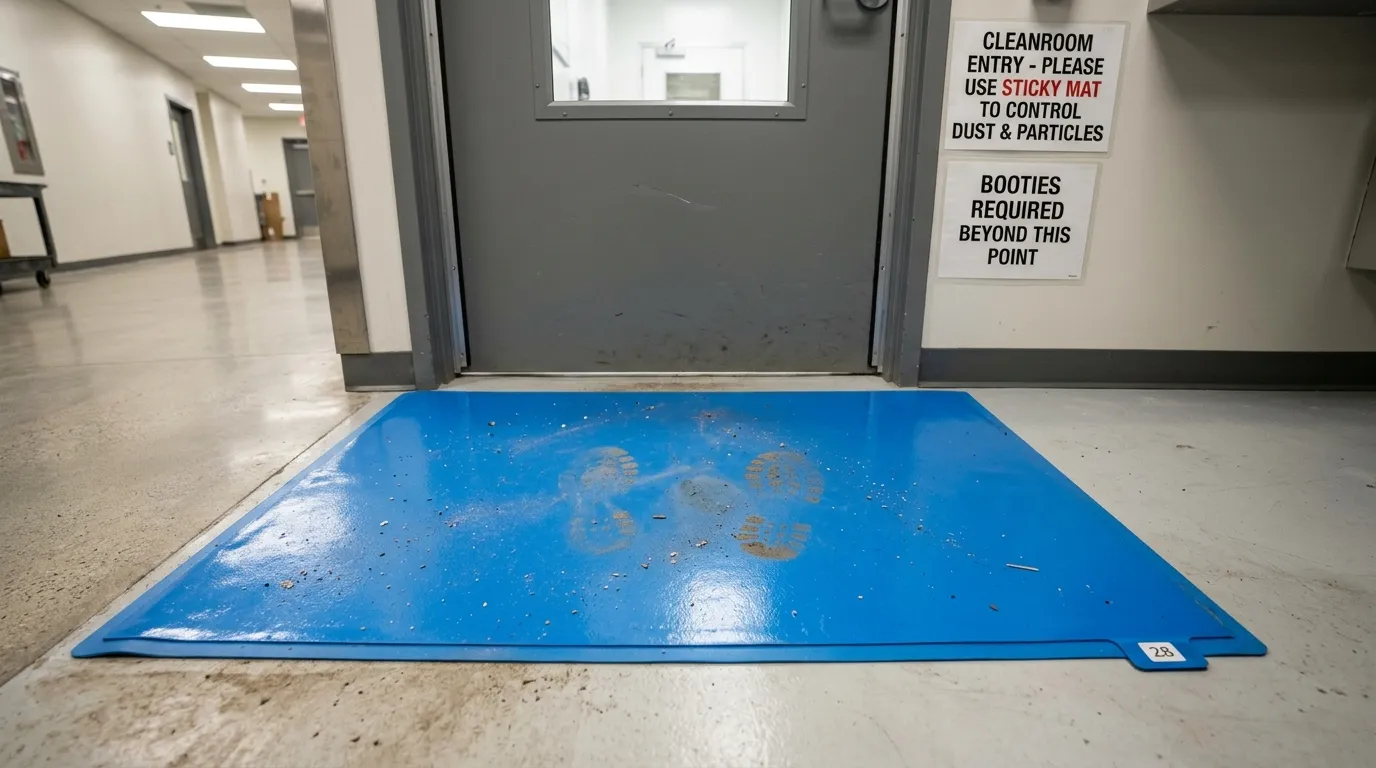
A particle control sticky floor mat is a special adhesive flooring material that is used to trap dust, dirt, and microscopic particles that can be found on shoes, carts, and wheels before they enter a clean environment.
It is also known as:
• industrial dust removing sticky mat.
• sticky adhesive mat to control contamination.
• anti-dust sticky mat in clean manufacturing areas.
The main concept is very basic and efficient. The mat is made of several layers of adhesive, which entrap and retain particles. Once the top layer is dirty, it is peeled off, exposing a fresh surface below.
The Operation of Sticky Mats in a Particle Control System
The adhesive surface tension and mechanical capture are the working principles of a sticky mat to control airborne particles in cleanrooms.
When one gets on the mat:
- Shoe sole dust particles are deposited on the adhesive layer.
- Small particles are immediately trapped.
- The bigger particles are frozen and cannot move anymore.
This forms a dust and particle capture system at the entry point, decreasing contamination prior to spreading to sensitive areas.
Technically, it is a:
• surface of particulate matter reduction.
• adhesive particle trapping technology.
• foot-borne contamination prevention system.
Technical Construction and Material
The quality cleanroom contamination control sticky mat is designed with accuracy. It is not a mere sticky sheet.
Typical structure includes:
Multi-Layer Design
• 30-60 peel-off layers based on level of use.
• The layers are all covered with pressure-sensitive adhesive.
• Constant thickness to capture particles uniformly.
Adhesive Technology
• Polymer-based or acrylic-based adhesive.
• Regulated stickiness to avoid shoe sticking and yet capture dust.
• Clean removal low-residue formula.
Surface Characteristics
• Floor stability anti-slip backing.
• Flat surface to enable good adhesion of particles.
• Micro-texture to enhance dust retention.
This renders it the best ISO cleanroom-compatible sticky mat and micro-particle retention flooring material.
Importance in Cleanroom and Industrial Environments
Contamination in cleanrooms is to be controlled. Even airborne dust or dust on the feet can influence the quality of production. The entrance contamination barrier of a cleanroom is useful in ensuring hygiene standards are upheld, as it forms the initial line of defense.
Sticky mat industries are:
- Semiconductor manufacturing
- Pharmaceutical production
- Electronics assembly
- Precision engineering
- Medical device manufacturing
The mat is a controlled environment cleanliness solution in such environments and minimizes the chances of product defects due to contamination.
Sticky Mat Uses in Industry
Semiconductor Manufacturing
Microscopic particles may harm wafers in semiconductor plants. A dust control semiconductor manufacturing sticky mat assists in minimizing the entry of particles at the gowning regions.
Pharmaceutical Industry
Ensures sterile areas and promotes pharmaceutical production hygiene control systems by avoiding footwear contamination.
Electronics Assembly
Shields circuits against dust damage with electronics manufacturing contamination control measures.
Precision Manufacturing
Provides stability in high-precision settings by minimizing dust interference.
Home and Light Use Applications
Industries are not the only users of sticky mats. They are also applicable in homes, laboratories, and small clean workspaces.
These mats are used as a:
- system of hygiene improvement in the workplace.
- dirt and debris sticking to the adhesive surface.
- controlled access cleanliness barrier
They come in handy particularly when:
- homes with allergies
- DIY clean labs,
- small workshops, and
- dust control areas for pets.
The Main Advantages of Sticky Mats in Dust and Particle Control
A good-quality adhesive sticky mat to control contamination has several benefits:
- High dust and particle trapping efficiency.
- Easy peel-off maintenance system.
- Cost-effective cleanroom solution
- Enhances hygiene in entry points.
- Reduces cleaning workload
- Helps in ISO cleanroom compliance.
- Avoids cross-contamination across zones.
- Improves safety and cleanliness in the workplace.
It is a floor-based particle reduction system that does not need any electricity or maintenance tools.
The Benefits of Sticky Mats in Cleanrooms
They assist in establishing a buffer zone whereby contamination is eliminated prior to workers accessing sensitive zones.
Technically, they are:
- cleanroom entrance contamination barrier
- cross-contamination prevention matting
- shoe sole particulate removal system.
- controlled access cleanliness barrier
This enhances efficiency in operations and minimizes the product rejection rates in production.
Selecting the Most Effective Sticky Mat to Use in Controlling Dust and Particles
In choosing the most effective sticky mat to use in dust and particle control in the cleanroom setting, the following factors should be considered:
1. Layer Count
The more layers, the longer the usability.
2. Adhesive Strength
Should have balance and easy movement.
3. Particle Size Efficiency
Find mats that trap micro-particles less than 5 microns.
4. ISO Compatibility
Make sure it is appropriate for your cleanroom class.
5. Size and Placement
Examples of common sizes are entry doors, corridors, and gowning areas.
Why Nabai ESD to Sticky Mats?
At Nabai ESD, quality and contamination control go hand in hand. Our products are intended to be used in high-performance industrial applications.
We specialize in:
- ESD safe work environment solutions
- contamination prevention flooring solutions.
- cleanroom-grade adhesive mats
- industrial hygiene systems
Our sticky mats are designed to be reliable, durable, and precise, and they fit global clean room standards.
Conclusion:
A sticky mat for dust and particle control is more than just a floor accessory. It is a silent protector of purity. It safeguards delicate settings, aids industrial accuracy, and minimizes the risk of contamination at the initial stage.
Enhance your cleanroom performance with high-quality solutions provided by Nabai ESD. Clean your workspace with high-tech contamination control and introduce accuracy to your workspace with reliable and high-quality sticky mats that are industrial in nature.
NEWS
GET SERVICE
With quality parts to meet every budget and friendly staff trained to make your visit informative and hassle free.