
Sticky Mat for Laboratory | Contamination Control Mats for Labs

Sticky Mat for Laboratory | Contamination Control Mats for Labs
Sticky Mat for Laboratory: The Smartest Way to Control Contamination
Cleanliness is no longer merely a requirement in modern laboratories, but rather the cornerstone of accuracy, safety, and compliance. You may be running a pharmaceutical laboratory, microbiology facility, biotechnology center, research institution, or an ISO-certified cleanroom, but even microscopic contaminants can interfere with results, cause equipment damage, and compromise the quality of products.
This is where a laboratory sticky mat will be a very important component of contamination control. These special adhesive mats are placed at the entrance, gowning, and transition areas to trap dust, dirt, microbes, and particles of footwear and equipment wheels before they enter the controlled areas.
With the ever-increasing cleanliness requirements in the laboratories, laboratory sticky mats are now among the most efficient and cost-effective contamination control devices.
Importance of Contamination Control in Laboratories
Sticky mats for the laboratory are constructed to work in very controlled environments. But contamination frequently comes in via the most frequent sources:
• Employee footwear
• Cart and trolley wheels.
• Equipment movement
• Packaging materials
• Visitor traffic
• Airborne dust particles
Research indicates that foot traffic contributes to particulate pollution in controlled settings as one of the major causes. An installed laboratory floor mat to control contamination assists in catching contaminants before they permeate the sensitive areas of work. When properly used, sticky mats can clean up 95 percent of the shoes and wheels.
What is a Sticky Mat to Use in the Lab?
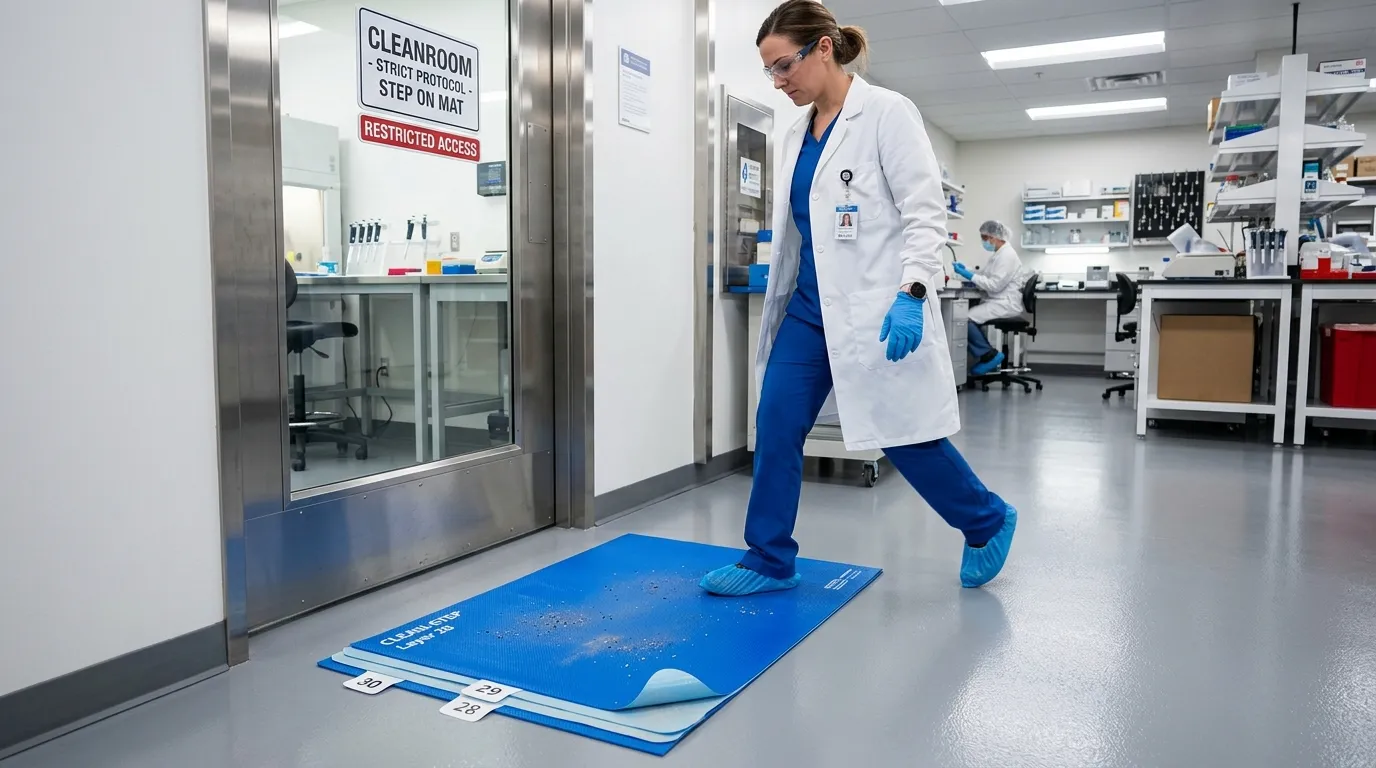
A laboratory sticky mat is a multi-layered adhesive flooring that is used to trap shoe, cart, and equipment wheel particles. These mats are usually made of polyethylene sheets that are covered with a pressure-sensitive acrylic adhesive.
Every layer serves as a new cleaning surface. When the upper layer is filled with dust and debris, it can be peeled off to expose another layer of adhesive below.
The majority of modern mats contain:
• 30-60 peel-off layers (numbered).
• High-tack adhesive coating
• Polyethylene film construction
• Non-residue adhesive technology
• Clean peel functionality
• Anti-slip floor attachment
This is a simple but very effective design that provides a dependable contamination interception system in laboratories and cleanrooms.
The Mechanism of Action of Laboratory Sticky Mats
The physics of a sticky mat is quite impressive. The mat picks up: When personnel walk over the adhesive surface.
• Dust particles
• Hair fibers
• Dirt
• Micro-debris
• Airborne particulates
• Footwear contaminants.
Similarly, a sticky floor mat in the laboratory to hold equipment wheels eliminates contaminants on carts, trolleys, and mobile laboratory equipment. The adhesive layer serves as a particle reduction system, which prevents the contaminants from penetrating further into the facility.
Technical Characteristics of High-Performance Laboratory Sticky Mats
Innovative contamination control solutions are necessary in modern cleanroom and laboratory settings. Quality sticky mats may have the following specifications:
Multi-Layer Adhesive Construction
A multi-layer laboratory sticky mat is a sticky mat that has several adhesive sheets. Benefits include:
• Longer service life
• Easy maintenance
• Consistent adhesive performance
• Reduced replacement frequency
A high tack laboratory sticky mat is a mat that is used to trap particles by using special acrylic adhesives to ensure that there is maximum retention.
Advantages include:
• Superior dust capture
• Improved cleaning of wheels.
• Effective debris removal
• Enhanced contamination control
Polyethylene Film Technology
The majority of high-quality mats are made of tough polyethylene. Benefits include:
• Tear resistance
• Consistent tackiness
• Low particle generation
• Excellent durability
A pressure-sensitive adhesive mat works immediately when it comes in contact with a contaminant, and it traps the contaminant without the need for more cleaning agents.
Sticky Mats: ISO Cleanrooms and Sterile Environments
Laboratories that are classified under ISO cleanrooms should have strict limits of contamination. An ISO cleanroom sticky mat on the lab floor aids in compliance by minimizing the movement of PM in high-traffic zones into controlled zones. These mats are usually laid in:
• ISO Class cleanrooms
• Pharmaceutical laboratories
• Biotechnology facilities
• Electronics testing labs
• Plants for manufacturing medical devices.
• Research laboratories
Sticky mats help cleanroom contamination prevention programs and laboratory quality assurance programs by reducing foot traffic contamination.
Disposable Laboratory Sticky Mat Advantages
A sticky laboratory mat that is disposable has a number of practical benefits.
- Consistent Performance
A new layer offers a new adhesive surface.
- Quick Maintenance
Take off the used sheet and proceed with the operations.
- Cost Efficiency
Less cleaning is required, thereby reducing operational expenses.
- Improved Compliance
Promotes GMP and ISO contamination control measures.
Industrial Uses of Laboratory Sticky Mats
- Pharmaceutical Laboratories
Avoid contamination that may compromise the integrity of products.
- Biotechnology Facilities
Protect sensitive research and biological samples.
- Microelectronics Laboratories
Minimise the presence of particulate contamination that may harm components.
- Medical Testing Laboratories
Support a sterile environment, safeguarding.
The Nabai solutions find extensive application in the biotechnology, pharmaceutical, microelectronics, semiconductor manufacturing, and other precision industries.
Selecting the Most Appropriate Sticky Mat for the Entrance of the Laboratory
The choice of the appropriate mat is dependent on a number of factors.
- Adhesion Level
Select low, medium, and high-tack adhesive systems.
- Layer Count
An increased number of layers gives extended operational life.
- Traffic Volume
The best sticky mat to use in a laboratory is a heavy-duty one.
- Cleanroom Requirements
Take into account ISO classifications and contamination control objectives.
- Equipment Usage
Carts and trolleys have wheel-specific contamination control mats.
Why Nabai is a Trusted Laboratory Sticky Mat Manufacturer
Nabai has been providing contamination control and ESD protection solutions to precision industries all over the world for over 17 years. Their sticky mats are made to ensure efficient contamination control at the cleanroom entrances and also assist in the management of the environment that is ISO compliant.
Nabai offers:
• Normal cleanroom sticky mats.
• Equipment-specific sticky mats
• Anti-static sticky mats
• Cleanroom anti-bacterial sticky mats
• OEM and ODM solutions.
Conclusion
Nabai can provide a high-tack adhesive mat, a sticky mat for laboratory to fit equipment wheels, or an antibacterial solution to use in sterile environments, with years of experience in cleanrooms. Today, visit Nabai to find out what high-quality laboratory contamination control mats are, get a quote, or even order a bulk order of laboratory sticky mats directly with a reputable manufacturer of laboratory sticky mats.
NEWS
GET SERVICE
With quality parts to meet every budget and friendly staff trained to make your visit informative and hassle free.