
Sticky Mat for Pharmaceutical Cleanroom: Guide to GMP Control

Sticky Mat for Pharmaceutical Cleanroom: Guide to GMP Control
Sticky Mat in Pharmaceutical Cleanroom: Initial Barrier to Contamination
The production of pharmaceuticals requires accuracy in all processes. One particle can undermine the quality of the product, influence the regulatory compliance, and add operational risks. This is why the control of contamination is one of the most important priorities in any cleanroom of pharmaceutical manufacturing.
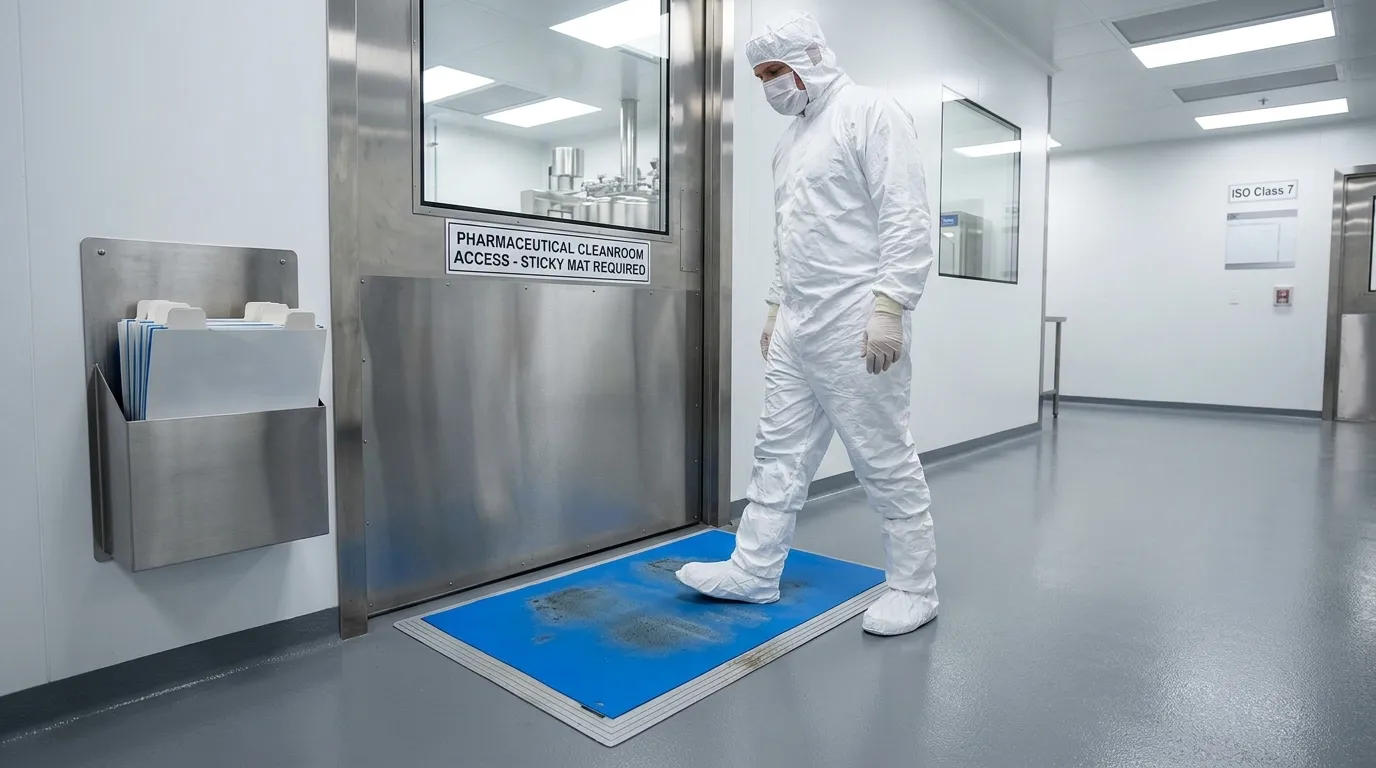
- A sticky mat for a pharmaceutical cleanroom is one of the most basic and yet the most effective solutions to contamination prevention among the numerous cleanroom consumables employed to keep the environment in a pharmaceutical cleanroom. These mats are placed at the entrances, gowning areas, and airlocks to trap dirt, dust, and particles before they get into the controlled areas.
- At Nabai ESD, contamination control is at the core of every product solution. Their superior adhesive mat systems have been designed to accommodate pharmaceutical hygiene control, particle reduction, and GMP compliance throughout pharmaceutical production plants.
Importance of Contamination Control in Pharmaceutical Cleanrooms
Pharmaceutical plants are highly regulated. Regardless of whether it is the manufacture of tablets, injectables, vaccines, or biologics, it is imperative to have a controlled pharmaceutical environment.
Particles may get into a cleanroom via:
• Employee footwear
• Cart and trolley wheels.
• Packaging materials
• Equipment movement
• Airborne dust migration
Pharmaceutical aseptic processing and sterile drug manufacturing processes are susceptible to even microscopic contaminants. A pharmaceutical cleanroom sticky mat provides a good barrier to contamination by capturing particles prior to entering the cleanroom. This easy preventive step assists in supporting:
• Cleanroom contamination control
• Pharmaceutical contamination management
• Contamination control of GMP cleanrooms.
• Pharmaceutical quality assurance
• Cleanroom particle reduction
What is the Mechanism of Action of Pharmaceutical Cleanroom Sticky Mats?
A pharmaceutical cleanroom adhesive floor mat is a floor mat made of several layers of adhesive-coated material. As the personnel or equipment crosses the mat, the adhesive surface captures:
• Dust particles
• Dirt
• Fibers
• Hair
• Packaging debris
• Wheel-borne contaminants
A saturated top layer can be peeled off to expose a new adhesive surface. This design renders a pharmaceutical cleanroom peel-off mat very efficient and cost-effective. The capture of the particles helps in:
• Footwear contamination prevention
• Flooring control in pharmaceutical floors.
• Cleanroom dust prevention
• Cleanroom traffic control
• Controlled environment cleanliness
The Sticky Mats and Their Role in GMP Compliance
Good Manufacturing Practice standards demand that pharmaceutical facilities have efficient contamination control measures. To address these needs, a pharmaceutical cleanroom sticky mat to comply with GMP minimizes the movement of particles between uncontrolled and clean manufacturing areas.
Sticky mats are typically placed in:
• Gowning rooms
• Airlocks
• Packaging cleanrooms
• Production entrances
• Laboratory access points
• Material transfer zones
Sticky mats can be used as part of a larger dust control system to ensure that facilities have cleaner production environments and are better prepared to comply with regulations.
Important Characteristics of a Good Pharmaceutical Sticky Mat
- Sticky Mats are Not All the Same
An ideal sticky mat to use in pharmaceutical cleanrooms must have a number of important characteristics.
- Multi-Layer Construction
Pharmaceutical cleanroom environment multi-layer sticky mat offers long service life with multiple peel-away sheets. This design reduces the maintenance disruption and provides uninterrupted contamination control.
- High-Tack Adhesive Technology
A high tack pharmaceutical sticky mat is a good capturing sticky mat that does not leave any residue on shoes or wheels. High-tech acrylic bonding agents ensure uniform particle retention and can be used in clean rooms.
- Durable Polyethylene Construction
A lot of pharmaceutical cleanroom floor mats are produced with heavy-duty polyethylene materials that cannot be torn by continuous traffic.
Uses in Pharmaceutical Facilities
There is a pharmaceutical contamination prevention mat that is applied in different areas of operation.
- Pharmaceutical Production Areas
There must be tight control of contamination in production zones since products are exposed directly during production. A pharmaceutical production contamination control sticky mat assists in minimizing the movement of particles in the surrounding regions.
- Pharmaceutical Packaging Cleanrooms
Dust can be produced during packaging operations due to cartons, labels, and secondary packaging materials. Sticky mats minimize the transmission of contamination and promote the cleanliness of pharmaceutical facilities.
- Pharmaceutical Laboratories
A pharmaceutical laboratory sticky mat is used to ensure cleaner testing conditions where the accuracy of analysis is vital.
- Biotech Facilities
A biotech cleanroom sticky mat is used to aid in the control of contamination in biotechnology processes, where the environment is directly related to the results.
Which Sticky Mat is the Best in Contamination Control of Pharmaceutical Cleanrooms?
In assessing the most suitable sticky mat to use in pharmaceutical cleanroom contamination control, the decision-makers must take into account:
• Layer count
• Adhesive consistency
• Material quality
• Traffic volume
• Regulatory requirements
• Ease of maintenance
The perfect solution is a combination of:
• Strong particle capture
• Reliable peel-off performance
• High durability
• GMP compatibility
• Cost efficiency
Nabai sticky mats are uniquely designed to offer contamination control assistance to pharmaceutical, biotechnology, semiconductor, and other precision sectors.
Benefits of Pharmaceutical Cleanroom Sticky Mats
The benefits are much more than dust removal. Key benefits include:
• Improved contamination control in the cleanroom.
• Reduced particle introduction
• Improved pharmaceutical hygiene control.
• Support for GMP cleanroom supplies programs
• Enhanced cleanroom validation.
• Lower cleaning costs
• Cleaner controlled environments
• Better protection of the quality of products.
• More powerful contamination prevention solutions.
All these advantages render sticky mats a significant part of the modern cleanroom flooring solutions.
Reasons Why Pharmaceutical Facilities Prefer Nabai
Nabai has been providing contamination control and ESD protection solutions to precision manufacturing industries globally for over 17 years. The firm offers ISO-certified manufacturing, hi-tech manufacturing, and cleanroom expertise.
Nabai solutions are widely used across:
• Pharmaceuticals
• Biotechnology
• Semiconductor manufacturing
• Electronics production
• Medical device manufacturing
Their product line comprises sticky mats, sticky rollers, protective films, and other cleanroom accessories that facilitate the objectives of contamination control.
Conclusion
In need of a reliable sticky mat for a pharmaceutical cleanroom? Nabai offers high-end contamination control systems designed to meet the requirements of pharmaceutical production, biotechnology plants, and sterile manufacturing. Discover high-performance sticky mats, air shower adhesive mats, and cleanroom consumables that can be used to facilitate cleaner operations and more rigorous compliance standards.
Go to NABAI today and ask to be provided with a solution that will meet the needs of your contamination control in your facility.
NEWS
GET SERVICE
With quality parts to meet every budget and friendly staff trained to make your visit informative and hassle free.