
Sticky Mat Price: Cost Guide & Buying Factors for Cleanroom Mats

Sticky Mat Price: Cost Guide & Buying Factors for Cleanroom Mats
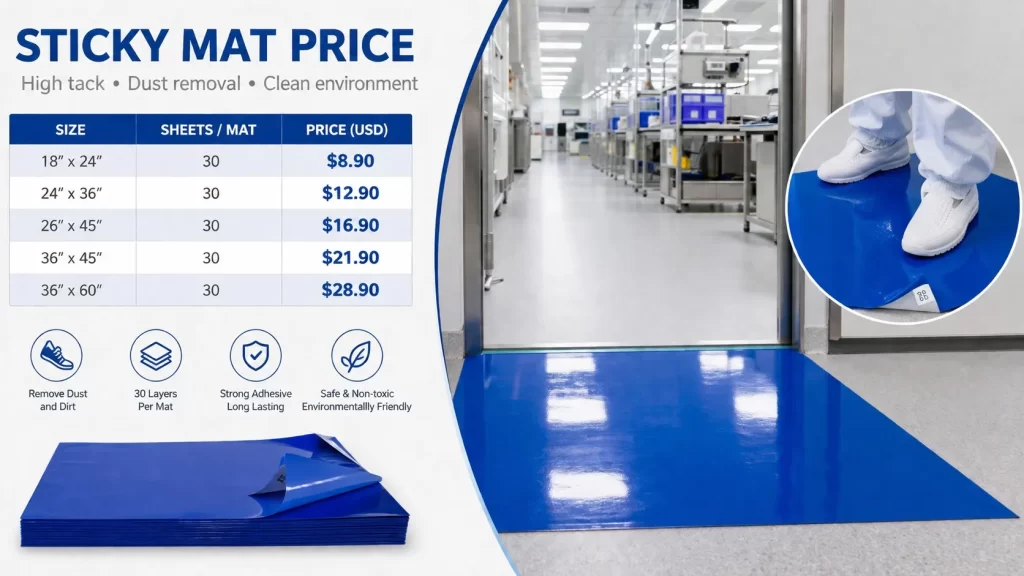
When purchasing sticky mat prices, it is not only important to know the costs of cleanroom sticky mat prices but also what factors differ among brands, sizes and applications. From semiconductor clean rooms, hospitals, electronics workshops, or construction sites, sticky mats are an easy-to-use and effective contamination control tool.
What Is a Sticky Mat?
Sticky mat (also known as tacky mat or cleanroom adhesive mat) is a multi-layered mat that will remove dust, dirt and particles from shoes and wheels before entering a controlled environment.
Each mat is usually made up of:
- 30–60 peel-off adhesive layers
- A non-slip base layer
- Strong adhesive coating that traps particles
Once the top layer becomes dirty, it is peeled off to reveal a fresh clean layer underneath.
Sticky Mat Price Overview (2026 Market Range)
The cost of the sticky mat will differ from one to another according to size, stickiness, number of layers, manufacturing quality etc.
This is an estimated world-wide price range:
1. Standard Cleanroom Sticky Mats
- Small size (18” x 24”): $15 – $35 per pack
- Medium size (24” x 36”): $25 – $60 per pack
- Large size (26” x 45”): $40 – $90 per pack
2. Industrial Heavy-Duty Sticky Mats
- Price range: $50 – $120 per pack
- Designed for high-traffic entry zones
3. Anti-static (ESD) Sticky Mats
- Price range: $60 – $150 per pack
- Used in electronics manufacturing and semiconductor cleanrooms
4. Bulk Wholesale Sticky Mats (Factory Direct)
- Price range: $0.8 – $3 per sheet (OEM/ODM orders)
- Best for distributors and large-scale buyers
Key Factors That Affect Sticky Mat Price
Understanding pricing structure helps you choose the right product without overpaying.
1. Number of Layers
Most sticky mats come in:
- 30 sheets (budget option)
- 45 sheets (standard)
- 60 sheets (premium)
More layers = higher price but lower cost per use.
2. Adhesive Strength
There are three main adhesive levels:
- Light tack (low traffic areas)
- Medium tack (standard cleanrooms)
- High tack (industrial contamination zones)
Stronger adhesive increases production cost and price.
3. Material Quality
Higher-quality mats use:
- Polyethylene (PE) film layers
- Non-toxic adhesive coatings
- Anti-slip rubber backing
Cheap mats may use thinner film that tears easily, reducing lifespan.
4. Size and Thickness
Larger mats require more material and stronger backing support, increasing price.
Common sizes:
- 18” x 24”
- 24” x 36”
- 26” x 45”
5. Anti-Static (ESD) Function
ESD sticky mats are more expensive due to:
- Conductive materials
- Specialized coatings
- Testing and certification (ISO/ESD standards)
6. Certification Requirements
Mats used in:
- Semiconductor factories
- Medical cleanrooms
- Pharmaceutical production
often require compliance such as:
- ISO Class standards
- RoHS compliance
- ESD certification
These certifications increase cost but are mandatory in regulated industries.
Sticky Mat Price Comparison by Application
Semiconductor & Electronics Industry
- Price: $60 – $150 per pack
- High demand for ESD protection
- Strict contamination control requirements
Medical & Hospital Cleanrooms
- Price: $30 – $90 per pack
- Focus on hygiene and infection control
Food Processing Plants
- Price: $25 – $70 per pack
- Emphasis on cleanliness and safety compliance
Construction Sites
- Price: $15 – $50 per pack
- Used for dust reduction in controlled zones
How to Choose the Right Sticky Mat (Based on Price vs Performance)
When evaluating sticky mat price, don’t just focus on the cheapest option. Instead, consider cost per use.
Step 1: Calculate Cost per Sheet
Example:
- $40 mat / 30 sheets = $1.33 per use
- $70 mat / 60 sheets = $1.16 per use
Higher upfront cost can be more economical long-term.
Step 2: Match Adhesive Level to Environment
- Light traffic → light tack
- Standard cleanroom → medium tack
- Heavy contamination → high tack
Step 3: Consider Replacement Frequency
High-traffic areas may require frequent replacement, making durability more important than initial price.
OEM and Wholesale Sticky Mat Pricing
For distributors or B2B buyers, factory pricing is significantly lower.
Typical OEM options include:
- Custom logo printing
- Custom sheet count
- Custom thickness
- Color options (blue, white, gray)
Wholesale pricing advantages:
- Lower per-unit cost
- Branding opportunities
- Long-term supply contracts
Factories in China, Vietnam, and India often offer the most competitive pricing for bulk orders.
Hidden Costs to Consider
When evaluating sticky mat price, buyers often overlook:
- Shipping costs (volume weight matters)
- Import duties and tariffs
- Storage conditions (humidity protection)
- Disposal costs for used mats
These can significantly affect total cost of ownership.
Sticky Mat Price Trends in 2026
The global market shows several trends:
1. Rising Demand for Cleanroom Products
Semiconductor and EV industries are expanding, increasing demand.
2. Shift Toward Eco-Friendly Materials
Biodegradable adhesive films are emerging but currently more expensive.
3. Increased OEM Customization
More companies want branded mats for facility standardization.
4. Price Stabilization in Asia Supply Chain
Factory pricing remains stable, but logistics costs fluctuate.
Buying Tips to Get the Best Sticky Mat Price
To optimize your purchase:
- Buy in bulk (reduces per-unit cost significantly)
- Compare sheet count, not just pack price
- Choose factory-direct suppliers when possible
- Request samples before large orders
- Check adhesive performance, not just appearance
Conclusion
The adhesive price for the sticky mat is tremendous and changes according to the size, layers, stickiness and the requirement for the application. Depending on the type of mat, the basic ones can be as low as $15/pack, whereas the high-performance cleanroom or ESD mat can be more than $150/pack.
For most industrial buyers, when choosing a heat heat exchanger, it is best to consider the cost of use, length of service and compliance requirements, rather than just the initial cost.
Knowing these factors can help you make more informed buying decisions and keep cleanroom or industrial hygiene standards cost-effective and efficient.
NEWS
GET SERVICE
With quality parts to meet every budget and friendly staff trained to make your visit informative and hassle free.