
Why Rounded Inner Core Design Reduces Film Damage in Industrial Sticky Rollers

Why Rounded Inner Core Design Reduces Film Damage in Industrial Sticky Rollers
High-speed production systems like PCB cleaning stations, printing, and laminating have unplanned downtime and increased loss from rejects due to minor film damage. The Industrial Cleaning Sticky Roller may be the first defense against particle contamination. There are multiple designs for sticky rollers. Active Cores of Industrial Cleaning Sticky Rollers with sharp-cornered designs versus rounded-edge designs can greatly impact their ability to protect sensitive films. This article discusses the features of Nabai's Inside-Core Rounded Edge Industrial Sticky Rollers and how they reduce the effects of film tears, scratches, and waste.
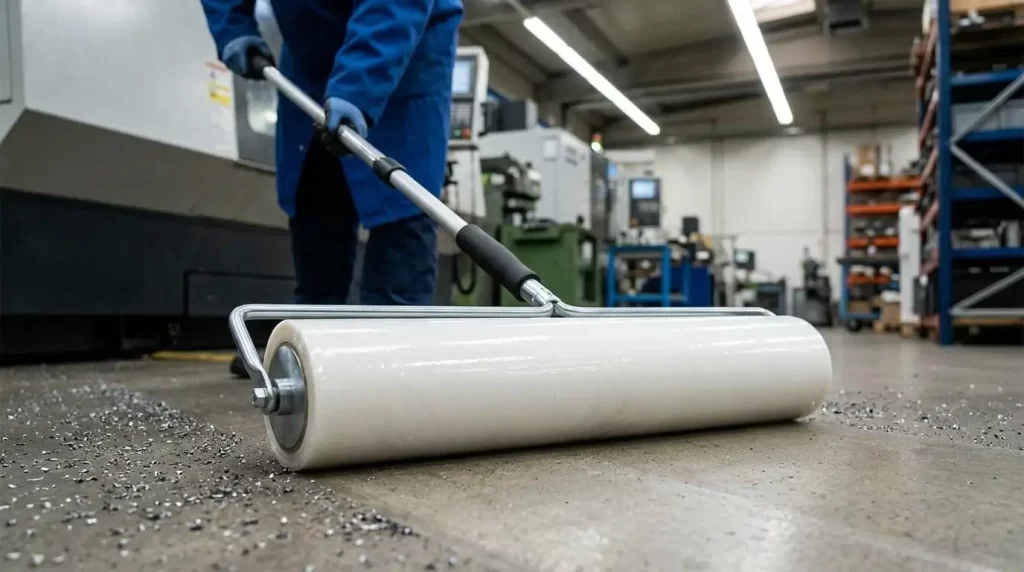
The Roller's Edge and Film Integrity
The construction of a Sticky Roller may appear simple, with a core and an adjacent adhesive surface. Greater design concern arises during the frequent contact of the core with the film, or, more likely, the core's contact with the dispensing assembly. Edge design becomes of concern during the repeated contact of the core with the assembly roller.
•The effect of an unrounded edge during the core contact with the film may actually be blade-like during contact with a film that is under some tension. The contact, and subsequent tension of the film, may even lead to the formation of micro-cuts, or worse, ruptures.
•The effect of film fatigue during high-speed production is even more pronounced when the production speed exceeds 50 M/min and the core has a burr as little as 0.2 mm.
•Sharp, unrounded edges of a core greatly increase the friction between the core and film during contact, and those conditions lead to a rapid increase in temperature, and in turn, greater contamination which will also adhere to the sticky surface.
These issues become even more problematic when looking at materials that are thin and delicate such as polyimide films, dry films of photoresist, optical clear adhesives, and release liners used in the manufacturing of medical devices.
Traditional Designs vs. Rounded Edge Geometry.
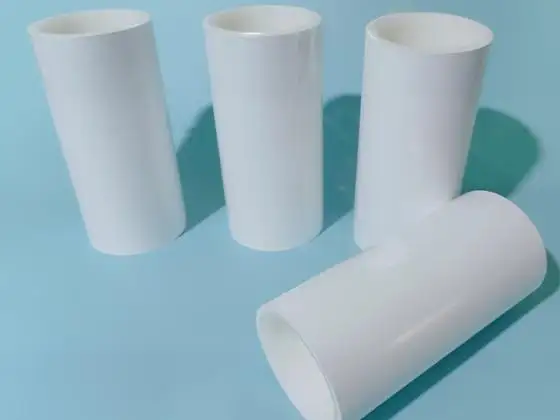
Typically, simple cut ends with 90 degree corners are left when manufacturing traditional sticky roller cores. On the contrary, the rounded inner core design provides a radius that is continuous and smooth at the edge where the core meets the film contact zone.
•Stress redistribution: Under the same load, pressure with a rounded edge design is distributed over a wider area and is, therefore, reduced by as much as 60% when compared to a design with a sharp edge.
•Removal of stress riser: Corners of a design tend to concentrate stress in materials science, and rounded corners are likely to prevent the initiation of a crack on the film.
•Reduced friction: A design with a smooth and curved surface that has less than 1.6μm of roughness guarantees gliding rather than scraping contact and, therefore, less severing wear.
Nabai's Technical Approach: Precision That Prevents Damage
Nabai's Inside-Core Rounded Edge Industrial Sticky Roller is not a generic consumable. It is produced with quantifiable quality controls that directly address film damage mechanisms.
Key Quality Parameters and Their Protective Role
•Core roundness tolerance of ±0.1mm: This ensures that every revolution of the roller maintains a consistent radial profile, eliminating "bumpy" rotation that would otherwise jerk the film and cause edge curling.
•For tolerance ±0.05mm across all production runs: if consistently applied, there will be no hard spots. Having an even radius on the core provides even contact with the film, avoiding uneven wear.
•Surface smoothness Ra < 1.6μm: A mirror-like finish on the inner core reduces friction against dispenser guide rollers, which in turn lowers metallic particle generation and prevents those particles from embedding into the film.
•Compression testing at 100kg load: The core maintains its round geometry even under heavy tension, so it will not deform into an oval shape that would pinch or crease the film.
Material and Adhesive Considerations
The roller's polypropylene (PP) substrate offers inherent stiffness without brittleness. The adhesive layer, available in strengths from 200D to 1500D (g/25mm), is formulated to capture particles without leaving residue. But even the best adhesive cannot compensate for a poor core design.
•200D to 500D range: Suitable for ultra-sensitive films (e.g., optical films or printed electronics) where any additional stress must be avoided.
•800D to 1500D range: Suitable for high contamination zones such as pre-lamination cleaning, where rounded core still protects against film tearing despite increased tack.
Production Advantages Beyond Film Protection
The entire production line is positively impacted by the installation of a rounded-core sticky roller, not just the film surface.
•Increased lifespan of dispensers by 40-50%: Due to the smooth, rounded core that has a reduced metallic friction coefficient and a balanced radial friction, the dispensers and the tension and guide rollers last significantly longer.
•Less required intervention by operators: Operators spend a lot of their time monitoring the quality of the film. This is because the film is no longer breaking, therefore, they have to stop the line and re-guide the film.
•Production speed increased by 10-20% while maintaining film quality. Low friction movement and wider design allow faster manufacturing speeds, with some lines operating between 10% and 20% faster.
Where Rounded Core Is Most Beneficial
For these industrial applications, the protective nature of rounded cores benefits the following:
•Electronics (PCB cleaning): Eliminates the need to dispose of panels by providing a way to remove the particles without ripping the copper foils.
•Printing (coating and laminating): Provides a means to avoid web breaks and registration issues by eliminating the drag caused by a rounded core.
•Packaging (automated label applicator): Provides a means to avoid adhesive transfer to rollers by protecting the edge of the liner.
•Cleanroom (particle-sensitive assembly): Provides a means to avoid core-generated friction that leads to a malfunction of an ISO Class 5 cleanroom.
•Manufacturing Medical Devices (policed processes): Device films often require full-width cleanliness. The rounded core design prevents micro-tears that trap bacteria or that would lead to a compromise in sterility.
Indicators of a Good Rounded Core Sticky Roller Design
The following indicators show that the Sticky Roller is designed properly for Industrial Cleaning:
•Radius is evident on the edge: The edge that comes in contact with the core should be rounded. You should be able to feel it with your fingers.
•Rounded core and edge consistency data available: Good suppliers (like Nabai) will give you the measurement of their roundness and edge radius consistency (e.g., ±0.1mm roundness, ±0.05mm edge radius).
•Proper mounting and good right feel: Once you mount the roller on a shaft, it should rotate freely and not bind.
•No sharp mold seams: The edges should not have mold parting lines. Nabai validation states that all batches will have the same consistency of edge radius.

Conclusion: Small Design Change, Large Impact
While the transition from sharp-angled to a rounded inner core may appear to be a small design consideration, it has a marked effect on film damage. The Inside-Core Rounded Edge Industrial Sticky Roller Design Rounded Edge Industrial Sticky Roller, with friction and stress evenly distributed, eliminates all stress risers, design transforms a consumable with a design that affects process reliability. For manufacturers using the design in the sectors of Electronics, Printing, Packaging, Cleanrooms and Medical Devices, the design means less waste and longer life and reduced downtime of the equipment overall through less film breaks.
The evidence of Nabai's commitment to unyielding precision, seen through uniformly smooth edge profiles, round cores, and supremely consistent surface finishes, stands at the submicron level. Our products leave nothing to chance and unyielding precision from the first millimeter to the last is expected. The rounded core approach is not an option, but a necessity, for reliable particle removal when dealing with delicate materials.
FAQs
Q1: How does a rounded inner core help?
A: Rounded edges help distribute pressure, and minimize damage to film and tearing.
Q2: Is the rounded core sticky roller good for use with automated dispensing machines?
A: Yes, the tolerance gives it the ability to smoothly rotate and be a part of most automatic tension mechanisms.
Q3: What do the adhesives of different films have to offer?
A: 200D to 1500D (g/25mm) – lower level for delicate optical films, and higher for films in contact with heavy contaminants.
Q4: How does the rounded core design help in the extension of equipment lifespan?
A: It helps to control friction on guide rollers and metal particle generation, allowing dispensers to function adequately for 40–50% longer.
Q5: For industrial applications, what are the dimensional limitations?
A: Between 650mm and 2000mm, but of course anything beyond that is custom.
NEWS
GET SERVICE
With quality parts to meet every budget and friendly staff trained to make your visit informative and hassle free.