
Optical Grade vs. Industrial Grade Surface Protection Film for Cleanrooms – When Transparency Matters

Optical Grade vs. Industrial Grade Surface Protection Film for Cleanrooms – When Transparency Matters
In cleanrooms, considering the right Surface Protection Film will go beyond just stopping scratches or dust. While both optical grade and industrial grade films provide protection, the optical performance will make the difference. In the following article we will explore the different aspects of Surface Protection Film to help you consider the right one for your business.
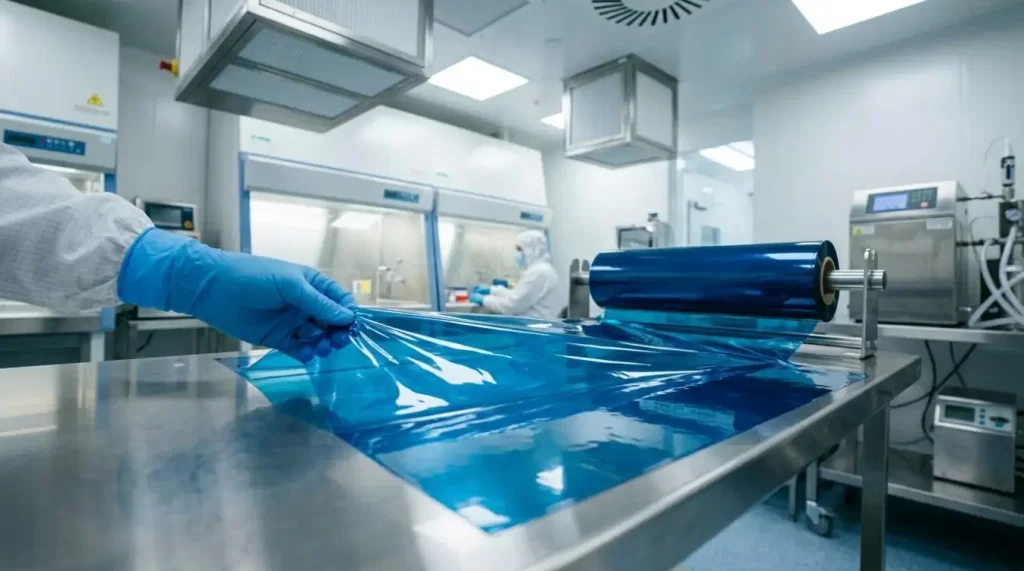
Why Is Transparency Important in Films for Cleanroom Protection?
Using a protection film with a low level of transparency can impact control of quality, workflow, and final yield of the product. Here's how.
• Automated Optical Inspection Systems (AOI): Low film transparence causes false defect inspection.
• Operator visual inspection (OVI): When optical clarity is low, it can lead to contamination of the film.
• Post-Application Alignment: A film with high transparency is essential to precise alignment over a surface.
• Customer Product Acceptance: If a protective film is low in optical quality, it leads to unnecessary inspections.
Optical Grade vs. Industrial Grade Surface Protection Film for Cleanrooms
Knowing the differences will help you to avoid under-protecting and over-specifying the Surface Protection Film for Cleanrooms. Both grades will have a Silicone Coated PET base, but will differ in optics and in high mechanical design.
1. Optical Grade Surface Protection Film for Cleanrooms
Films with Optical Grade Surface Protection are ideal for Cleanrooms. Applications requiring high levels of light transmission and minimal light distortion can benefit from the following characteristics:
• Visible Light Transmission >92%: There is almost total visibility of the film.
• Haze Value <1.5%: Low Haze values mean that a film cannot easily conceal micro scratches/dirt.
• Low Surface Roughness: Reduces scattering and allows the film to be put under high magnification without being inspected.
• Laminate Displays, Lenses, and Touch Panels: Used to Protect Displays, Lenses, and Touch Panels: Used for Laminating, Assembling and Testing of Smartphones, Tablets, AR/VR and Medical Displays.
• Acts as a Shield during Full Speed AOI: Due to its Optical Clarity, the film is still susceptible to defect detection via AOI with a 5µm resolution, even with the film applicated.
2. Industrial Grade Surface Protection Film for Cleanrooms
Industrial Grade films focus a lot more on Mechanical Protection and cost than Optical Grade Protection, while also containing the following characteristics:
• Visible Light Transmission ~85%: This is adequate for most applications and basic product handling, but fails for most Optical Inspections.
• Haze Values (2.5%-5%): Minor haze can be tolerated for films that protect Stainless Steel Sheets, Plastic Housings, and Painted Surfaces.
• Scratch and Puncture Protection: Industrial Grade Protection films are usually of a greater thickness due to the requirements of a rough manufacturing environment.
• Machinery, Metal Panels, and Large Components: Protects film during machining, stamping, and sotrage/shipping activities.
• In-line AOI is Not Recommended: Due to poor transparency, there are many false readings that are likely to require removal of the film, causing contamination.

Key Takeaways (From Nabai's Silicone-Coated PET Film)
Nabai's Surface Protection Film for Cleanrooms provides both grades, combining silicone-coated PET with residue-free anti-static properties. Shown below are the important technical differences between Optically Clear Film and Industrial Film:
| Parameter | Optical Film | Industrial Film |
| Light Transmission | >92% | ~85% |
| Haze | <1.5% | 2.5–5% |
| Main Application | Assembly of displays, protection of optical elements | Protection of metal, plastic, and machine components |
| Integrates AOI | Yes (full speed) | No (false rejects risk) |
| Nominal Thickness | 25µ–75µ | 75µ–125µ |
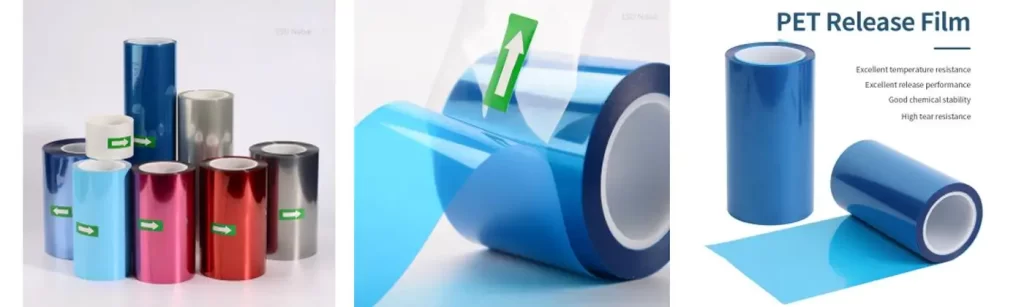
| Color Choices | Transparent | Blue, Red, Transparent, White |
Nabai's Technology for Optical Grade Solution
Nabai's design innovations enable highly transparent films for cleanroom protection:
• Optically clear silicone layer: Standard yellowing sanitary films don't meet the protection needs for a cleanroom, but Nabai's silicone adhesive remains clear and maintains >92% transmission after 6 months of storage.
• Low-tack silicone: Provides a clean peel without the micro-abrasions that reduce transparency.
• Anti-static layer: Combats dust attraction to both the film and the surface, especially important for optical elements where dust is highly visible.
• Dual release liner: minimizes the risk of reduced transparency due to air entrapment during application.
• Heat-resistant silicone foam (for some variants): Provides impact protection while maintaining optical clarity.
When to Use Optical Grade Surface Protection Film for Cleanrooms
Use this film when the following applies:
• In-line automated optical inspection is carried out: The film must not in any way obstruct the camera to detect defects, hence false passes or unnecessary inspections are to be avoided.
• The protected surface is highly reflective or anti-reflective coated: AR coatings amplify haze; industrial-grade films produce noticeable rainbow effect or blur.
• The final product requires no visible distortion at a 20cm viewing distance: For smartwatch covers, medical displays, or automotive touchscreens, users will perceive blurring caused by the film.
• You must conduct a quality check without removing the film: Limiting the number of film removals decreases the film's off-gassing and improves the longevity of the cleanroom's consumables.
When to Use Industrial Grade Surface Protection Film for Cleanrooms
Industrial grade is the sensible option in the following situations:
• Protecting raw metal, unprocessed plastic, or coarse substrates: Scratches on these substrates are acceptable, and transparency is subordinate to protection against puncture.
• High-abrasion processes such as CNC routing or die cutting: Film must be tough enough to withstand contact with chips and tools; optical grade would tear far too easily.
• Large, flat parts with infrequent, manual inspection: Processors can peel a corner to inspect the film; full transparency is not desired while processing.
• Cost-constrained projects with no AOI specification: For the same thickness, industrial grade is 20-30% less than optical grade.
Transparency in Cleanroom Films: Big Myths and Little Truths
Many cleanroom operators are misinformed, which negatively affects performance. Here are the truths:
• Myth: "All clear films are the same." Truth: A 5% difference in film transmission and 2% haze can severely impact AOI pass rates – we have seen false reject rates drop from 8% to 0.5% after switching to optical grade.
• Myth: "Thinner films allow more light to pass through." Reality: The film thickness has little effect. The light transmission quality is more dependent on the adhesive layer and the surface finish. Nabai's 100µ optical grade still delivers >92% transmission.
• Myth: "Silicone coatings reduce transparency." Reality: Properly cured silicone adhesive is highly transparent; poor-quality acrylic adhesives yellow over time, reducing clarity.
Best Practices for Using Optical Grade Surface Protection Film in Cleanrooms
To maximize the benefits of optical grade films, follow these steps:
• Clean the surface thoroughly before application: Any particle under the film will cast a shadow, appearing as a visible defect under AOI.
• Use the dual-layer release liner method: Remove the first liner, position the film, then remove the second liner while smoothing – this prevents air entrapment that reduces local transparency.
• Apply with a soft silicone squeegee: Hard tools can scratch the film's top layer, creating surface haze; Nabai recommends a 60 Shore A silicone roller.
• Allow 2 hours of dwell time before AOI inspection: The adhesive needs to fully wet out; immediate inspection may show temporary micro-air bubbles that disappear after settling.
Conclusion
Choosing between optical grade and industrial grade Surface Protection Film for Cleanrooms should be driven by your inspection method and surface sensitivity. For display, lens, and touch panel manufacturing, optical grade's >92% transmission is a production necessity – not just a spec. For heavy-duty mechanical protection, industrial grade offers reliable performance at lower cost. Nabai's silicone-coated PET platform ensures both grades deliver clean peel, anti-static properties, and heat resistance, so your decision focuses only on what you need to see through the film – and what you cannot afford to miss.
Need the right grade for your cleanroom? Request a quote with your light transmission requirement, thickness preference, and AOI camera specifications. Nabai provides custom widths (1040mm, 1090mm) and viscosities from 0–1000g to match your exact application.
FAQs
Q1: Does optical grade film cost significantly more than industrial grade?
Typically 20–30% more, but the cost is justified by higher yield rates in display and lens manufacturing lines.
Q2: Will the adhesive leave residue after months of storage?
No: Nabai's silicone-coated PET film does not leave a residue, and can be removed cleanly regardless of grade, even after long term storage.
Q3: Can I see surface defects through the film without removing it?
Yes, you can with optical grade (>92% transmission); industrial grade may reveal fine scratches or surface particles due to increased haze.
Q4: What thickness is best for optical grade applications?
25µ to 75µ is typical; for better conformability, thinner films will be best and for better puncture resistance with no loss of transparency, a 75µ will be best.
Q5: Is anti-static property available in both grades?
Yes: both optical and industrial grades contain an anti-static top layer to eliminate particle attraction in cleanrooms.
NEWS
GET SERVICE
With quality parts to meet every budget and friendly staff trained to make your visit informative and hassle free.