
The Materials Science and Manufacturing Behind a Tacky Mat

The Materials Science and Manufacturing Behind a Tacky Mat
A Tacky Mat may look like a simple stack of adhesive sheets, but reliable contamination control depends on the interaction of polymer film, pressure-sensitive adhesive, coating uniformity, peel force, and floor adhesion.
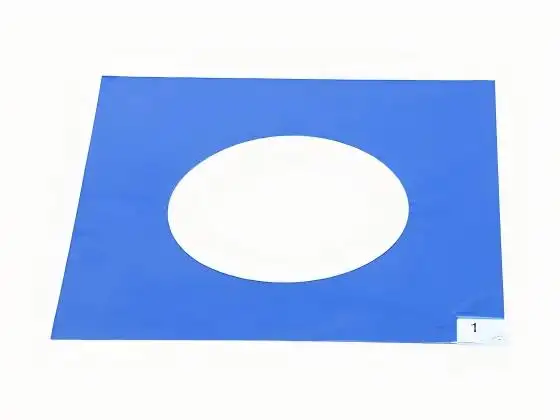
At Nabai, we treat each Tacky Mat as a controlled multilayer product rather than an ordinary disposable floor covering. Material selection and manufacturing consistency determine whether the mat captures particles effectively, peels cleanly, remains flat, and performs uniformly from the first layer to the last.
A properly manufactured Tacky Mat removes dust, fibers, and loose debris from footwear and equipment wheels before they travel farther into a cleanroom, air shower, laboratory, or dust-controlled production area.
How Tacky Mat Materials Work Together
Most peel-off Tacky Mat products use polyethylene film coated with an acrylic pressure-sensitive adhesive. Common practice in the industry is the employment of LDPE film, numbered peel-away sheets, acrylic adhesive, and a full-surface adhesive bottom for attachment to the floor.
| Component | Primary Function | Key Manufacturing Requirement |
| PE or LDPE film | Provides flexibility, tensile strength, and tear resistance | Surface is consistent and smooth, with a few to no wrinkles. |
| Acrylic adhesive | Helps to capture particles with light foot or wheel pressure | Needs to be balanced and have low residue transfer. |
| Numbered peel layers | Provides multiple clean collection surfaces | Need to be aligned and have controlled separation. |
| Bottom adhesive and liner | Holds the mat to the floor or to a supporting frame | Should allow a stable bond and a clean removal. |
| Color pigment | Makes the collected contamination more visible | Should not interfere with the performance of the adhesive. |
Some specific application Nabai models may also utilize PVC film, where greater rigidity or dimensional stability is needed. However, PE and LDPE remain widely used materials for standard multilayer Tacky Mat construction.
Film Thickness and Adhesion Data
The individual film thicknesses are of approximately 40–55 μm, although the correct value depends on the product grade and intended traffic level.
Adhesion should be reported using a recognized measurement, such as:
•180-degree peel force in N/25 mm
•Peel adhesion in g/25 mm
•A defined low-, medium-, or high-tack grade
•Separate top-layer and bottom-layer adhesion values
How Nabai Manufactures a Tacky Mat
Stable performance requires control throughout the production process.
1. Selection of Polymer Film
Base films are reviewed for:
•Evenness of thickness
•Strength and elongation of the film
•Surface cleanliness
•Resistance to tearing
•Presence of wrinkles and other visible defects
Thin films may peel, and films that are overly rigid may not allow the Tacky Mat to lay flat on the floor.
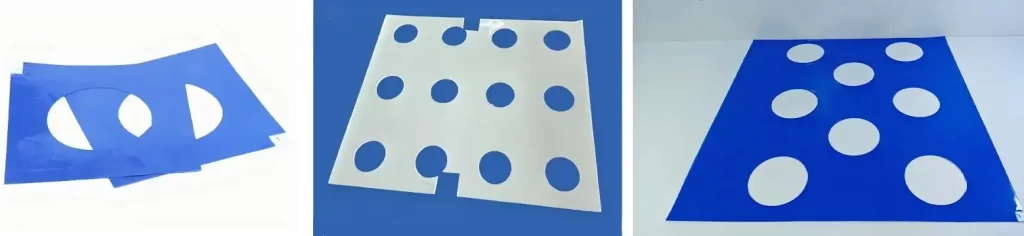
2. Preparation of Acrylic Adhesive
The pressure-sensitive adhesive requires the following properties in balance:
•Ability to pick up particles initially
•Stability of tack over time
•Ability to hold particles
•Controlled release of layers
•Minimized transfer of adhesive
•Film compatibility
At Nabai, the formulation of the adhesive can be tailored to the requirement. Typical entrances use medium or high tack, while entrance air showers and cart routes may need an adhesive with a higher strength particle pickup.
3. Precision Coating and Drying
When forming acrylic adhesive polymer films, the coating must be done in dry environments. Moisture can negatively affect the evenness of coating and can cause:
•Weak areas of adhesion
•Residual coating
•Undulated surfaces, or bubbles
•Variability in the performance of each individual sheet
The film is then dried so that the coating can develop the properties of a pressure-sensitive adhesive.
4. Layering Cutting and Numbering
Coated sheets are piled into a multi-layer stack of either 30 or 60 sheets with peel-away layers. The assemblies are cut to standard or custom sizes. Each assembly is marked with tabs to indicate the remaining sheets and allows for the removal of the layer.
5. Tacky Mat Quality Inspection
A practical quality-control plan should evaluate:
•Sheet thickness and total mat thickness
•Length and width tolerances
•Peel adhesion
•Layer-release consistency
•Tensile strength and elongation
•Surface cleanliness
•Edge alignment
•Floor-removal residue
•Packaging integrity
Nabai combines full-process quality control with customizable sizes, colors, layer counts, and tack levels for different cleanroom layouts and traffic conditions.
Using a Tacky Mat at an Air Shower Entrance
Installing a Tacky Mat before an air shower creates a useful pre-cleaning stage. The adhesive surface captures coarse dust and debris from shoes and trolley wheels before personnel or equipment enter the airflow-cleaning zone.
For consistent results:
•Install the Tacky Mat on a clean, dry, and oil-free floor.
•Align it lengthwise along the path of customary travel.
•Select a length appropriate for several contacts by shoes and/or wheels.
•Replace the exposed layer when visible contamination accumulates or tack declines.
•Peel the used sheet slowly from the numbered corner.
•Store unused mats flat and protected from moisture, heat, and dust.
A Tacky Mat should complement—not replace—gowning procedures, shoe covers, air showers, floor-cleaning programs, and HVAC filtration.
Nabai's Manufacturing Focus
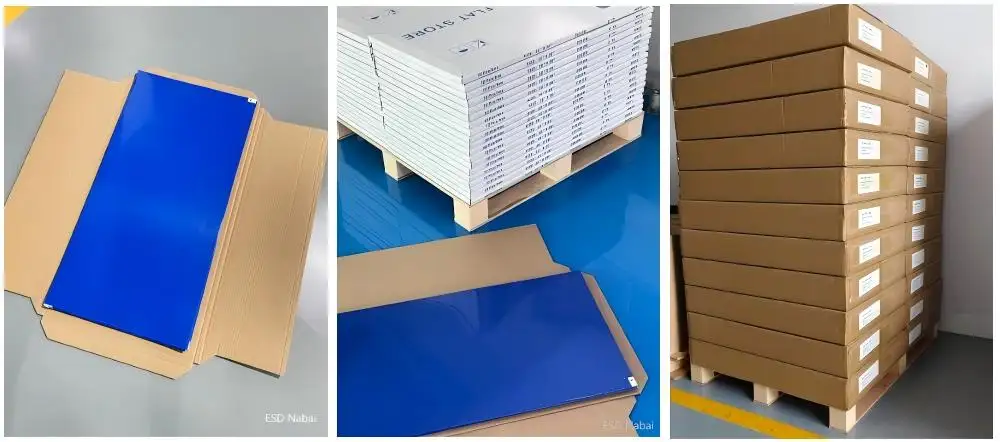
From a manufacturer's perspective, Tacky Mat quality is defined by repeatability. Users should receive similar adhesion, particle pickup, and peel behavior throughout the entire stack.
Nabai therefore focuses on controlled film selection, application-specific adhesive grades, stable coating, accurate lamination, clean cutting, customized dimensions, and documented inspection. Through this coordinated approach, each Tacky Mat is designed to provide predictable contamination control at cleanroom entrances, laboratories, pharmaceutical areas, electronics facilities, and air shower access points.
FAQs
Q1. What materials compose a Tacky Mat?
Tacky Mats are made of PE or LDPE films coated with an acrylic pressure-sensitive adhesive.
Q2. What is the layer structure of a Tacky Mat?
Tacky Mats have 30 or 60 layers of peel-away adhesive.
Q3. What is the ideal placement for a Tacky Mat?
Tacky Mats are installed at cleanroom doorways, air shower doorways, lab doorways, and production area access doors.
Q4. What is the appropriate frequency for Tacky Mat replacement?
Tacky Mats should be replaced once the top layer is dirty or no longer sticky.
Q5. Does a Tacky Mat leave a sticky residue?
There should be no residue left behind on shoes, wheels, or floors with a properly made Tacky Mat.
NEWS
GET SERVICE
With quality parts to meet every budget and friendly staff trained to make your visit informative and hassle free.