
Tacky Mats for Cleanrooms Guide: Reusable, Reliable, Ready

Tacky Mats for Cleanrooms Guide: Reusable, Reliable, Ready
The first line of defense for cleanliness in controlled environments, Tacky Mats for Cleanrooms target foothold contamination brought into these sensitive environments. Navigating through sensitive environments, facility managers and procurement specialists need to keep their operations contamination-free and invest in proper adhesive mats at facility entrances.
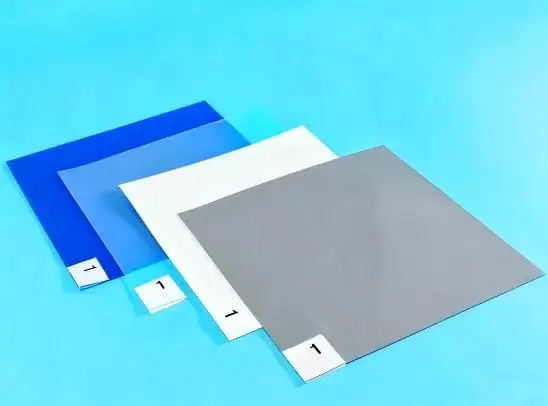
How Do Tacky Mats for Cleanrooms Function?
As an example of adhesive flooring, a cleanroom tacky mat is placed at the entrance of cleanrooms and controlled environments. It traps contaminants brought by personnel and equipment.
•The mechanics of contact-based removal: Tacky mats capture contaminants through physical direct contact, as personnel take a step onto the tacky mats.
•There are two major product types of tacky mats: Disposable, peel-off tacky mats comprise layers of adhesive which may be removed and disposed. Non-disposable tacky mats are Silicone mats, which are reusable, cleanable and can last for hundreds of cycles, however, they are considerably more expensive.
•Critical placement: Tacky mats should be placed at the cleanroom threshold, gown room entrances, and air showers. Mats capture contaminants before entering more sensitive zones.
The Core Challenge: Limitations of Traditional Disposable Solutions
While the industry has relied on disposable, peel-off mats for decades, many facilities ignore operational impediments and the total cost of ownership associated with these mats.
•Hidden costs: Facilities may find that each mat must be peeled multiple times a day, creating an unsustainable, hidden cost that is almost entirely borne by the facility manager in the form of a waste budget.
•Environmental issues due to the use of liner peel-off mats: each time a layer is peeled off, there is plastic waste, and the waste generated from a single entry into an aseptic room can fill several bins in a year.
•Real world applications show lower than expected particle capture: research has shown that the peel-off mats can only reduce the microbial transfer by a small amount, meaning that not all sticky mats are effective.
•The efficiency of sticky mats can be negatively affected by residue level: the residue level of the top layer can negatively affect the efficiency of the layer, therefore the top layer must be replaced frequently.
Why Reusable Silicone-Based Tacky Mats Are The Best Option
Due to the concerns with disposable mats, the cleanroom industry is moving to reusable mats made from silicone. These mats provide consistent adhesion and improve cost and waste management.
•High-quality silicone mats can be used for years: disposable mats lose their adhesion after one use, but silicone mats can stay tacky for hundreds of uses and be used for multiple years.
•Mats that need to be replaced can provide the same efficiency as disposable mats: mats made from silicone can keep 99% of contaminants at the entrance and therefore can reduce contamination of the entire cleanroom.
•No residue on shoes or floors: Compared to other mats, silicone mats do not leave any residue on shoes or floors which prevents contamination.
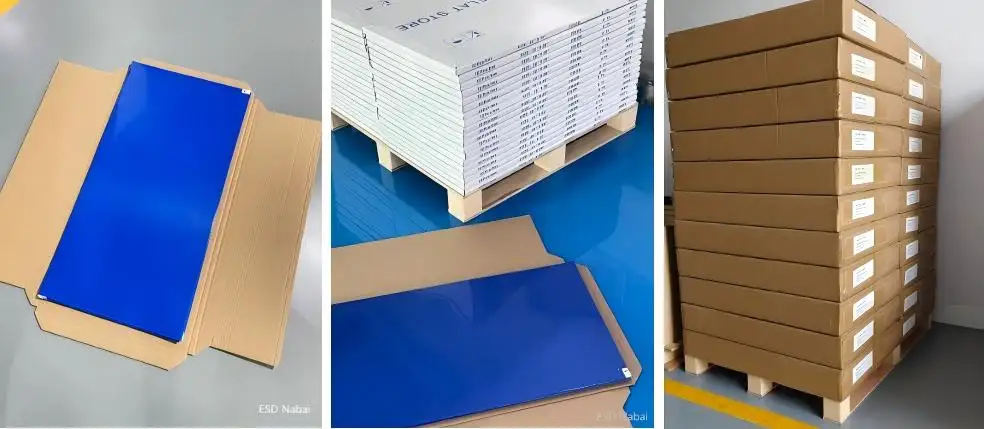
Essential Features That Require Your Attention
While evaluating tacky mats for cleanrooms, facility managers should consider several key features that determine real-world applicability and efficiency.
•Material combinations determine applicability. For example, medical-grade silicone is reusable and offers a permanent, albeit removable, tack. On the other hand, the polyethylene-based, single-use, peel-off mats do not offer permanent tack.
•Weight of foot traffic can also influence stickiness. For ease of movement and control among people, a reusable tack mat of low stickiness may put less strain on mats. For areas of constant foot traffic, a higher tack surface can better meet and withstand the demands of the environment.
While a mat of lesser thickness and tackiness may yield a useable and less stickiness mat, it may not be sufficient to withstand the demands of time and constant foot traffic. A thicker mat with a reinforced surface may better meet these demands and minimize curling and tearing, especially for traffic that includes jacks and carts.
**Usage and Maintenance of Washable Tacky Mats**
To maintain the service of a mat, the prevention of dirt and the removal of contaminants is key. Fortunately, a reusable tack mat is easy to maintain.
•Restoring surface tack may require daily cleaning: In environments with high traffic, mats may require cleaning several times a day. In less active environments, mats may require cleaning only once a day.
•Daily maintenance may require nothing more than clean water or mild detergent: Clean dust with water only. For heavier dirt, clean water or diluted neutral detergent is recommended.
•Using gentle agitation with a cotton mop or rubber blade may also be sufficient: Cleaning should be performed in parallel passes to push debris to the edge of the mat.
•In cases of contamination with oils, isopropyl alcohol may be necessary: In these cases, a lint-free cloth moistened with alcohol can be used. Care should be used to avoid flooding the mat with alcohol.
Foot traffic should be prohibited until the mat is completely air dried: Fully drying the mat should take about 10 to 15 minutes. This is also the time required for the contaminants to be removed. The mat will also return to its naturally tacky state.

Cleanroom Application Scenarios for Tacky Mats
Controlled environments use Tacky Mats For Cleanrooms depending on the level of risk for contamination, the classification of the cleanroom, and the cleanroom traffic patterns. All these variables have unique requests that impact the final choice.
•ISO Class 5–6 cleanroom entries: For moderate control of particles, standard-tack mats are placed at the exits of gowning rooms. The mats can be cleaned every day, and this can be done without any interruptions to the workflow.
•ISO Class 3–4 critical zones: High sensitivity zones require mats that are completely consistent with adhesion and are also low shedding. Because of the nature of shedding particles from layers that are peeled away, the preferred choice is a reusable silicone mat.
•High-traffic corridors between classified zones: The mats are located at the threshold between two cleanroom zones, and the majority of the traffic in the corridors is of personnel and cart movement. The mats have a size of 24" x 36" (or) mats of 26" x 45") and have an anti-slip backing, which is great to accommodate the traffic of wheeled items.
•Chemical-resistant application areas: Cleanrooms that utilize wipes of solvents or disinfectants need mats that resist the chemical agents of hydrogen peroxide, IPA, or quaternary ammonium with coating that degrades the surface of the mat.
•Low-frequency access points: For airlocks or emergency exits that are used only a few times in one shift, peel-off mats are a great solution, as the limited volume of traffic minimizes the frequency of the turnover. The mats do need to be disposed of after usage.
•Multi-layer staging zones: To increase the efficiency of the cleanroom, some facilities use two separate mats with the larger outer mat capturing debris, and the smaller inner mat capturing particles. This system also maximizes the intervals between cleanings.
How to Choose the Right Tacky Mat for Your Application
Analyzing the current and anticipated cleanroom traffic patterns is the best first step for choosing the best adhesive mat. Evaluating the level of cleanliness that is needed and the capacity of mat maintenance is also required.
•Analyze your daily foot and wheel traffic volume. High-traffic facilities will see a faster return on investment with multiple years usage of reusable mats.
•Evaluate chemical exposure and cleaning protocols. If your facility utilizes more aggressive disinfectants or solvents, it's essential the mat you select will perform adequately for prolonged exposure.
•Ensure alignment with ISO or GMP classification. For ISO Class 5 (or GMP Grade A/B), higher-grade materials will be needed to remain compliant.
Consider long term total cost of ownership versus just the initial outlay. The cost of a single-use mat looks lower at the point of sale, however after multiple years of buying a new mat every time the old one wears out, the cost of ownership of a reusable silicone mat will be far lower.
In Conclusion
Contamination control starts prior to personnel entering a critical processing zone. By selecting the correct tacky mats to cleanrooms and using them with the right technical parameters and maintaining them correctly, facilities can actually decrease the rate of particle ingress, decrease the cost of operations, and improve the achievement of their sustainability goals.
Whether for a semiconductor facility, a pharmaceutical clean room, or a high-precision assembly line, the question is not if you will implement the use of entry adhesive mats, but rather which mats will give you the best long term benefits.
Reduced to Frequently Asked Questions
Q1: When should I clean a reusable silicone tacky mat?
A: In a high-traffic cleanroom, two to three cleanings per day are recommended. In a low-traffic cleanroom, one daily cleaning is sufficient.
Q2: How long do washable tacky mats last?
A: A silicone mat can last anywhere from two up to three years if cleaned and maintained properly.
Q3: Can I use disinfecting solutions like IPA on the surface of the mat?
A: IPA and other mild detergents are safe to use on silicone surfaces. Avoid abrasive cleaning supplies and strong solvents, like acetone.
Q4: What is the difference between a peel off tacky mat and a reusable silicone mat?
A: Peel-off tacky mats consist of many layers of glue. Once one layer of the mat is soiled, it is removed and thrown away. Because reusable silicone mats can be cleaned and dried, they don't contribute to waste.
Q5: How do tacky mats work on cart wheels as compared to how they work on shoe soles?
A: Definitely. Mats can trap contaminants from both footwear and wheeled equipment, provided the mats are of suitable dimensions and secured.
NEWS
GET SERVICE
With quality parts to meet every budget and friendly staff trained to make your visit informative and hassle free.