

top 10 Antistatic materials manufacturer

top 10 Antistatic materials manufacturer
Electrostatic Discharge (ESD) is one of the most important issues facing product quality and safety in today's extremely sensitive electronics, semiconductor and industrial manufacturing processes. The anti-static materials are essential in avoiding static accumulation that can cause damage to the components, disrupt the production, and even create safety risks.
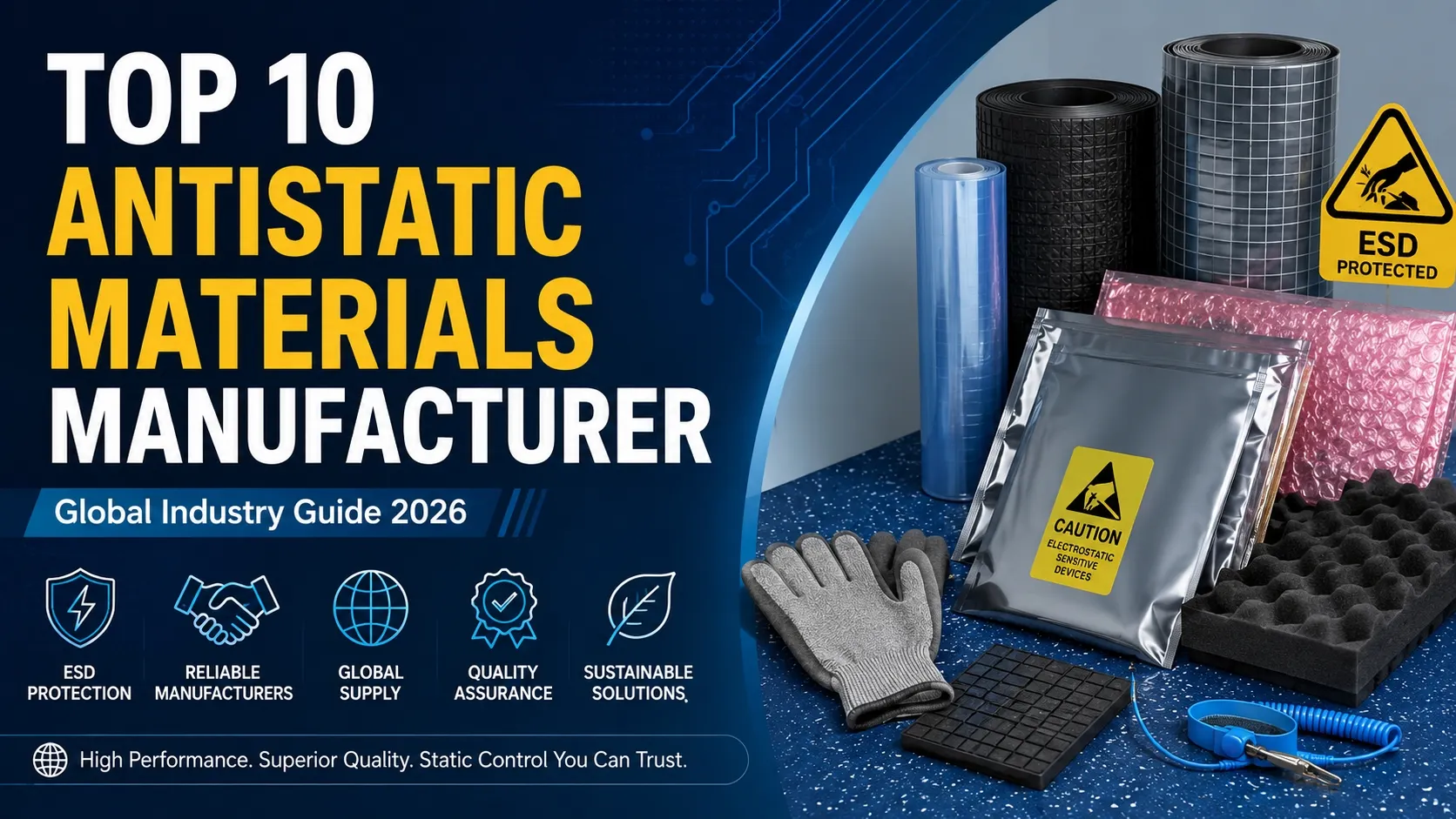
The reliable companies making antistatic materials have been growing in demand throughout North America, Europe and Asia with the world's demand for electronics continuing to rise. In this guide, you will learn about the top 10 key types and capabilities of leading antistatic materials manufacturers, and how businesses can decide which antistatic material manufacturer is best suited to them for long-term performance, compliance and cost efficiency.
1. Semiconductor-Grade Antistatic Material Manufacturers
In this group of manufacturers, they concentrate on high-purity, high performance materials used in semiconductor fabs and microelectronics manufacturing. Some of their products include ESD-safe films, wafer carriers, and cleanroom packaging materials.
These manufacturers generally work in areas that have matured semiconductor industries, like South Korea, Taiwan and Japan. They are precision, particle control, and strict ISO cleanroom compliant.
2. Industrial Packaging Antistatic Manufacturers
These manufacturers produce antistatic packaging materials such as:
- ESD bags
- Conductive bubble wrap
- Antistatic foam inserts
- Shielding bags
They are extensively used in electronics shipping and storage. China and Southeast Asian countries are home to a number of global suppliers that can provide scalable production at competitive rates that meet international standards such as ANSI/ESD S541, ESD.
3. Polymer-Based Antistatic Material Manufacturers
Antistatic plastics are plastics products made by polymer specialists with conductive additives, such as polyethylene (PE), polypropylene (PP) and PVC.
These manufacturers are used to products for industries like electronics for automotive, medical devices and consumer electronics. Their assets are material science innovation and durability of their antistatic properties.
4. Antistatic Flooring and Cleanroom Material Manufacturers
Cleanroom environments require strict static control. Manufacturers in this segment provide:
- Antistatic vinyl flooring
- ESD epoxy coatings
- Conductive tiles
- Cleanroom mats
They are often used in pharmaceutical plants, electronics assembly lines, and laboratories. There is a lot of European manufacturing strength in this niche, owing to the stringent regulation.
5. Antistatic Textile and Workwear Manufacturers
These companies produce ESD-safe garments such as:
- Lab coats
- Gloves
- Shoe covers
- Full-body cleanroom suits
They are used by workers that deal with sensitive electronic components. China, Vietnam, and Germany are well known for their manufacturing centers, and textile engineering combined with ESD compliance.
6. High-Performance Carbon Composite Manufacturers
The carbon-based antistatic materials are employed in the advanced aerospace, defense, and automotive applications. This is what these manufacturers concentrate on:
- Carbon fiber composites
- Conductive resins
- EMI shielding materials
They provide dual functionality: structural strength and static dissipation.
7. Antistatic Adhesive and Surface Coating Manufacturers
This class is for companies that manufacture antistatic coatings, sprays and adhesives for surfaces that need temporary or permanent static control.
Common applications include:
- Electronic assembly lines
- Conveyor belts
- Industrial tools and equipment
North American manufacturers often lead in this innovation segment due to strong R&D investment.
8. Cleanroom Consumables Manufacturers
These manufacturers focus on disposable antistatic products such as:
- Sticky mats
- Wipes
- Gloves
- Disposable packaging materials
They are essential for maintaining contamination-free environments in biotech, semiconductor, and aerospace industries.
9. Custom Antistatic Solution Manufacturers
Some manufacturers have a focus on custom antistatic systems. These include custom-designed packaging, integrated ESD protection systems and industry-specific engineering solutions.
They collaborate closely with the OEM's (Original Equipment Manufacturers) to create bespoke solutions for the unique production needs in particular the high-tech sectors in USA and Germany.
10. Eco-Friendly Antistatic Material Manufacturers
As the world shifts the focus towards sustainability, eco-friendly manufacturers are finding biodegradable and recyclable antistatic materials.
These include:
- Biodegradable ESD films
- Recycled conductive plastics
- Low-carbon production processes
Europe leads this trend due to strict environmental regulations and green manufacturing policies.
Key Factors When Choosing an Antistatic Materials Manufacturer
When selecting a supplier, businesses should consider more than just pricing. Important factors include:
1. Certification Compliance
Look for ISO 9001, ISO 14001, and ESD standard certifications to ensure product reliability.
2. Material Performance
Evaluate surface resistivity, durability, and conductivity stability over time.
3. Production Capacity
Large-scale manufacturers are better suited for global supply chains and bulk orders.
4. R&D Capability
Strong research and development ensures continuous innovation and product improvement.
Global Market Trends in Antistatic Materials
The antistatic materials market is expanding rapidly due to several global trends:
- Growth of semiconductor manufacturing
- Expansion of electric vehicles (EVs)
- Rising demand for cleanroom environments
- Miniaturization of electronic components
- Increased focus on workplace safety standards
In particular, the EV industry is creating strong demand for ESD-safe materials in battery production and electronic control systems.
Future Outlook
The future of antistatic materials manufacturing is moving toward smarter, more sustainable, and highly customized solutions. We can expect:
- AI-driven material design
- Smart ESD monitoring systems
- Fully recyclable conductive polymers
- Integration with Industry 4.0 manufacturing systems
Manufacturers who invest in innovation and sustainability will dominate the next decade of growth.
Conclusion
The global antistatic materials market is diverse from manufacturers of semiconductor grade precision materials to the innovation of eco-friendly materials. The selection of the appropriate manufacturer is based on several factors such as industry, technical needs and regional supply chain strategy.
From electronics to automotive, aerospace to healthcare, a good antistatic materials manufacturer guarantees the safety of the product, the efficiency of production and the stability of operation in the long run.
Knowing the top 10 antistatic materials manufacturers can help businesses to make better informed sourcing decisions and remain competitive in a more static sensitive world.
NEWS
GET SERVICE
With quality parts to meet every budget and friendly staff trained to make your visit informative and hassle free.
