
When to Replace Sticky Paper Pads | Cleanroom Replacement Guide

When to Replace Sticky Paper Pads | Cleanroom Replacement Guide
What are Sticky Paper Pads?
An adhesive paper pad or tacky sheet pad is a sticky paper pad that is used to remove particles. It traps dust, lint, and debris when they collide. These pads support:
- clean zone dust collection.
- surface cleaning in the industrial areas.
- control of contamination in production lines.
- waste on equipment and workstations.
The sheets are utilized as a sticky pad, which is disposable, and this means that performance decreases after usage. That is why it is important to replace the sticky paper pad in time to get clean results.
Sticky Paper Pad Lifespan Knowledge
The life of a sticky paper pad depends on the usage, dust concentration, and the nature of the environment. Pads can have a longer life in controlled cleanrooms. They wear out more quickly in dusty factories.
Typical usage range:
- Application in cleanrooms: 1-3 days.
- Industrial application: 1-2 days.
- Areas with high dust: same-day replacement.
The pad life is dependent on the load capacity of the particles. Once the surface dust loading capacity is achieved, the efficiency declines very quickly. It is referred to as the surface saturation point.
Sticky Paper Pads: Cleanroom and Industrial Full Guide
Sticky paper pads are not difficult to observe, but they are very effective in controlling dust and contamination. Knowing when to replace sticky paper pads will keep the surfaces clean, and production will not be interrupted. Pads that are left in use too long become sticky, and particles start to re-enter the work area.
This may impact the quality and safety of products in cleanrooms and industrial locations. The constant replacement contributes to the improvement of the removal of the particles and the constant cleaning of the surface. The majority of pads exhibit evident indicators such as dust accumulation, poor adhesion, and decreased cleaning abilities.
Important Clues: Sticky Paper Pads Require Replacement
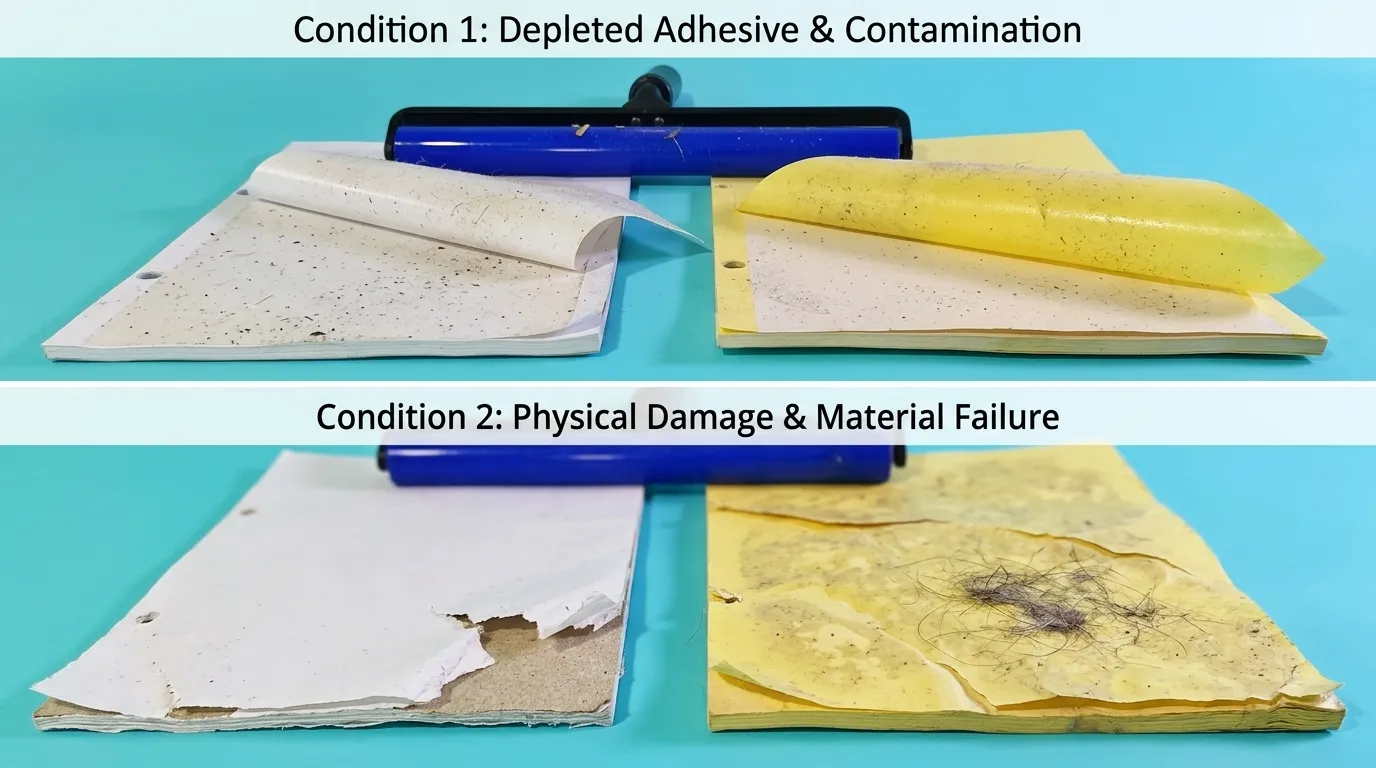
You need not guess. Pads give clear indications when they enter the adhesion loss phase. Sticky pads to change when you notice:
- decreased adhesiveness to the surface.
- visible dust buildup, low particle capture efficiency.
- uneven debris trapping
- surface loss of grip.
These signs show a reduction in tackiness and worse dust collection.
Technical indicators:
- maximum particle buildup was obtained.
- adhesive wear condition: visible
- accumulation of contamination on the top sheet.
- cleaning effectiveness drop
- saturation point of lint attained.
When these are released, then it is time to change.
Cleanroom Environments: When to Change Sticky Paper Pads
Clean rooms are extremely stringent. Even the small dust particles make a difference. Cleanrooms are more rigid in terms of the sticky paper pad replacement schedule. Standard cleanroom practice:
- Class 5-6 of ISO: Substitute all shifts.
- Class 7-8 ISO: Change 1-2 days.
- Entry mats or pads: change daily.
This will ensure proper contamination and uniform removal of particles. Cleanroom systems are based on:
- cleanroom dust control
- anti-static cleaning tools
- particle control solutions
- controlled environment cleaning
Frequency of Replacement of Sticky Paper Pads in Industry
The industrial settings generate additional dust and debris. In this way, the frequency of change of the sticky pad is higher.
Recommended schedule:
- Electronics assembly: daily
- Fields of printing press: daily or shift.
- Packaging lines: 1–2 days
- General workshops: 1 day
This helps in cleaning the surface stably and minimizes the failure of dirt pickup.
Technical Insight: Why Adhesion Fails
Acrylic adhesive layers are used to make sticky pads. These layers entrap particles by surface tension.
- particles fill sticky holes.
- Dust prevents contact of adhesive surfaces.
- Tackiness reduction begins
- An adhesive's lifespan decreases
- The degree of debris saturation increases.
The performance of cleaning reduces significantly as the efficiency of capturing the particles reduces. This is the greatest reason for replacement time.
How to Replace the Sticky Paper Pad, Step-by-Step
Replacement is carried out in a proper manner to ensure cleanliness and safety.
Step 1: Surface Check
Find dust accumulation or less grip.
Step 2: Tremendously Test Adhesion
Light pressure touch. When dust is recalcitrant, it is time.
Step 3: Peel the Top Sheet
Pull on the edge or the perforation line.
Step 4: Dispose of the Used Sheet
Dispose of it at a good time to avoid re-contamination.
Step 5: Move on to the Next Layer
Cleaning cycle with a new sheet.
This is after the cycle of replacement frequency applied in industrial hygiene systems.
Perforated Self-Sticky Performance on Sticky Paper
Nabai ESD offers self-adhesive sticky paper, which can be replaced with a perforated one.
Key benefits:
- clean perforated separation
- stable particle collection
- reduced material waste
- smooth sheet tearing
- fast replacement cycle
Its stratified design improves the entrapment of debris and helps to manage lint in a busy environment.
Timing Industrial Impact Correct Replacement
The quality of production is increased by the right time.
- better particle removal
- stable surface cleaning
- reduced product defects
- improved contamination prevention
- Higher process safety
It subsidizes such industries as:
- semiconductor manufacturing
- pharmaceutical production
- electronics assembly
- laboratory systems
Timely performance of adhesive dust pads guarantees good performance.
How long Does Sticky Paper Pad Last?
It does not have a definite number. It depends on:
- accumulation of dust in the air.
- frequency of use
- type of industry
- particle size exposure
However, when the cleaning effectiveness drops, it needs to be replaced. A wet pad is never better than a new pad.
Conclusion:
It is important to know when to replace sticky paper pads to ensure that your workspace is safe, clean, and stable. An old pad is not able to trap the particles effectively and poses a higher risk of contamination. Be aware of dust accumulation, decreased adhesiveness, and decreased cleaning performance. Replacement in time to protect tools, products, and the quality of production.
Nabai ESD sticky paper pads are stable-performing and replaceable. Select more intelligent cleaning options now and enhance your contamination control system with confidence.
NEWS
GET SERVICE
With quality parts to meet every budget and friendly staff trained to make your visit informative and hassle free.