
Cleanroom Visitor & Contractor Entry: How-To Protocol

Cleanroom Visitor & Contractor Entry: How-To Protocol
A cleanroom entry protocol for visitors and contractors is the documented sequence of authorization, briefing, personal preparation, gowning, supervised movement, and exit procedures that controls how non-routine personnel enter and leave a cleanroom without compromising contamination control. This article gives you a practical, role-based checklist you can adapt to your facility's approved standard operating procedure.
Controlled entry is one component of an overall cleanroom contamination control program, and it deserves specific attention because visitors and contractors are the least predictable people in your cleanroom. Their training is shorter, their tasks are unfamiliar, and they often bring tools, materials, and street habits with them. A written protocol prevents most problems before the gowning room door opens.
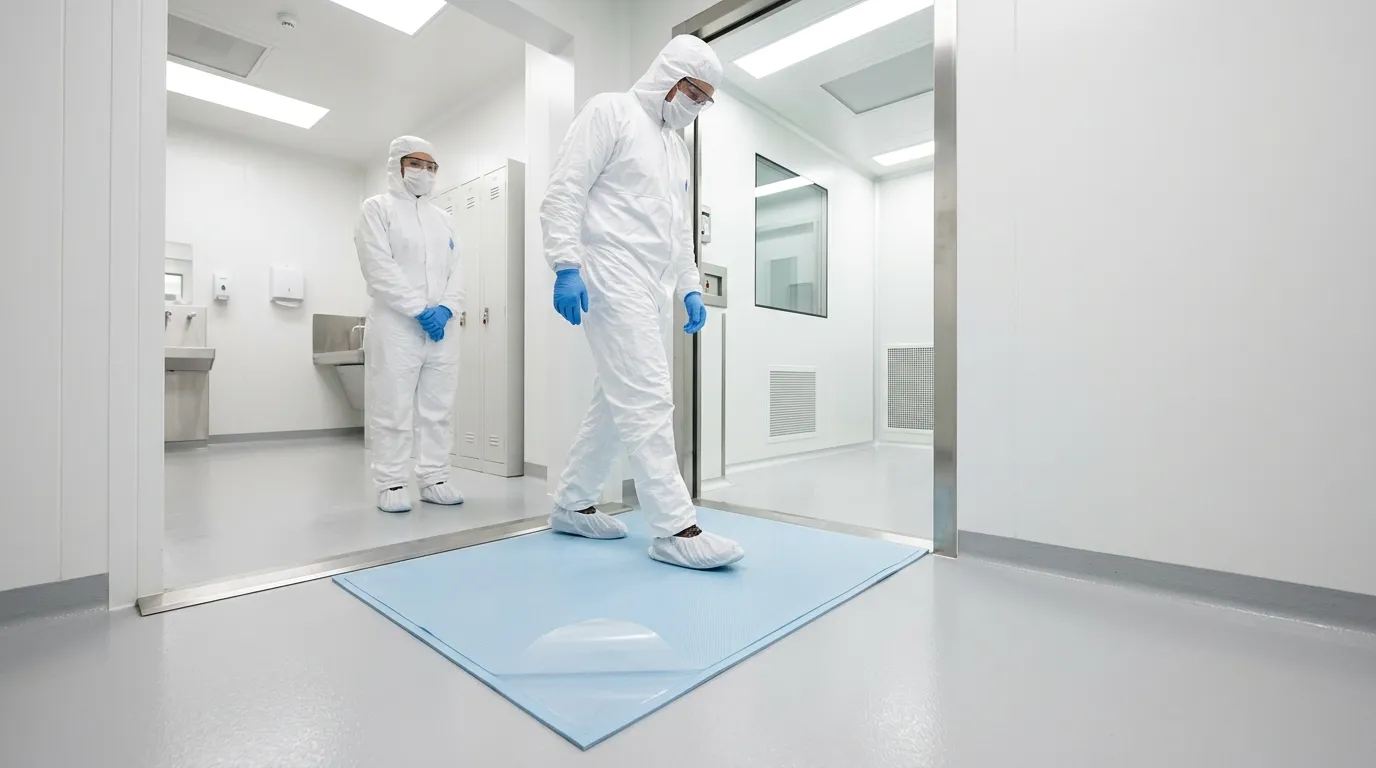
Why Visitors and Contractors Need a Formal Entry Protocol
Visitors and contractors enter a cleanroom with unknown habits, limited training, and sometimes with tools, packaging, or street clothing. They may perform maintenance, installations, audits, or inspections that production staff never do. Without a documented protocol, they can introduce particles, foreign-object debris (FOD), static-discharge risk, and safety hazards.
ISO 14644-5:2025, the international operations standard for cleanrooms, explicitly covers personnel management, gowning, training, and the transfer of materials and equipment — the exact areas where visitors and contractors create risk. A formal entry protocol converts those requirements into repeatable, auditable steps.
Pre-Entry Controls: Authorization, Briefing, and Personal Preparation
Three controls must happen before anyone reaches the gowning room.
Confirm Authorization and Assign an Escort
Entry begins with approval, not with a gown. A facility owner or cleanroom manager must authorize the visit, and the visitor must be assigned a trained escort. Institutional cleanroom policies consistently require this. Stanford's Clean Room Access Policy, for example, requires visitors to be accompanied by a qualified cleanroom user and allows the facility to restrict visitor access during critical activities.
The escort must be a trained cleanroom operator who knows the area, the process, and the emergency procedures. The escort's job is to keep the visitor safe, keep the cleanroom protected, and end the visit early if something goes wrong.
Deliver a Cleanroom Entry Briefing
Before changing clothes, the visitor must understand what is expected. The briefing should cover:
- Purpose of the visit and the exact areas the person may enter.
- Cleanroom behavior rules: no running, no cosmetics, no uncovered hair, no loose jewelry, no unnecessary touching of surfaces or products.
- Emergency exits, alarms, and assembly points.
- Personal preparation rules and prohibited items.
- Contractor-specific restrictions on tools, materials, and work activities.
The briefing should be confirmed in writing or on the visitor log for audit purposes.
Personal Preparation and Prohibited Items
The following items are commonly prohibited or restricted inside cleanrooms:
- Cosmetics, nail polish, and fragrances.
- Jewelry, watches, and piercings that cannot be fully covered.
- Personal electronics, including phones and smartwatches.
- Food, drink, gum, and tobacco products.
- Bags, backpacks, and briefcases.
- Loose items in pockets that could fall out.
Visitors should also report illness, open wounds, or infectious conditions before entry. Street clothing should be clean and low-shedding where the facility requires it. When in doubt, the facility SOP governs.
The Cleanroom Entry Sequence: Step-by-Step
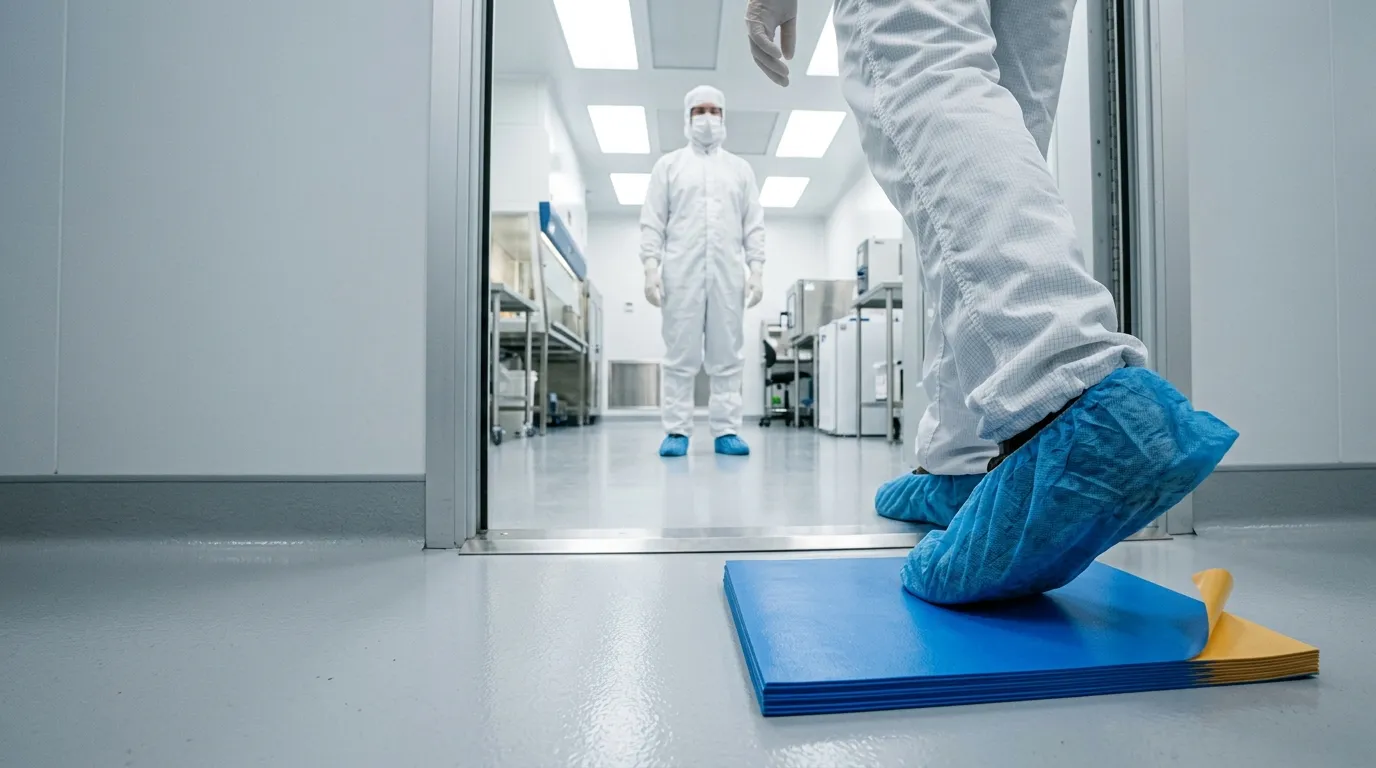
Once authorization, briefing, and personal preparation are complete, the entry sequence follows a fixed order:
- Arrive at the gowning room or anteroom. Do not proceed past this point without the escort.
- Remove and store prohibited items in the designated lockers or storage area.
- Walk across the sticky mat for cleanroom entrance if the facility uses one, to remove loose soil from footwear before any covering is applied.
- Put on cleanroom shoe covers or dedicated cleanroom footwear.
- Perform hand hygiene as required by the facility.
- Gown following the facility's approved cleanroom gowning procedure step by step. Hair and beard covers come first, then mask, then coverall or frock, then gloves — but the facility's own order governs.
- Use the air shower if the facility has one. NASA's cleanroom guidance notes that gowning and de-gowning occur in designated areas and that some facilities use air showers as part of the transition.
- Cross to the clean side, check that all garments are properly sealed, and report to the escort.
- Move only in permitted areas and follow clean-side conduct rules.
The gowning room separates the street side from the clean side. Garments that touch the floor, walls, or dirty-side surfaces must not be adjusted after crossing over.
Visitor vs Contractor Requirements at a Glance
The depth of control depends on the person's role. The table below shows how requirements typically change across four common entry types. Your facility's SOP may differ.
| Requirement | Tour Visitor | Customer / Auditor | Service Contractor | Construction Contractor |
|---|---|---|---|---|
| Approval | Facility owner | Facility owner / manager | Work authorization | Work authorization + permit |
| Escort | Always | Always | Yes | Yes, every entry |
| Briefing | Basic + behavior | Basic + audit scope | Detailed + work scope | Detailed + toolbox talk |
| Garments | Visitor kit as required | Visitor or operator kit | Full kit for the area | Full kit for the area |
| Tools / materials | None | None | Pre-cleaned, bagged, inventoried | Pre-cleaned, bagged, inventoried |
| Critical operations | Restricted | May be restricted | Restricted | Restricted |
| Documentation | Visitor log | Visitor log | Visitor log + work permit | Visitor log + permit + tool list |
Cornell's cleanroom visitor guidance, for instance, specifies visitor garments, safety glasses, and gloves for its facility — a good example of how a short-visit protocol can still be complete.
Contractor Entry Controls: Tools, Materials, and FOD
Contractors are the highest-risk entrants because they perform work, not just observation. A service technician repairing a tool, a contractor installing equipment, or a construction crew modifying a cleanroom can introduce contamination and foreign-object debris (FOD) in ways a tour visitor cannot.
MIT.nano's cleanroom protocol includes explicit provisions for maintenance and minor construction activities, reflecting the reality that controlled work is a normal cleanroom event. The following controls apply:
Tools and materials:
- Pre-clean all tools before entry; use cleanroom-compatible tools where the facility requires them.
- Remove outer packaging before entering the cleanroom.
- Transfer materials through an airlock, pass-through, or wipe-down station where available.
- Inventory every tool and part brought in, so nothing is left behind.
- Keep tools in a controlled toolbox or tool roll that can be wiped down and inspected.
FOD and waste control:
- Control loose fasteners, cable ties, wire ends, packaging scraps, labels, and adhesive residue.
- Use only approved materials that match the cleanroom's particle and chemical requirements.
- Remove all debris, waste, and temporary equipment at the end of the work.
- Perform a final walk-down with the escort or area owner before closing the work permit.
Contractors should also coordinate with the facility before entry: schedule work during non-critical windows, notify the cleanroom manager of planned activities, and confirm that the work permit, risk assessment, and point of contact are in place.
Clean-Side Conduct, Escort Duties, and Exit
Once inside, the visitor is no longer a guest — they are a contamination vector. The escort must keep the visitor in sight at all times, correct protocol errors immediately, and end the visit if the visitor cannot follow instructions.
Clean-side conduct rules include:
- Move slowly and deliberately; sudden movements stir particles.
- Keep hands away from products, equipment, and exposed surfaces.
- Do not touch the face, adjust garments, or scratch under gloves.
- Stay within the permitted area and follow the escort's direction.
- Speak only when necessary; avoid coughing or sneezing toward exposed product where this is relevant to the process.
Exit follows the same discipline. The visitor returns to the gowning room, removes garments in the order prescribed by the facility's gowning procedure, disposes of or returns reusable garments, and leaves shoe covers in the designated area. Hand hygiene after de-gowning is good practice. De-gowning is not a relaxation of rules — it is the last contamination-control step of the visit.
Handling Deviations: When Entry Must Be Stopped or Refused
The protocol should include explicit stop-entry conditions. Entry must be delayed or refused when:
- The visitor or contractor shows visible signs of illness, or has open cuts or wounds that cannot be properly covered.
- Garments are missing, damaged, or unfit for the required cleanroom class.
- The person refuses to follow the briefing or gowning requirements.
- Unauthorized tools, materials, or packaging are present.
- The individual has not completed the required training or authorization.
- A critical process is running in the area and the facility has restricted access during that activity.
When any of these conditions is met, the escort informs the responsible cleanroom manager, the issue is documented, and entry is rescheduled or refused. Schedule pressure must never override the protocol.
Record-Keeping: What to Document
A visitor log creates traceability for audits, incident investigation, and continuous improvement. At minimum, record:
- Date and time of entry and exit.
- Visitor or contractor name and company.
- Purpose of the visit.
- Authorizing person and escort name.
- Confirmation that the briefing was delivered.
- Cleanroom areas accessed.
- Garments or PPE issued, if the facility tracks this.
- Tools and materials brought in and removed, for contractors.
- Deviations, incidents, or missed steps.
Signature lines for the escort and visitor should be included where the facility requires them. The log becomes the evidence that the protocol was followed.
Adapting the Entry Protocol to Your Cleanroom
One protocol does not fit every cleanroom. Your facility's approved SOP and risk assessment always govern. Two factors matter most: the cleanroom classification and the industry you operate in.
Class-Based Requirements
Lower ISO class numbers — for example ISO 5 and stricter — generally require more complete garment coverage, stricter discipline, and more controlled entry procedures. Less strict environments such as ISO 7 or ISO 8 may allow frocks, shoe covers, hair covers, and reduced controls. ISO 14644-1 classifies air cleanliness by airborne particle concentration; ISO 14644-5:2025 addresses the operational requirements. Neither replaces the facility's own ratified procedures.
Industry-Specific Requirements: GMP, Semiconductor, Medical, and Food
Industry context adds another layer of control:
- Pharmaceutical: Sterile manufacturing facilities may operate under EU GMP Annex 1, which places entry controls, gowning, and personnel behavior inside the facility's contamination-control strategy.
- Semiconductor and electronics: Static-sensitive areas may require ESD controls consistent with ANSI/ESD S20.20 or IEC 61340-5-1, affecting garments, footwear, floor mats, and wrist straps.
- Medical device: Cleanliness, traceability, and documented entry controls are commonly required.
- Food: Hygiene rules, hair covers, and contamination prevention are typically specified by the facility's food-safety program.
Verify the specific regulation that applies to your facility and your market. A generic checklist is a starting point, not a compliance document.
Cleanroom Entry Consumables: What to Stock and How to Verify Them
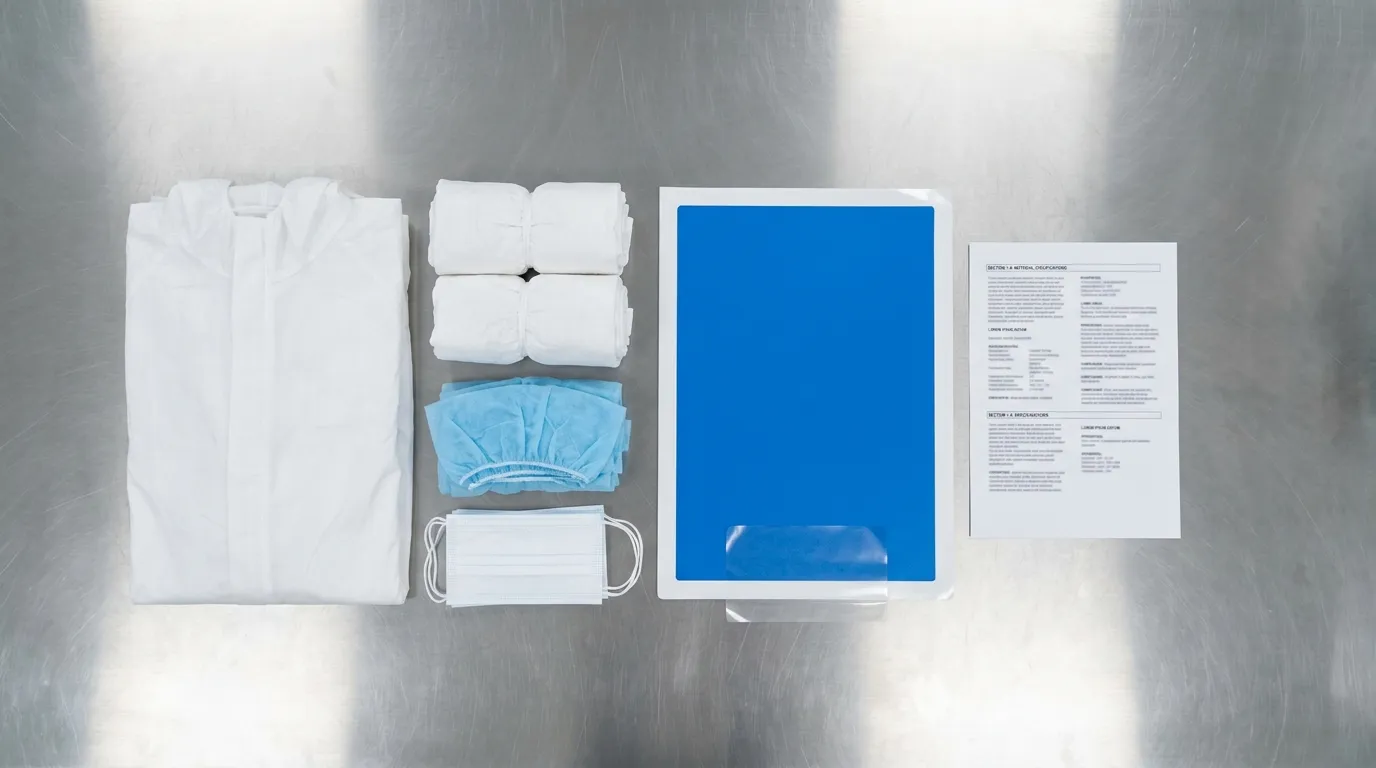
The protocol depends on a reliable supply of entry consumables. A typical visitor and contractor kit includes:
- Shoe covers.
- Hair and beard covers.
- Face masks.
- Gloves — evaluate options from a cleanroom gloves supplier against your processes.
- Coveralls or frocks appropriate for the cleanroom class.
- Entry-point tacky mats — see how to use cleanroom sticky mats and how to choose a sticky mat for a cleanroom for operational and selection guidance.
Every consumable should come with clear documentation. The table below distinguishes the three documents you will see most often.
| Document | Purpose | What It Should Contain |
|---|---|---|
| TDS (Technical Data Sheet) | Describes the product specification | Dimensions, construction, physical and electrical properties, handling, storage |
| Batch Test Report | Verifies one production batch | Measured values for resistance, tack, thickness, or other properties against the TDS |
| SDS (Safety Data Sheet) | Communicates safety and handling | Hazards, handling, storage, first-aid, disposal |
Verify that the supplier's documented specifications match your facility's requirements — including unit consistency. Do not compare resistance values reported in ohms with values reported in ohms per square, or a sheet count with a layer count, without confirming the test method.
Nabai supplies cleanroom consumables and ESD products, and positions its cleanroom sticky mats as a first line of contamination control at cleanroom entry points. When your protocol requires entry-point mats, compare the product specification against your facility's requirements and confirm the TDS and batch documentation before purchase.
NEWS
GET SERVICE
With quality parts to meet every budget and friendly staff trained to make your visit informative and hassle free.