
Cleanroom Sticky Mat MOQ and Lead Time: Buyer FAQ

Cleanroom Sticky Mat MOQ and Lead Time: Buyer FAQ
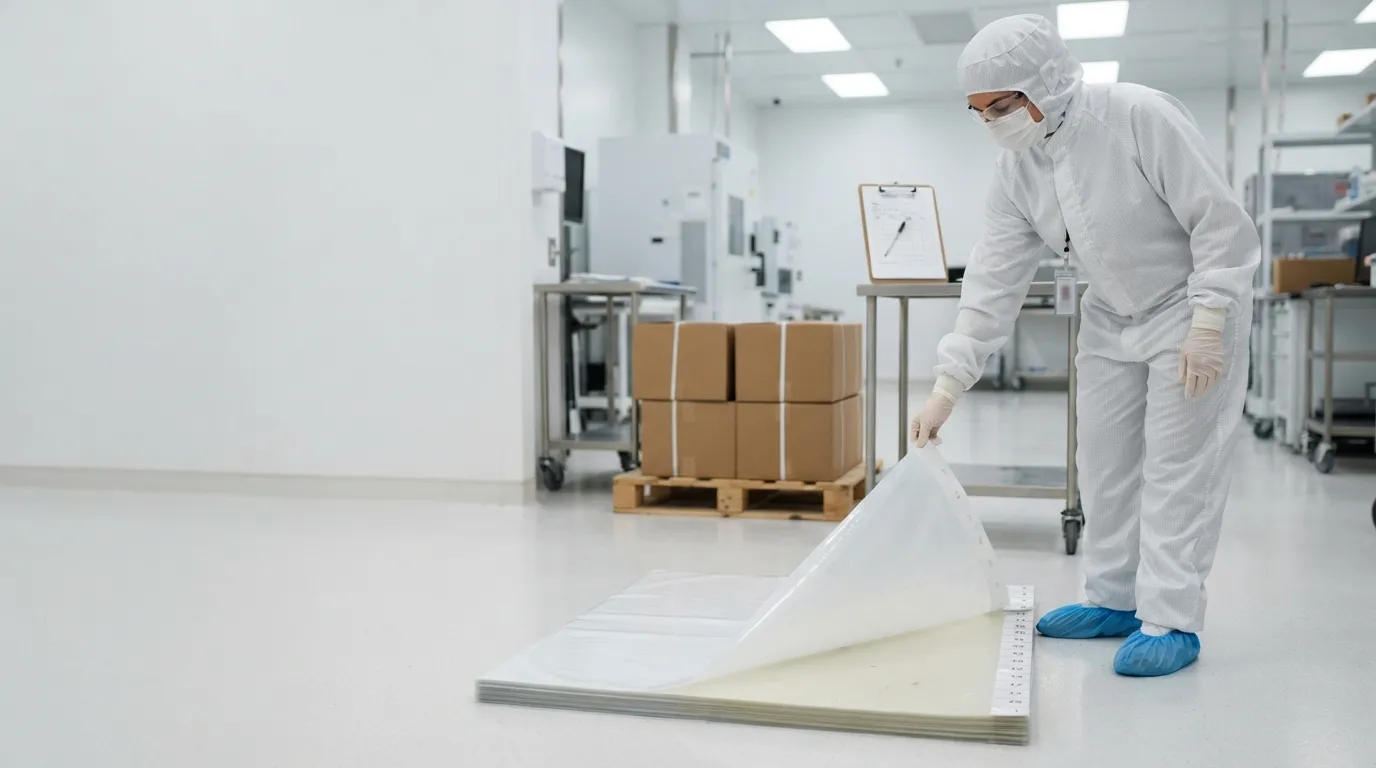
Cleanroom sticky mat MOQ and lead time are not universal figures. The minimum order quantity (MOQ) depends on how the supplier expresses it — per piece, per mat, per case, or per carton — and on whether you order a standard stock item or a custom configuration. The lead time depends on what it includes: production, inspection, dispatch, transit, and customs clearance. Every supplier defines these terms differently, so both must be confirmed in writing before you place an order.
This guide explains how to evaluate MOQ and lead-time quotes for cleanroom sticky mats (also called tacky mats, adhesive mats, or contamination control mats), what information to send with a quotation request, and the questions to ask before you confirm an order.
What Does MOQ Mean for Cleanroom Sticky Mats?
MOQ stands for minimum order quantity: the smallest quantity a supplier will accept for an order. Suppliers set MOQs because every order consumes materials, production setup, packaging, and administrative time. For cleanroom sticky mats, the MOQ is not always expressed in the same unit, which makes quotes surprisingly easy to compare incorrectly.
| MOQ Unit | What It Typically Means | What to Confirm |
|---|---|---|
| Per piece | One individual mat, including its peel-off sheets | Whether a single-piece trial order is possible |
| Per mat | One finished mat as a complete unit | The exact mat size and sheet count being quoted |
| Per case / carton | One sealed carton containing a set number of mats | How many mats are in a carton and the carton weight |
| Per production run | A minimum batch size for custom production | The run size, setup cost, and production schedule |
Before comparing two supplier quotes, check that both are quoting the same unit. A quoted MOQ of 10 cases can represent more total mats than a per-piece MOQ of 50 if each case contains six mats. For a full view of what affects the final cost, see sticky mat price. When your planned volume goes beyond a trial order, the bulk sticky mats for cleanroom page covers volume ordering in more detail.
Why Do Cleanroom Sticky Mat MOQ and Lead Time Vary?
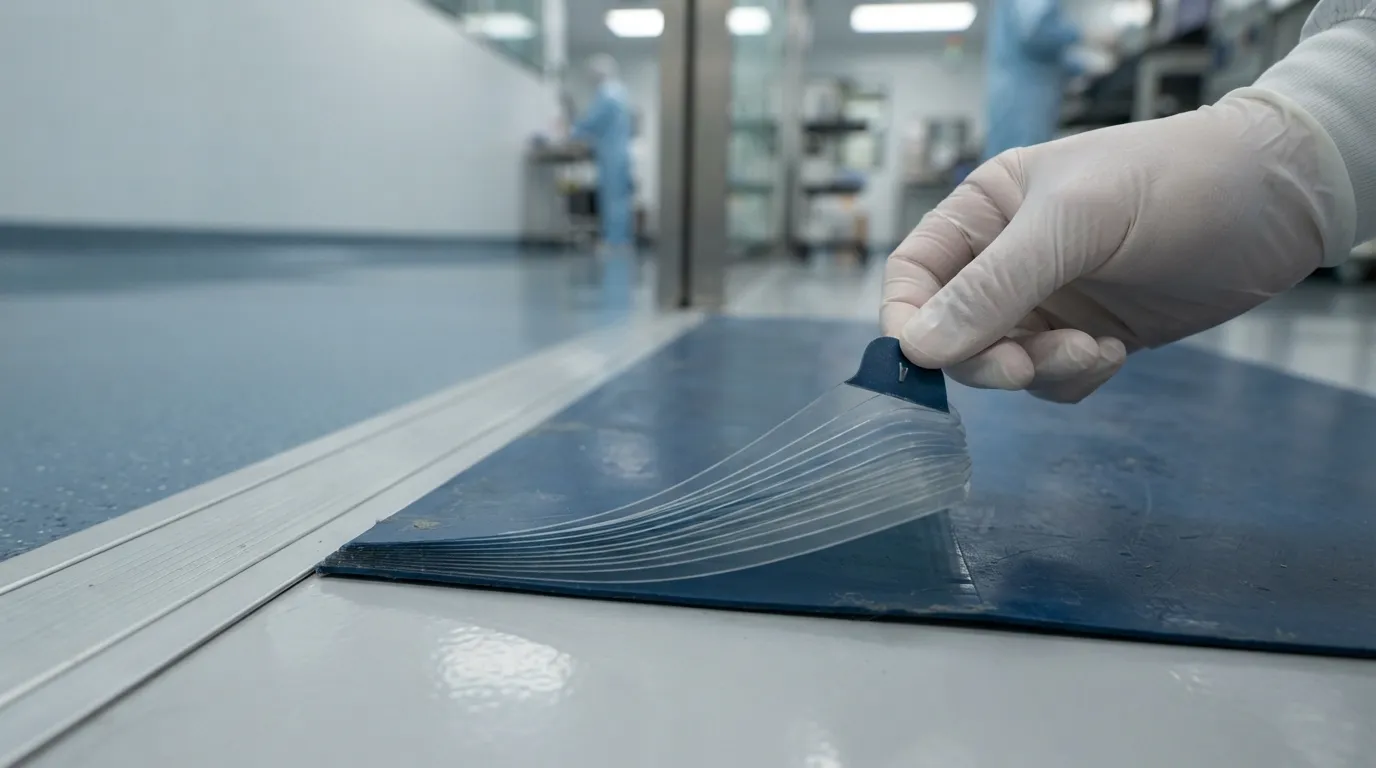
The main reason MOQ and lead time vary between suppliers is the difference between a standard stock order and a custom order.
A standard stock order uses a configuration the supplier already produces: set sizes, colors, layer counts, and packaging. Because no setup or approval is needed, the MOQ is usually lower and the lead time shorter. A custom order changes one or more variables — nonstandard dimensions, a different layer or sheet count, custom color, printed or private-label packaging, or an ESD requirement. Each change can add production setup, raw-material planning, and approval steps.
| Factor | Standard Stock Order | Custom Order |
|---|---|---|
| MOQ | Usually lower; may be quoted per case | Usually higher; often quoted per production run |
| Lead time | Shorter when stock is available | Longer; includes setup and approvals |
| Specifications | Fixed by the supplier | Defined by the buyer |
| Best for | Routine restocking and urgent dates | Branded or application-specific requirements |
If you need custom size, color, or private-label packaging, confirm how those changes affect both the MOQ and the production schedule. Nabai's oem support page outlines the customization options available.
An ESD requirement can also change the product itself, not just the paperwork. If the mat must perform in a static-sensitive process, state the requirement clearly and ask which electrical value the supplier will verify.
How Long Does It Take to Manufacture and Deliver Cleanroom Sticky Mats?
The only safe way to evaluate a cleanroom sticky mat lead time is to break it into stages. A single "lead time" figure rarely tells you when the goods will actually reach your facility.
- Specification confirmation — the supplier confirms dimensions, sheet and layer count, color, packaging, and any performance requirements.
- Quotation and order confirmation — commercial terms, Incoterms, and payment are agreed.
- Sample or artwork approval — required for custom mats, printing, or private label.
- Production — the mats are manufactured.
- Inspection and documentation — pre-shipment checks and documents such as a TDS or batch test report are prepared.
- Dispatch — the goods leave the supplier's factory.
- Transit and customs — shipping to your destination and import clearance.
The clock starts when the specification and order are confirmed — not when you send your first inquiry. Production lead time is the time from order confirmation until the goods are ready. Dispatch time is when the goods actually leave the supplier. Transit time is the shipping period to your destination, which depends on the shipping mode (air, sea, or courier) and the destination country. Total delivery time is the sum of all stages.
Incoterms matter here too. They define the point where responsibility transfers from supplier to buyer. A supplier quoting "lead time" may mean production only, while you expect door-to-door delivery. Confirm which one is being quoted.
What Information Should You Send for an Accurate Sticky Mat Quote?
A reliable MOQ and lead-time quote depends on a complete specification. Missing information delays the quote and can produce a delivery date that does not match your actual requirement.
Send the following with your quotation request:
- Exact dimensions (length × width, stated in mm or inches)
- Film thickness or material specification, if you have one
- Layer count and sheet count — these are different; state both if possible
- Adhesive or tack requirement, if specified
- Color
- Quantity and packaging preference (pieces per carton)
- Application (semiconductor, pharmaceutical, electronics, and so on)
- ESD or other performance requirements
- Destination country or port
- Incoterms preference
- Documentation required (TDS, batch test report, SDS)
Sheet count means the number of peel-off sheets supplied. Layer count refers to the number of film layers in the stack. Some suppliers use the terms interchangeably, which is why you should state both on your enquiry. If you are unsure which mat best fits your application, work through the sticky mat selection guide before sending a specification.
Can You Order a Sample or a Small Trial Quantity First?
Sample policies for cleanroom sticky mats vary by supplier, product, and destination. Some suppliers provide samples for evaluation; others charge for the sample and shipping. A sample order may also have a different MOQ or unit price than a production order, so confirm the terms before requesting one.
For custom products, sample approval adds time to the overall schedule — so does artwork approval when the mat or packaging carries a printed design. Ask whether the sample is identical to the production version, including the adhesive, layer count, and any ESD performance. A sample that only checks color or size will not verify the product's electrical or contamination-control behaviour.
What Documentation Should You Request Before a Bulk Sticky Mat Order?
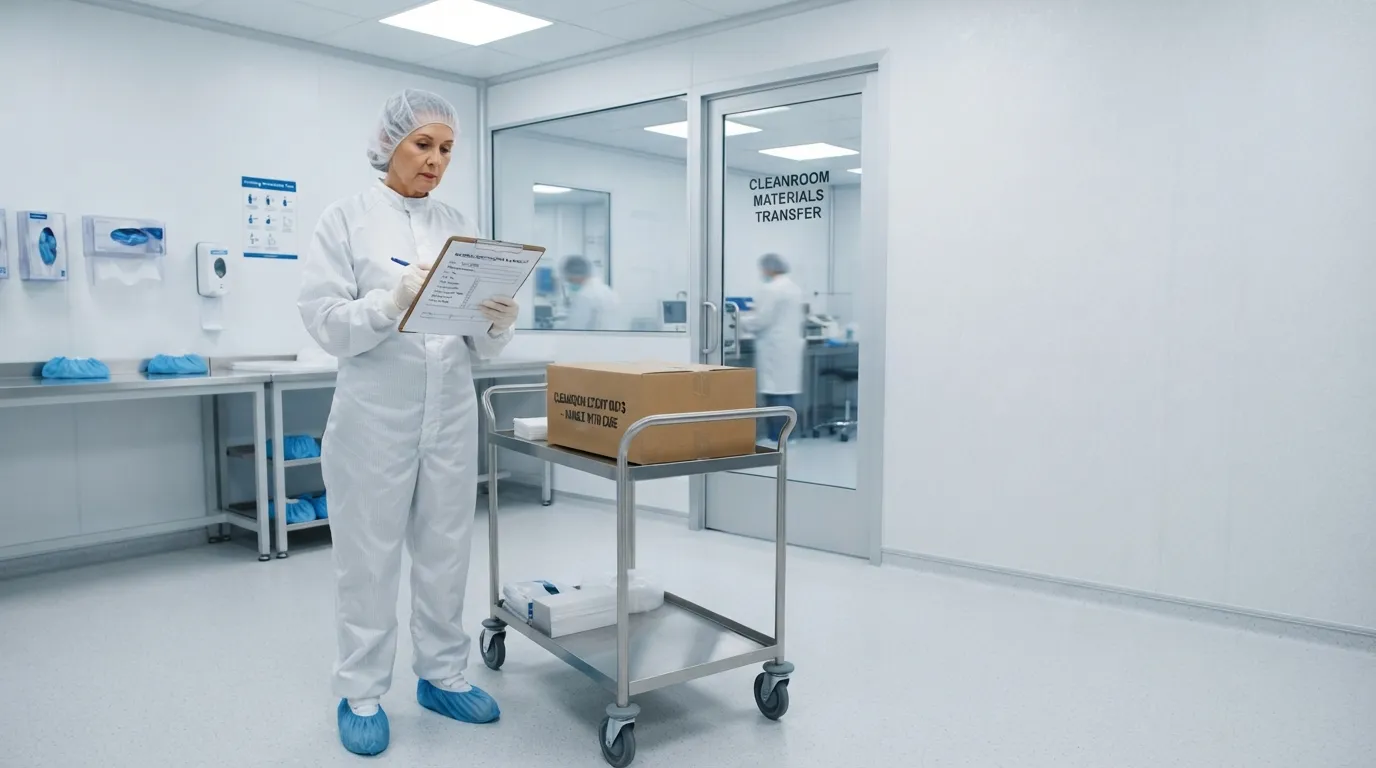
Before placing a bulk cleanroom sticky mat order, know which documents you actually need. The terms are often confused, but they serve different purposes.
- TDS (Technical Data Sheet) — describes the product's physical and performance specifications: dimensions, layer and sheet count, material, and handling information. A TDS is not a certification.
- Batch test report — verifies that a specific production batch met the agreed values, including the test method and date. A batch report applies to that batch only.
- SDS (Safety Data Sheet) — covers handling, storage, transport, and safety information for the material.
- RoHS or REACH statements — request these only when your destination market or customer requires them, and ask for product- or batch-specific statements rather than a generic company claim.
You can also arrange a pre-shipment inspection to verify quantity, packaging, and visual quality before the goods are dispatched. For a broader look at Nabai's cleanroom consumables range and sourcing capability, see cleanroom consumables manufacturer china.
Questions to Ask Your Supplier Before Confirming a Cleanroom Sticky Mat Order
Use this checklist when you receive a quote. The answers will tell you whether the MOQ and lead time are realistic and comparable to other suppliers.
- What is the MOQ unit: per piece, per mat, per case, or per carton?
- Does the quoted MOQ apply to a standard SKU or a custom configuration?
- What is the production lead time?
- When does the clock start: order confirmation, deposit, sample approval, or artwork approval?
- What is the dispatch time?
- What is the estimated transit time to my destination?
- Which Incoterms apply to the quote?
- What documentation is included — TDS, batch test report, SDS?
- Is a sample or trial order available, and at what cost?
- How does the quote change if I adjust the size, layer count, color, or packaging?
Compare supplier quotes only when the product configuration, MOQ unit, and delivery definition are the same. To reduce lead time, ask whether a standard size and stock configuration is available before requesting custom work.
When you are ready for a current MOQ and lead-time confirmation, send Nabai your specification and ask for the MOQ unit, production lead time, dispatch time, and transit time in writing. Nabai is a cleanroom consumables and ESD-products manufacturer based in Dongguan, Guangdong, China, and can be reached at sales@dgnabai.com.
NEWS
GET SERVICE
With quality parts to meet every budget and friendly staff trained to make your visit informative and hassle free.